en.Wedoany.com Reported - On June 24, the International Supercomputing Conference (ISC26) in Hamburg, Germany, released the latest IO500 global storage performance rankings. China's Pengcheng Laboratory's "Pengcheng Cloud Brain III" achieved a score of 603,334, securing first place in both the IO500 Global List and the Research List, while setting a new world record. According to official information from Pengcheng Laboratory, this marks the laboratory's twelfth consecutive championship in the IO500 track. Building on the long-standing top position of "Pengcheng Cloud Brain II," "Pengcheng Cloud Brain III" completed a new round of system iteration, winning the dual championship of the IO500 Global List and Research List for the first time.
The IO500 list primarily measures the storage input/output capabilities of high-performance computing systems. As AI large model training and inference scale to larger sizes, storage systems must simultaneously handle high bandwidth, large files, and massive small file accesses. Simply stacking computing power is no longer sufficient to support overall system efficiency.
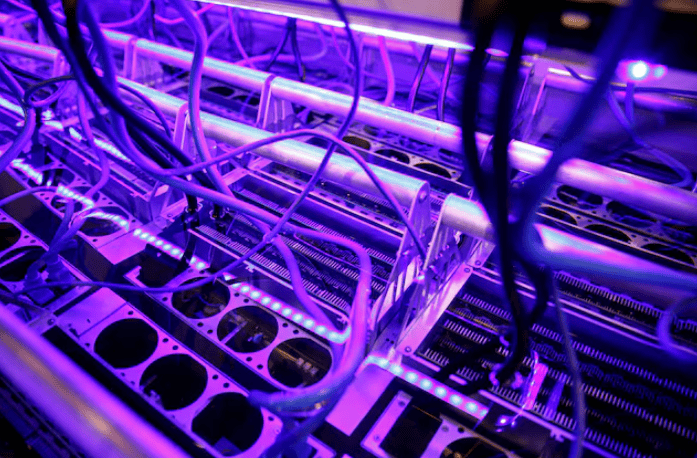
The "Pengcheng Cloud Brain III" targeted new storage workloads in the AI era for this ranking attempt. Pengcheng Laboratory explained that as AI enters the era of intelligent agents, large model applications impose new storage requirements, shifting from "large IO, high bandwidth" to "hundreds of millions of small IOs, high IOPS," necessitating adjustments to the balanced design approach of traditional high-performance storage. The system innovatively adopts a control-data separation and I/O direct-connect architecture, expanding bandwidth through shared network cards and using DPU for direct data connection to SSD endpoints, reducing data transmission losses, achieving a single-chassis throughput of 500GB/s. A report from Science and Technology Daily also noted that this architecture is designed to address issues such as data transmission latency and stuttering in supercomputing, supporting the upgrade of domestic high-performance storage technology.
The IO500 Research List focuses more on forward-looking technical routes. The fact that "Pengcheng Cloud Brain III" topped both the Global List and the Research List indicates that its achievement stems not only from individual hardware stacking but also from system design oriented towards next-generation AI workloads.
The bottleneck of high-end intelligent computing systems is not limited to GPUs, NPUs, or CPUs. When training large models, running multi-agent tasks, or processing multimodal data, computing nodes need to frequently read parameters, samples, checkpoints, and intermediate results. If the storage system cannot keep up, the computing cluster will experience waiting, congestion, and decreased utilization. The improvement in IO500 scores directly reflects breakthroughs in the system's read/write throughput, metadata processing, concurrent access, and overall input/output efficiency. After "Pengcheng Cloud Brain III" set the record of 603,334 points, China's high-end intelligent computing systems have gained new international benchmark support in storage subsystems, data pathways, and engineering collaboration capabilities.
The dual first-place finish of "Pengcheng Cloud Brain III" also continues Shenzhen's investment in intelligent computing infrastructure. As one of the national strategic scientific forces, Pengcheng Laboratory has long been engaged in research and development around artificial intelligence, network communications, and new computing systems.
As AI applications evolve from model training to agents, scientific computing, autonomous driving, smart cities, and industrial intelligence, storage performance will continue to impact the overall efficiency of intelligent computing centers. The larger the computing cluster scale, the higher the pressure on data movement, task scheduling, model checkpoint saving, and multi-task concurrency. With "Pengcheng Cloud Brain III" topping the IO500 dual rankings, domestic high-performance storage systems have achieved new internationally comparable results, providing engineering samples for subsequent large model training platforms, domestic intelligent computing clusters, and industry AI infrastructure construction. Future points of interest will focus on the system's open usage scope, real-task load performance, domestic software and hardware collaboration capabilities, and whether related technologies can be replicated and implemented in more intelligent computing centers.