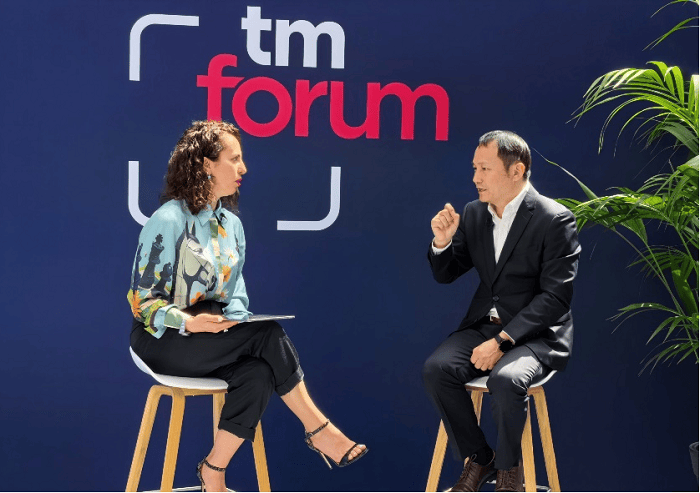
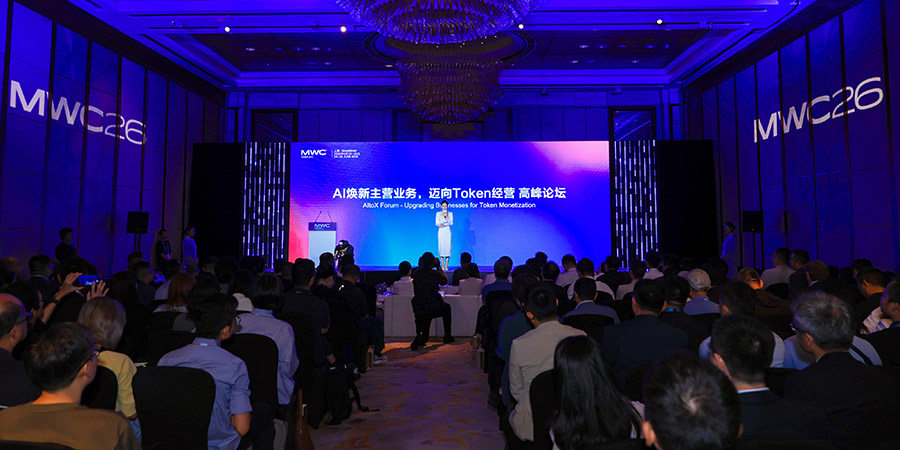
en.Wedoany.com Reported - At the AItoX Forum (held during MWC Shanghai 2026), co-organized by GSMA and Huawei, representatives and partners from China's three major telecom operators, specialized companies, provincial branches, as well as leading operators from Hong Kong, Europe, and the Asia-Pacific region, agreed that the telecom industry is transitioning from a Byte-centric economy to a "Byte+Token" converged economy. The forum focused on two core issues: how to leverage AI to upgrade existing core businesses, and how to empower AI services through infrastructure evolution.
AI introduces a new digital unit of value—the token. Unlike data traffic, tokens represent computational work, model inference, and intelligent generation. This shift changes the accumulation of costs, the form of service delivery, and reshapes the value distribution landscape across the entire ecosystem. The network is no longer a passive carrier of data but a key enabler of AI-driven products and outcomes.
As AI capabilities become deeply embedded in consumer and enterprise environments, operators face two parallel demands: empowering existing core businesses with AI, and making AI itself a core business. Token operations represent a strategic opportunity for operators to restructure their business models and unlock new value through AI-driven experiences and services. Leveraging decades of deep user relationships and insights into consumer behavior, operators possess a foundational advantage. Combined with their comprehensive strengths in business, network, and computing capabilities, this positions operators uniquely to lead and thrive in the Token economy. The forum concluded that the service model will shift from "people seeking services" to "services seeking people," with the goal of creating practical, closed-loop, and measurable AI service outcomes for consumers. Token-based operations are a natural evolution of operators' existing capabilities in monetizing data and experiences. Voice services, data services, and home broadband remain anchors of the value chain, with the strategic imperative being to build a cycle that expands outward from these core products through AI integration.
The forum noted that in the era of Byte+Token converged operations, upgrading operators' core businesses requires specific infrastructure support. The evolution towards networks with guaranteed experience and low latency is crucial. Networks are transitioning from best-effort delivery to reliable, experience-assured service products, and operators are already practicing in this direction. New network demands of the Token economy—from 5G-A, home broadband, and computing-network synergy to computing infrastructure—will accelerate operators' strategic leap from traditional traffic management to Token management. In the home broadband sector, operators have begun offering home packages with experience guarantees. Packages with 2000Mbps and 3000Mbps speeds have been launched, and Wi-Fi 7 is becoming a mandatory technical standard for next-generation home connectivity. By optimizing latency scheduling, high-priority AI services can be guaranteed lower and more predictable latency. On the mobile side, operators offer tariff plans with large uplink traffic to support applications like AI live streaming. In both mobile and fixed domains, unified channels through home User Plane Function (UPF) units enable high-speed interconnection and consistent AI service experiences across personal devices and home environments. The forum also pointed out that computing-network synergy, by coordinating central computing, edge computing, and network resources, is a key technology theme supporting Token services.
The AI Agent service platform, situated above the infrastructure, is considered the greatest business opportunity. The forum confirmed that current AI Agents suffer from inaccurate intent recognition and fail to predict user needs. Participants believe that AI Agent service platforms need to achieve long-term memory, unified memory, and unified intent. By building AI Agent service platforms on top of network data lakes, operators can provide personalized, proactive services tailored to individual users. Practical examples include AI-driven home central control screens, which serve as interaction portals, allowing users to perform network self-checks, self-repairs, and fault reporting through single-sentence voice commands. Proactive service assurance systems can intelligently detect poor network quality and automatically optimize performance before users notice issues. The central control screen also acts as a home computing host, providing services like intelligent content search based on user interests and voiceprints.
The overall message from the forum is that the industry chain—operators, technology vendors, and ecosystem partners—must coordinate their respective strengths. By mutually reinforcing business and network, and jointly building a high-experience network foundation, operators can be empowered to use AI to upgrade their core businesses, accelerate ecosystem prosperity, and achieve business growth in the era of Byte+Token converged operations.