en.Wedoany.com Reported - Traditional offshore mining technologies have developed shallow-water dredging and deep-sea seabed mining systems over the past 40 to 50 years, but these systems only target surface deposits on the seabed, unable to access mineral resources beneath the seabed, and are not environmentally friendly to aquatic life. Research by the U.S. Geological Survey and the Bureau of Ocean Energy Management shows that vast mineral deposits lie beneath the seabed within the U.S. 200-nautical-mile exclusive economic zone, including heavy mineral sands containing titanium and zirconium, phosphate-rich sediments, metalliferous sediments, and offshore placer deposits. Borehole mining technology offers a solution that can be remotely operated through existing offshore drilling infrastructure.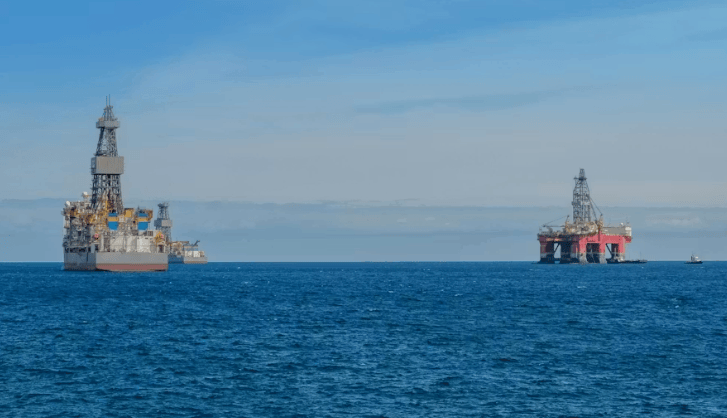
Borehole mining is a process of hydraulic excavation through a drilled and cased wellbore. The tool typically consists of a dual-wall API standard extended pipe string, with high-pressure water delivered downhole via the annulus and slurry containing excavated material returned to the surface through the inner pipe string. The system is based on water circulation, compatible with standard drilling infrastructure, requires no surface excavation, uses no chemicals, can be deployed from land, offshore, or ice sheets, and operates in temperatures as low as minus 30 degrees Celsius. Key parameters for borehole mining include: mining depth from 40 meters to 1 kilometer, production interval thickness from 1 meter to 400 meters, tool diameter from 140 to 273 millimeters, water pressure of 70 to 150 bar with a flow rate of 150 to 200 cubic meters per hour, pump motor power of 700 to 800 kilowatts, tool production rate of 35 to 90 cubic meters per hour, cutting diameter of 13 to 17 meters, and a crew requirement of 5 to 8 people. Depending on formation characteristics, the excavated cavity diameter can exceed 14 meters.
In a coalbed methane stimulation project in the San Juan Basin, a borehole mining system operated by Phillips Petroleum successfully excavated coal seams from a depth of nearly 1,000 meters. Sonar measurements confirmed the formation of underground cavities, and natural gas production doubled compared to pre-treatment levels, demonstrating that the technology can operate at depth using conventional oilfield infrastructure.
The deployment of offshore borehole mining is broadly similar to onshore operations. Jack-up rigs offer a relatively straightforward deployment option, but seabed subsidence risks must be considered, and room-and-pillar or backfill mining techniques can be applied to mitigate impacts. Deployment from floating vessels is technically feasible, with vessel motion potentially requiring heave compensation systems or flexible risers, but offers advantages such as safety, high mobility, and low cost in the event of seabed subsidence. Typical offshore borehole mining operations will use equipment familiar to offshore drilling personnel, including top drives, casing and tubing, mud pumps, and well control equipment, with the core addition being the downhole tool for hydraulic excavation.
Borehole mining is fundamentally different from seabed mining or dredging; it does not continuously traverse the seabed but remains stationary for extended periods, extracting resources beneath the seabed that conventional technologies cannot reach. There is currently no operational database for offshore borehole mining, and economic assessments require comparing the market value of recovered mineral products with total extraction costs. Based on decades of onshore experience, the cost of extracting one cubic meter of ore ranges from $30 to $80, depending on factors such as deposit characteristics, mining depth, and energy prices.
According to research by the U.S. Geological Survey and the Bureau of Ocean Energy Management, sub-seabed deposits suitable for borehole mining include: heavy mineral sands containing zirconium, titanium, rutile, thorium, tungsten, and rare earth elements; phosphate-rich sediments with strategic mineral byproducts; offshore placer gold, silver, titanium, platinum, and rare earth elements; metalliferous sediments containing aluminum, iron, and manganese; and deposits containing lithium, magnesium, and strontium in formations suitable for solution mining.
Ideal candidate sites for the first offshore borehole mining demonstration should feature shallow water (15 to 20 meters), a mineral body located 60 to 80 meters beneath the seabed, a thickness of 3 to 5 meters, proximity to a port, and soft mineralization. The Atlantic continental shelf off the coast of southern Georgia is considered an attractive location, with workboats from the Port of Brunswick able to reach the site within 1 to 1.5 hours. A preliminary pilot project could use a jack-up rig or vessel, a high-pressure water pump with a rated flow of 200 cubic meters per hour, a borehole mining tool with an outer diameter of 8-5/8 inches, and slurry collection tanks, with the primary goal of demonstrating the technology's safety, reliability, and efficiency under actual operating conditions.
Borehole mining builds upon mature offshore drilling, fluid circulation, and remote operation technologies that are already widely applied, and is seen as an extension of existing marine drilling technology into resource development beyond oil and gas. This technology supports advanced monitoring, real-time optimization, and predictive operations, with applications ranging from oil and gas reservoir stimulation to mineral extraction, and potentially involving the commercial development of offshore methane hydrates.