Volvo Delivers 5 B100 Trucks to Potencial Agro in Brazil
en.Wedoany.com Reported - Volvo has delivered five flexible-fuel trucks capable of running on 100% biodiesel to Potencial Agro, an agricultural group in Paraná, Brazil. As the country's biodiesel blending policy (B16) has yet to be implemented, companies across the supply chain are advancing their own decarbonization efforts. The delivery ceremony took place on June 30 in the city of Lapa.
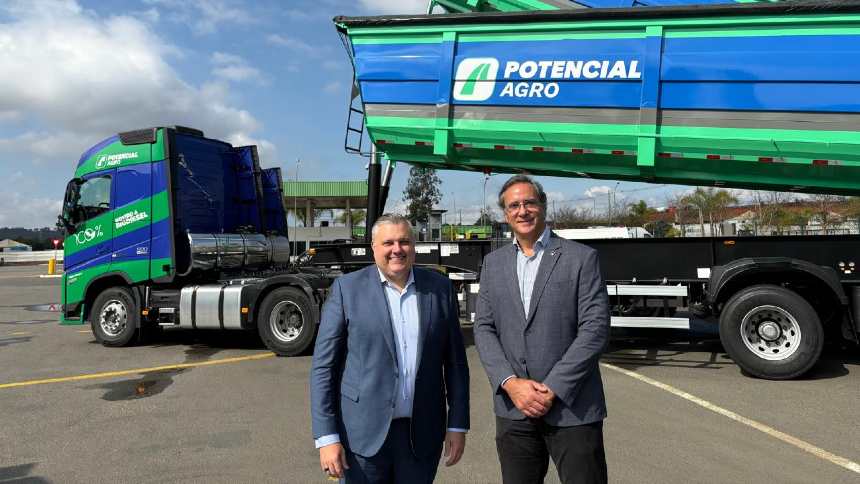
Potencial Agro is ramping up investments in soybean crushing, biodiesel production, and projects such as corn ethanol and biomethane, with the philosophy of providing solutions for the energy transition market while achieving its own decarbonization goals—aiming to become a carbon-negative company. With this delivery, the Paraná-based company now operates a total of 43 B100 trucks. Carlos Eduardo Hammerschmidt, Vice President of New Business, Commercial, and Relations at the group, stated that the company's investment in purchasing these trucks was approximately 50 million reais, with the scale limited due to policy obstacles faced by the industry. Currently, Brazil's National Agency of Petroleum, Natural Gas, and Biofuels (ANP) restricts the sale of pure biodiesel at gas stations. Trucks at Potencial's biodiesel plant can use pure biodiesel, but once on the road beyond Volvo's guaranteed range of 2,500 kilometers, they can only refuel with S10 diesel or B15 blended fuel.
Potencial Group plans to invest 6 billion reais by 2030 to expand its industrial complex, targeting a production capacity of 1.7 billion liters of biodiesel, 500 million liters of degummed oil, 1 billion liters of ethanol, and 9 million cubic meters of biomethane, with a total soybean and corn processing capacity of 4.7 million tons per year.
Alcides Cavalcanti, Executive Director at Volvo, stated that since the launch of the FH B100 model in 2024, the manufacturer has sold 300 units. Sales continue to grow among large agricultural conglomerates; in addition to Potencial, groups such as Amaggi and Bunge in Mato Grosso have also adopted these trucks. Cavalcanti noted that the ANP's restriction on biodiesel sales at gas stations is a limiting factor for sales growth, and currently, transporters and users need special authorization from the ANP to use it at storage tanks. He estimates that B100 truck sales will grow by 40% in 2026 compared to 2025, and once restrictions on transport companies related to biodiesel producers are relaxed, annual sales could reach 1,000 units. B100 trucks are cheaper than electric or natural gas models, costing only 5% more than conventional diesel trucks, and can reduce CO2 emissions by up to 90% if operated sustainably throughout their lifecycle.
Potencial's Volvo FH B100 Flex trucks will be used to transport soybeans and soybean meal (using dump bodies) and for fuel distribution via tanker trailers. These vehicles will primarily operate in the Southern, Southeastern, and Central-Western regions. The model can be financed through Brazil's National Bank for Economic and Social Development (BNDES) Climate Fund (Fundo Clima), which offers a loan facility of 11.2 billion reais at an annual interest rate of 6.5% plus 1.3% of the BNDES rate. Offering the B100 Flex truck is part of Volvo's plan to achieve net-zero emissions by 2050.
Related Products

220kV Composite Outdoor Cable Terminal
Shenyang Guolian Cable Accessories Manufacture Co., Ltd.
Global Sulfur Hexafluoride Gas Supply and Cylinder Export
Foshan Yuexin Industrial Gas Co., Ltd.
Bidirectional Metal Hard Sealed Seawater Butterfly Valve
Henan Quanshun Flow Control Science & Technology Co., Ltd.


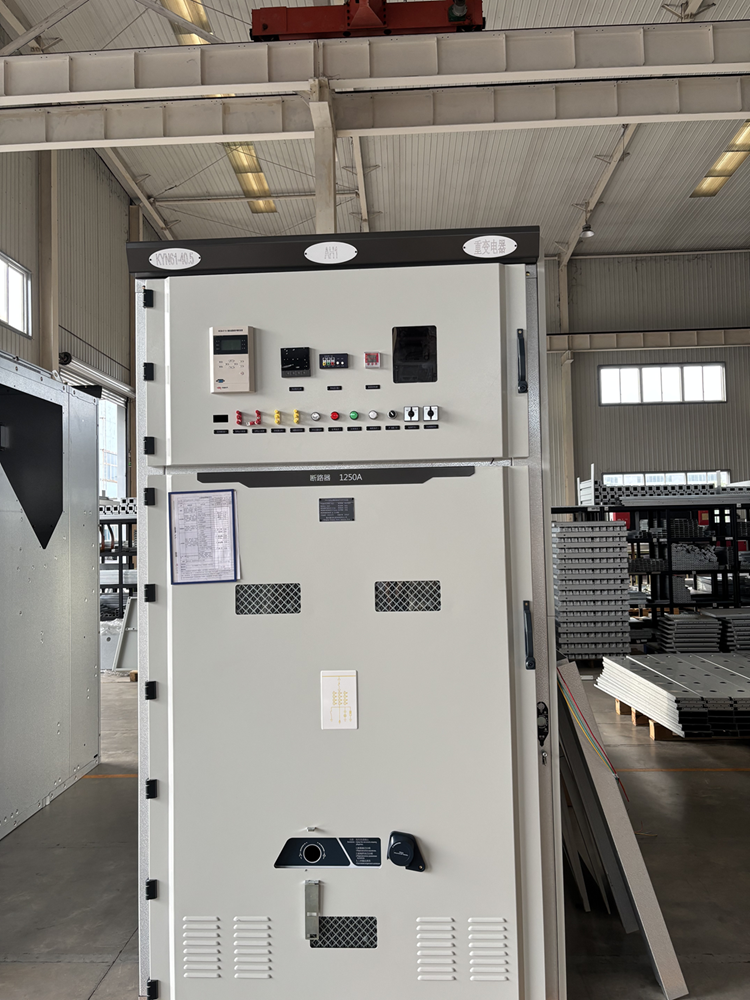
KYN61-40.5 Indoor AC Metal-clad Removable Switchgear
Chongqing Transformer Co., Ltd.