en.Wedoany.com Reported - Australia's Lode Resources Ltd (ASX:LDR) has obtained a new round of gold intercepts from ongoing reverse circulation drilling at its wholly-owned Uralla Gold Project in northern New South Wales, further supporting the company's view that the project may host a larger-scale intrusion-related gold system (IRGS).
The latest follow-up reconnaissance drilling yielded 23 new gold mineralisation intercepts across multiple targets, confirming widespread, near-surface mineralisation and further supporting the emerging IRGS model at Uralla.
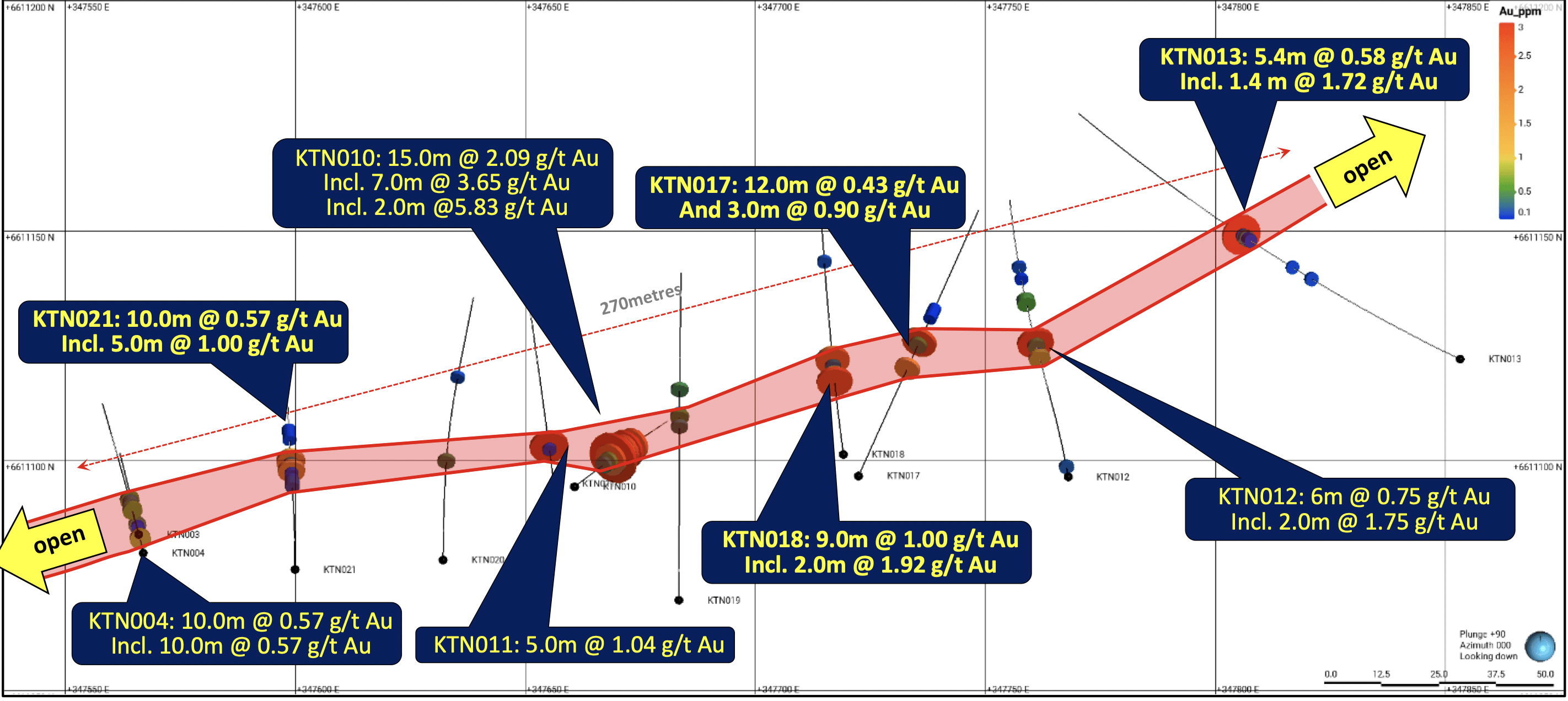
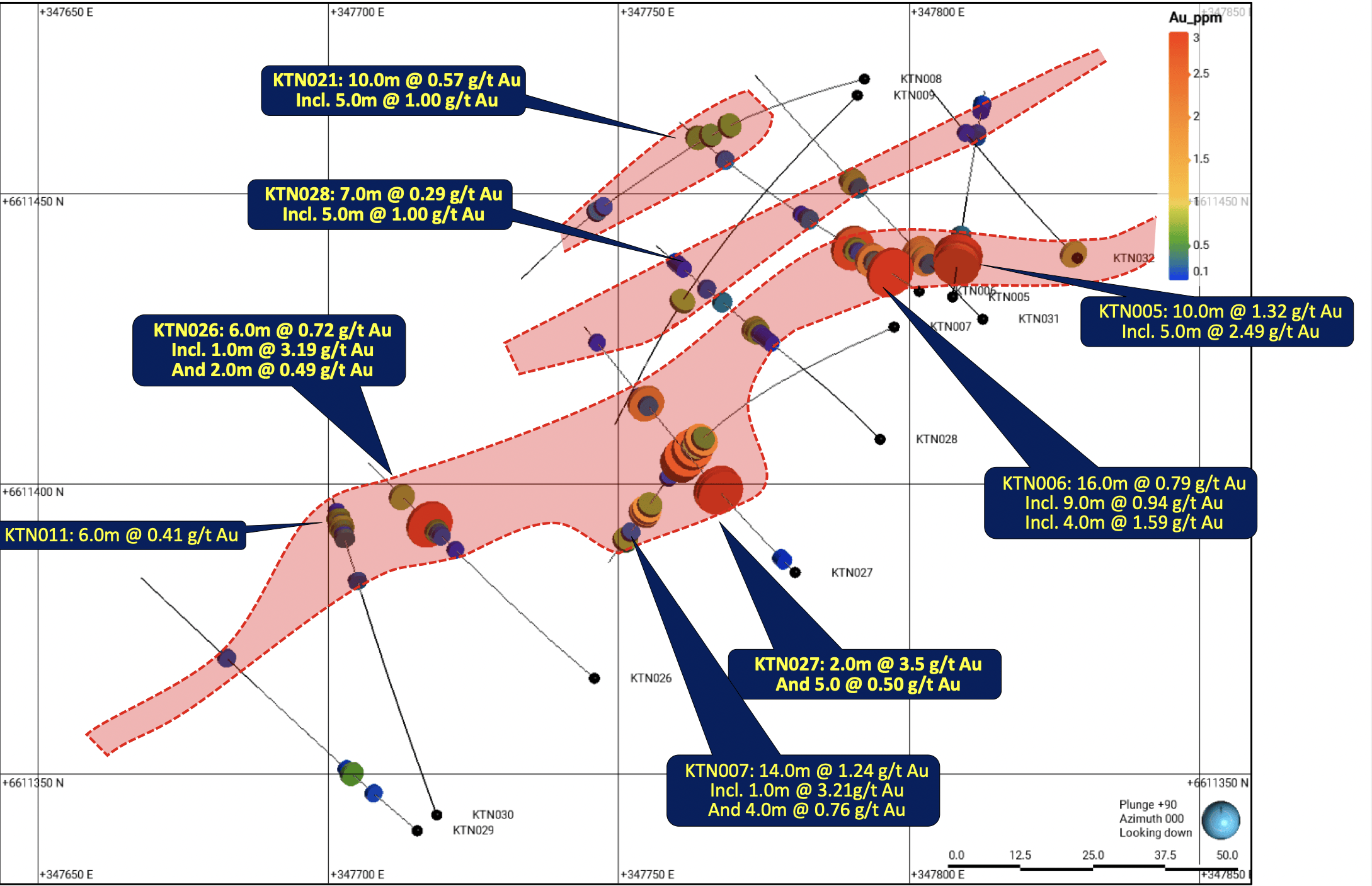
Key results from the latest program include: 9 meters at 1.00 g/t gold in hole KTN018, 17 meters at 0.46 g/t gold (including 3 meters at 2.11 g/t) in hole KTN023, 2 meters at 3.35 g/t gold in hole KTN027A, 4 meters at 1.51 g/t gold in hole KTN025, and 10 meters at 0.57 g/t gold (including 5 meters at 1.00 g/t) in hole KTN021.
Previous reconnaissance drilling had already returned stronger intervals, including 15 meters at 2.09 g/t gold from 12 meters (including 7 meters at 3.65 g/t) in hole KTN010, and 14 meters at 1.24 g/t gold from 68 meters in hole KTN007.
Managing Director Keith Mayes stated that these results are helping to build a "compelling picture" for Uralla, with drilling delineating gold-bearing veins at surface, while broader exploration data points to the potential presence of a large mineralised intrusion at depth.
The Uralla Gold Project covers over 300 square kilometers of the historic Uralla goldfield within the New England Fold Belt, one of the earliest gold-producing regions in New South Wales. The project is emerging as a significant IRGS, a style of mineralisation associated with widespread disseminated gold, breccias, and stockwork veins within and around intrusions.
Gold mineralisation delineated across multiple near-surface veins forms a large circular geophysical feature consistent with a deep mineralised intrusive stock, a key characteristic of IRGS and a potential indicator of large tonnage. Supporting this interpretation, Lode has identified a 400-meter by 350-meter circular feature at Uralla, interpreted to potentially reflect a deep intrusive stock, with antimony pathfinder element zoning also considered consistent with an IRGS system.
Drilling has yielded gold intercepts across several zones, including the Dyke Lode, Little Dyke Lode, and Red Gum Lode targets, with each subsequent reverse circulation (RC) result adding mineralised intervals associated with diagnostic IRGS structural and lithological features. At Red Gum Lode, reported results include 10 meters at 1.32 g/t gold in hole KTN005, 16 meters at 0.79 g/t gold in hole KTN006, and 14 meters at 1.24 g/t gold in hole KTN007A. At Dyke Lode, results include 15 meters at 2.09 g/t gold in hole KTN010 and 9 meters at 1.00 g/t gold in hole KTN018. Further exploration drilling is planned.
Lode Resources focuses on the New England Fold Belt in northeastern New South Wales and the Montezuma silver-antimony project in the West Coast mineral province of Tasmania. Its portfolio is concentrated on wholly-owned brownfield precious and base metal assets with historical geochemical or geophysical data, under-drilled mineralisation, and large deposit potential. Its key assets include the Uralla Gold Project, the New England Antimony Project, the Granville Tin Project, and the Silver Hills Silver-Antimony Project.