Anritsu Launches Tenzor Vector Network Analyzer Platform at IMS 2026
en.Wedoany.com Reported - Anritsu Corporation has launched its next-generation Tenzor Vector Network Analyzer platform at the IMS 2026 exhibition in Boston, showcasing a series of demonstrations that highlight advancements in measurement speed, flexibility, automation, and user interaction. The new platform is designed to meet the complex RF and high-speed digital testing needs of millimeter-wave systems, high-speed interconnects, and advanced component characterization.
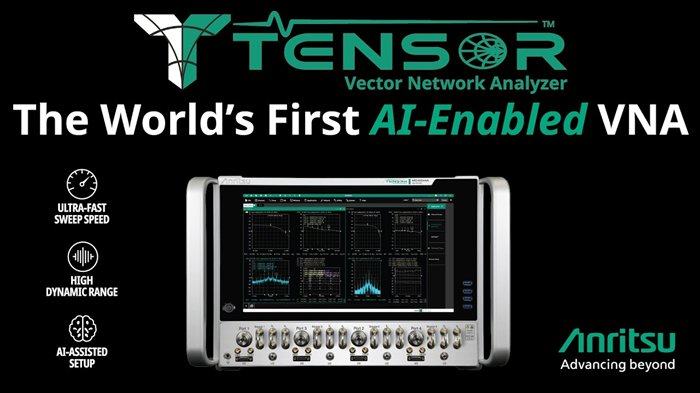
Navneet Kataria introduced the Tenzor Vector Network Analyzer, which operates over a frequency range of 10 MHz to 43.5 GHz, expandable to 220 GHz via external millimeter-wave modules. The system supports both Anritsu-developed and third-party modules, including waveguide solutions, offering flexible adaptation to various test environments without the need for external test sets. Its architecture allows users to configure the instrument for baseband, wideband RF, or millimeter-wave measurements within the same platform.
A key feature of the Tenzor platform is its multi-source, multi-receiver architecture, with each port equipped with an independent source and two receivers. In a four-port configuration, this results in four sources and eight receivers, enabling parallel measurements. Users can perform multiple tests simultaneously, such as four gain compression measurements and two two-tone measurements on different devices, thereby reducing overall test time. The instrument also supports multi-frequency gain compression measurements, allowing simultaneous sweeping of frequency and power to generate multi-dimensional characterization data.
The platform integrates dual local oscillators with coherent signal paths, enabling vector mixer characterization and multi-stage frequency conversion testing. Complex measurements that typically require additional setup in traditional VNAs are integrated within the Tenzor system.
Naveen demonstrated the integration of artificial intelligence in the Tenzor platform to enhance user interaction and measurement efficiency. The AI capabilities are available in both offline and online versions. The offline version requires no internet connection and provides a conversational interface to guide users through configuration and measurement tasks. The online version enables voice interaction and extended functions via cloud connectivity. In the demonstration, the AI assistant was used to explain Smith charts and gain compression, and to execute commands, including adjusting power levels and auto-scaling measurement traces. The AI system is designed to act as an interactive assistant, helping users configure measurements, reduce errors, and streamline workflows without navigating complex instrument menus.
Product Manager Krishna's demonstration focused on high-speed cable testing, utilizing an integrated solution comprising the Tenzor VNA, a configurable switch matrix, and dedicated test automation software. This setup was used to characterize an eight-channel differential backplane cable, which expanded into 32 single-ended coaxial connections. Traditional test methods require repeated manual reconnections for each channel and measurement arrangement, leading to long test times and reduced connector reliability. With the integrated system, the switch matrix automatically routes signals for all channels, and the software controls calibration, measurement execution, and data collection. The solution captures parameters such as differential insertion loss, return loss, crosstalk, and skew, outputting results in formats like PDF and CSV. The automated workflow significantly reduces test time, improves repeatability, and enables scalability for production environments, with the switch matrix supporting over one million switching cycles.
Beyond measurement capabilities, the Tenzor platform emphasizes speed, achieving a sweep rate of 6 microseconds per point to support faster data acquisition. To complement this speed, Anritsu has introduced a four-port automatic calibration kit operating up to 43.5 GHz, surpassing the traditional 26.5 GHz limit, allowing users to reduce calibration time while maintaining measurement accuracy. This video showcases the Tenzor VNA supporting millimeter-wave frequency extension.
Across the various demonstrations, the Tenzor VNA platform is positioned as a unified solution combining high-speed measurement performance, flexible hardware architecture, automated test workflows, and AI-assisted operation, aimed at simplifying complex RF testing processes and improving efficiency in both research and production environments.
Related Products


Pneumatic high-pressure wear-resistant ball valve
Zhejiang Deca Control Valve Meter Co., Ltd.

LBH4000 Batch Environmental Protection Asphalt Mixing Plant | Asphalt Batching Plant | Asphalt Mixing Plant
Jilin Province Road Construction Machinery Co., Ltd.
Aluminum-Magnesium Alloy High-Pressure Die-Casting Molds
NINGBO HELI TECHNOLOGY CO., LTD.
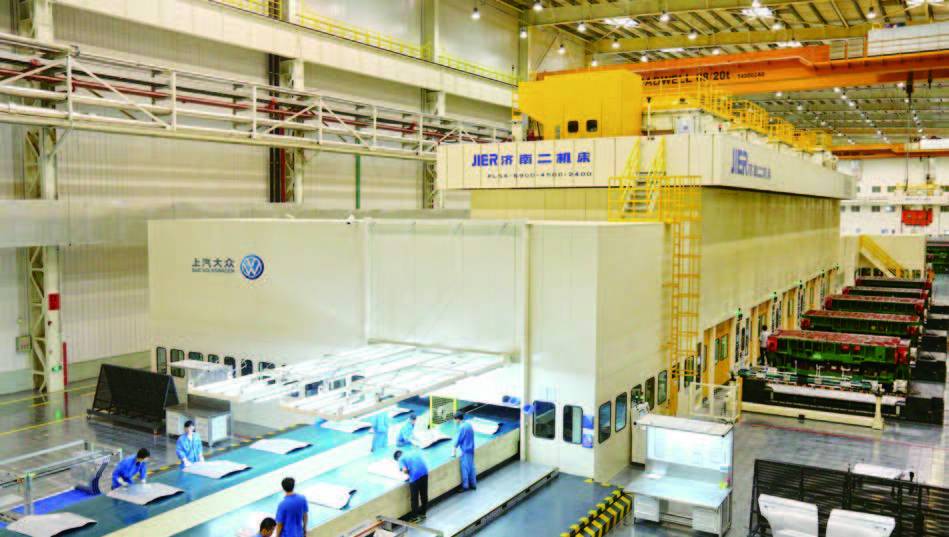
High-Speed Flexible Fully Automatic Stamping Production Line
JIER Machine-Tool Group Co., Ltd.