Three UK Companies Launch REMADE Project to Build Recycled Battery Anode Supply Chain
en.Wedoany.com Reported - Three UK companies—Altilium, Nyobolt, and Talga—have jointly launched the REMADE project, aiming to establish a next-generation high-performance battery anode supply chain based on recycled materials.
The REMADE project focuses on Nyobolt's ultra-fast charging battery technology, integrating Altilium's advanced battery recycling capabilities and Talga's expertise in graphite purification and active anode material production. The project is committed to supporting the development of sustainable, high-performance battery production and enhancing the UK's energy security and industrial resilience.
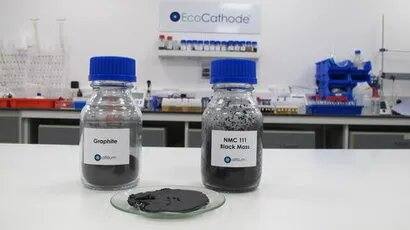
By validating the technical and commercial feasibility of a circular supply chain for anode materials in next-generation battery cells, this initiative aims to reduce dependence on imported raw materials while lowering the carbon footprint associated with battery production. Altilium will lead the recovery and regeneration of Nyobolt's patented anode materials, including graphite and niobium tungsten oxide (NWO), from end-of-life electric vehicle batteries and manufacturing scrap. Talga will refine the recycled graphite feedstock to produce battery-grade high-specification graphite; the recovered NWO and graphite will be further processed by Nyobolt for use in manufacturing ultra-fast charging, high-performance batteries. A leading automotive original equipment manufacturer (OEM) will provide oversight to ensure alignment with future automotive requirements.
As demand for lithium-ion batteries accelerates, this project directly addresses a critical gap in the UK's battery value chain. Graphite is a key component of battery anodes, and according to forecasts by the Advanced Propulsion Centre, demand for graphite is expected to reach 72,000 tonnes per year by 2035. Currently, the UK relies almost entirely on graphite imports, with China supplying 99% of the world's battery graphite and anode technology. Fast charging is also a key enabler for electrification applications across multiple sectors, and establishing a localized, recycled material-based high-performance battery supply chain presents a significant opportunity for the UK.
Dr. Christian Marston, Chief Operating Officer of Altilium, stated that through the REMADE project, recycled battery scrap can become a sustainable domestic source of critical anode materials for next-generation batteries, helping to build a more resilient and low-carbon UK battery supply chain. Current recycling processes primarily focus on cathode material recovery, with graphite often ending up as waste. Altilium's proprietary EcoAnode process can recover 99% of graphite from end-of-life battery scrap, reducing emissions by up to 77% compared to primary mining and refining.
Nyobolt's advanced lithium-ion batteries can charge to 80% in five minutes, and its high-power-density technology enables smaller, lighter battery packs, thereby reducing raw material requirements and lifecycle emissions. Anna Wise, Head of Strategy at Nyobolt, added that the REMADE project brings together breakthrough materials engineering and systems-level thinking to reshape battery manufacturing, and collaboration with Altilium and Talga demonstrates that circularity can enhance both performance and sustainability.
Talga's high-performance active anode materials enable faster charging and higher-power batteries, and its wholly-owned natural graphite and recycled graphite anode production platform supports emission reduction and ensures supply security. The Battery Innovation Programme is a government-industry strategic initiative funded by the UK government, delivered by Innovate UK and supported by the Department for Business and Trade. Valued at £452 million and running from 2026 to 2030, the programme aims to drive economic growth by accelerating battery innovation and enhancing the UK's global competitiveness in automotive, aerospace, off-highway, energy storage, and maritime sectors.
Related Products


714CD Series C-Band Weather Radar
Chengdu Zhongdian Jinjiang Information Industry Co., Ltd.
220kV and Below Voltage Level Energy-saving Oil-immersed Power Transformers
FuZhou TianYu Electric Co., Ltd.
Forest and Grassland Heat Source Infrared Monitor
China Huayun Meteorological Technology Group Co., Ltd.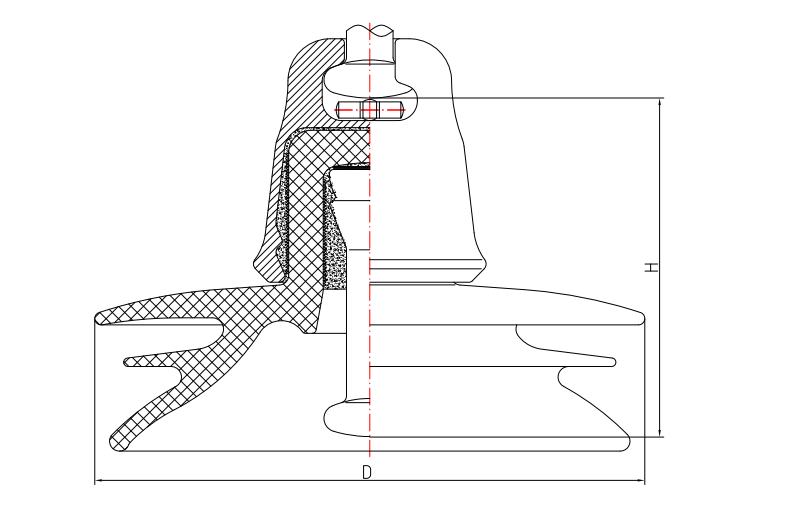
Post-type AC Pollution-resistant Disc Suspension Porcelain Insulator (Triple Umbrella Type)
Shandong High Voltage Insulator Co., Ltd.
Inductive Power Harvesting Self-Powered Device - Safuneng
SELF ENERGY TECHNOLOGY (SHENZHEN) CO., LTD.
Mars (Liquid Cooling) Series Industrial and Commercial Energy Storage Converter High Protection Module
Shenzhen Winline Technology Co., Ltd.