Wedoany.com Report-Apr. 14, Pakistan’s wheat production for the 2025-26 season is projected to decline by 13% to 27.5 million tonnes, compared to 31.6 million tonnes the previous year, according to a report from the Foreign Agricultural Service (FAS) of the US Department of Agriculture. The reduction stems from a smaller cultivated area and dry weather conditions.
Wheat consumption is expected to rise slightly to 31.9 million tonnes. To meet demand, imports are forecasted at 1.7 million tonnes, though the final volume will depend on the harvest’s outcome. An FAS spokesperson noted: “As of March 2025, imports are banned, so the government will have to reauthorize imports and decide whether to allow private importers or the state-run Trade Corporation of Pakistan do the import business.” Wheat and flour prices in March 2025 were 35% lower than the previous year’s peak.
Rice production for 2025-26 is anticipated to reach 9.8 million tonnes, assuming stable planting areas and typical yields, marking a slight increase from the prior season. Domestic rice consumption is projected at 4.2 million tonnes, while exports are expected to hit 5.8 million tonnes, driven by competitive pricing and demand from Southeast Asian markets, including the Philippines, Malaysia, and Indonesia.
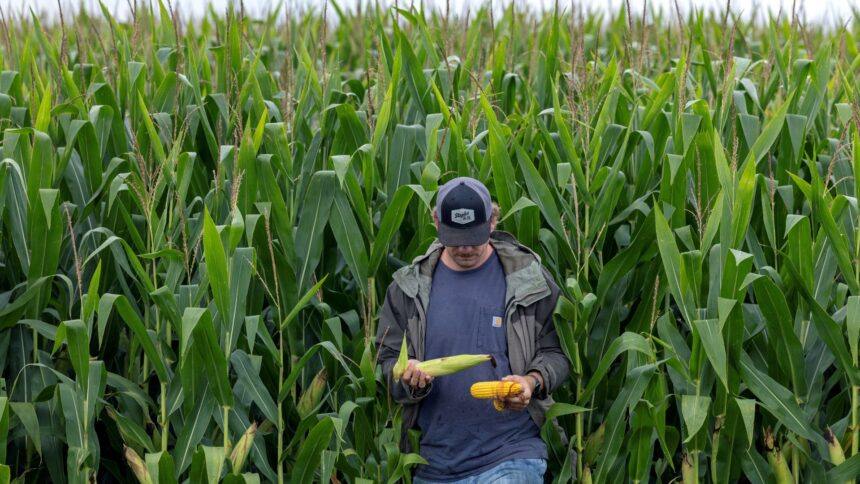
Corn production is forecasted at 9.6 million tonnes, supported by a modest increase in cultivated land and average yields over the past five years. Consumption is estimated at 9.1 million tonnes, up from 8.9 million tonnes in 2024-25. The poultry sector, the primary consumer of corn, uses about 65% of the crop for feed, with wet milling and dairy feed accounting for 15% and 10%, respectively, according to the FAS. The remaining portion is processed into flour for human consumption.
A ban on genetically engineered soybean imports in October 2022 had reduced corn demand by affecting the poultry industry. However, the reauthorization of these imports in late 2024 is expected to support the feed sector and increase corn demand in 2025-26. Corn exports are projected to fall to 600,000 tonnes. The FAS stated: “The ultimate level of exports will hinge on the final output, world corn prices, and the state of the domestic poultry industry.”
These forecasts reflect Pakistan’s efforts to balance agricultural output with domestic needs and export opportunities. The agriculture sector continues to adapt to environmental and market conditions, ensuring a stable supply of wheat, rice, and corn for both local consumption and international trade.