Sweden's Sandvik Completes Unified Jaw Crusher Product Line
en.Wedoany.com Reported - Sweden's Sandvik has completed the unified deployment of its upgraded stationary jaw crusher product line, establishing a standardized series for primary crushing applications. This initiative aims to address core demands for equipment reliability, operational safety, and predictable output in quarrying, mining, and heavy construction operations.
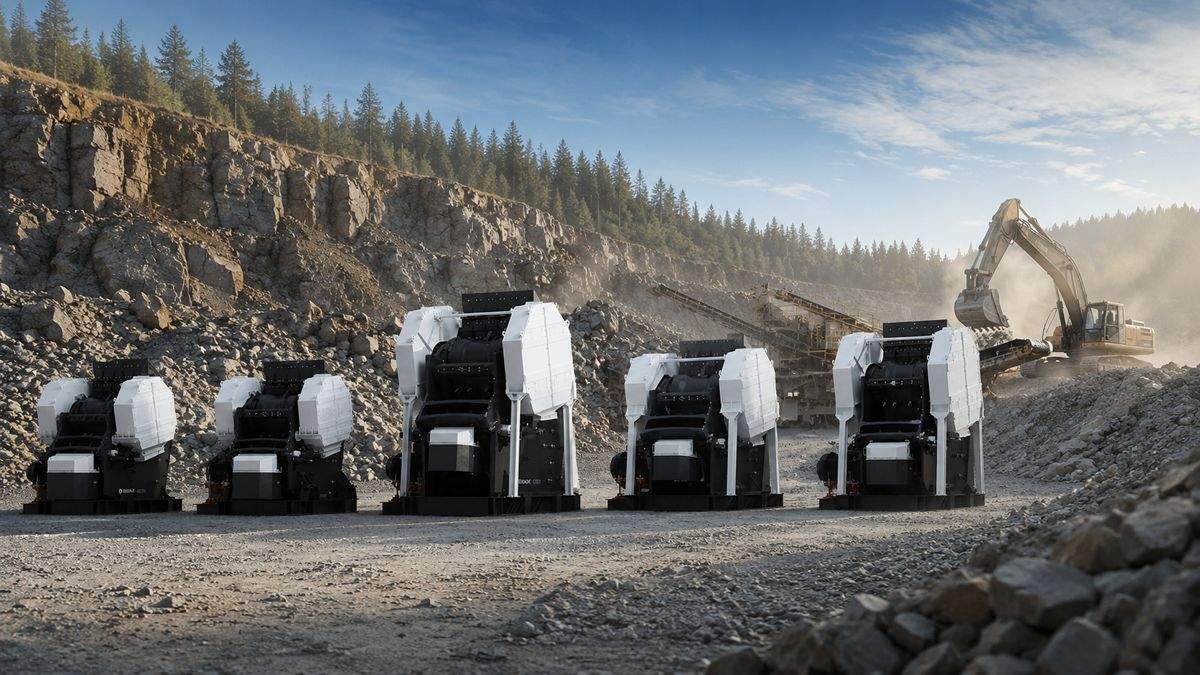
The new series focuses on enhancing operator safety through hydraulic wedge adjustment, synchronized retraction systems, and improved guards, while simplifying the crusher adjustment process. These engineering improvements are designed to reduce the manual intervention traditionally required when adjusting the discharge setting or performing maintenance activities, thereby lowering operator risk and minimizing equipment downtime. Additionally, the series integrates the ACS-j monitoring and control platform, enabling operators to monitor hydraulic settings, lubrication performance, and eccentric shaft bearing temperature via a web interface, driving a shift toward predictive maintenance.
The commercial advantages of product line standardization extend beyond individual equipment. Common engineering principles, shared operating systems, and consistent maintenance procedures allow companies operating multiple sites to streamline spare parts management, reduce training needs, and improve fleet consistency. This design philosophy responds to the industry's focus on total cost of ownership, particularly against the backdrop of labor shortages and tightening operating margins, where maintenance planning, component commonality, and digital service support increasingly influence equipment investment decisions.
The engineering focus is on incremental improvements to proven technologies, making validated equipment easier to use and safer throughout its working life. Enhanced mechanical structures, material quality, and component standardization aim to support higher equipment availability and reduce installation and repair complexity. Reliable primary crushing has a cascading effect on the entire processing plant, with stable feed characteristics helping to improve downstream screening, secondary crushing, and material handling, thereby sustaining more predictable productivity.
The continued expansion of digital monitoring capabilities reflects industry trends. Modern quarries and mining operations are shifting from reliance on periodic inspections to real-time data-driven management. Digital tools provide fleet managers with continuous visibility into equipment status, helping to optimize maintenance scheduling and reduce unplanned downtime. Martin Johansson, Product Manager for Jaw Crushers, Gyratory Crushers, and Impact Crushers at Sandvik Rock Processing, stated that these upgrades focus on safe operation, ease of use, and stable productivity, aiming to deliver more intuitive and reliable solutions.
Customer feedback has played a key role in validating design improvements. Interactions around usability, operational transparency, and safer work practices reveal that customer priorities are shifting from mere production figures to more comprehensive operational consistency. Equipment purchasing decisions are increasingly integrating lifecycle performance, operational simplicity, and connectivity support. Primary crushing equipment is gradually evolving into part of a broader digital production system, underpinning efficiency, sustainability, and long-term operational resilience.