Vodafone Ireland Completes Europe's First Emergency Communications Demonstration Using Direct-to-Device Satellite Connectivity
en.Wedoany.com Reported - Vodafone Ireland, in collaboration with the Office of the Government Chief Information Officer (OGCIO), has completed Europe's first mission-critical emergency communications demonstration integrating terrestrial and low Earth orbit (LEO) direct-to-device broadband satellite connectivity.
The trial was conducted on Clare Island, County Mayo, demonstrating how standard smartphones can maintain voice and data connections when terrestrial mobile networks are unavailable due to storms, power outages, or coverage limitations. The demonstration utilized technology from Satellite Connect Europe, a joint venture between Vodafone and AST SpaceMobile. During the trial, representatives from Vodafone Ireland and OGCIO successfully initiated a mission-critical (MCx) voice call via AST SpaceMobile's satellite network to David Lund, the EU Critical Communications Services (EUCCS) coordinator based in the United Kingdom. This test is part of an ongoing collaboration between Vodafone Ireland and the Irish government to assess resilient communications for emergency and public service organizations.
Vodafone stated that the trial demonstrates how direct-to-device satellite connectivity can provide an additional communications layer for emergency services, including access to Ireland's 999 and 112 emergency numbers, and support police, fire, and ambulance services when terrestrial infrastructure is unavailable. Clare Island serves as a test site for Vodafone's satellite initiatives, including Ireland's first satellite-based mobile video call earlier this year. Vodafone Ireland also noted that it recently invested €360 million in network and digital infrastructure, secured Ireland's first test and trial license for direct-to-device satellite services, and is collaborating with communications regulator ComReg on future commercial deployment.
The trial combined terrestrial mobile networks with LEO direct-to-device satellite broadband connectivity, using standard smartphones without the need for dedicated satellite terminals. The satellite connection was provided by Satellite Connect Europe, the joint venture between Vodafone and AST SpaceMobile. The successful MCx voice call connected participants in Ireland with the EU Critical Communications Services coordinator in the UK. The technology is aimed at emergency responders and public safety organizations operating in areas with network outages or remote locations. Vodafone Ireland is working with ComReg to establish a regulatory framework for future commercial direct-to-device satellite services. Sheila Kavanagh, Network Director at Vodafone Ireland, stated that by integrating satellite technology with next-generation systems such as MCX, network resilience is being enhanced, helping frontline teams stay connected and respond effectively in remote areas.
The trial reflects growing interest across Europe in integrating direct-to-device satellite capabilities into public safety and critical communications networks. While commercial consumer messaging services have emerged through satellite partnerships, supporting broadband voice and mission-critical services via LEO satellites remains a more challenging technical goal, requiring spectrum coordination, resilient network integration, and regulatory approval. Vodafone is expanding its satellite strategy across multiple European markets through AST SpaceMobile, while operators such as Deutsche Telekom, Orange, AT&T, and Verizon continue to evaluate partnerships with satellite providers including AST SpaceMobile, Lynk Global, and SpaceX's Starlink Direct to Cell. Government-backed resilience initiatives indicate that hybrid terrestrial-satellite architectures are increasingly viewed as a key component of future emergency communications infrastructure.
Related Products




TWP16 P-Band Tropospheric Wind Profile Radar
China Huayun Meteorological Technology Group Co., Ltd.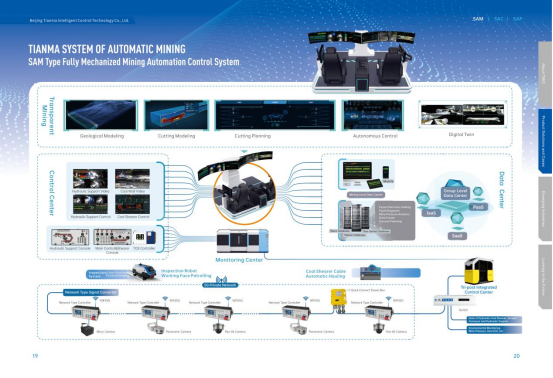
Comprehensive Mining Automation Control System
Beijing Tianma Intelligent Control Technology Co., Ltd.

GYTA Type Non-Self-Supporting Aerial/Duct Optical Cable
TONGDING INTERCONNECTION INFORMATION CO., LTD.
G.652.D Wavelength-extended Non-dispersion Shifted Single-mode Optical Fiber
HONGAN GROUP CO., LTD.

Multi-function Marine Monitoring Low-altitude Detection Radar Sea-air Boundary Ocean Dynamic Environment Measurement
Chengdu Dixin Technology Co., Ltd.