Accuracy Is Not Enough: How to Select Automation Instruments for Real Process Conditions
en.Wedoany.com Reported - Accuracy is one of the easiest specifications to compare when purchasing Automation Instruments, but the most accurate device on a laboratory data sheet is not always the best choice for an industrial process. Useful measurement depends on range, turndown, repeatability, stability, response time, fluid properties, installation and environmental conditions.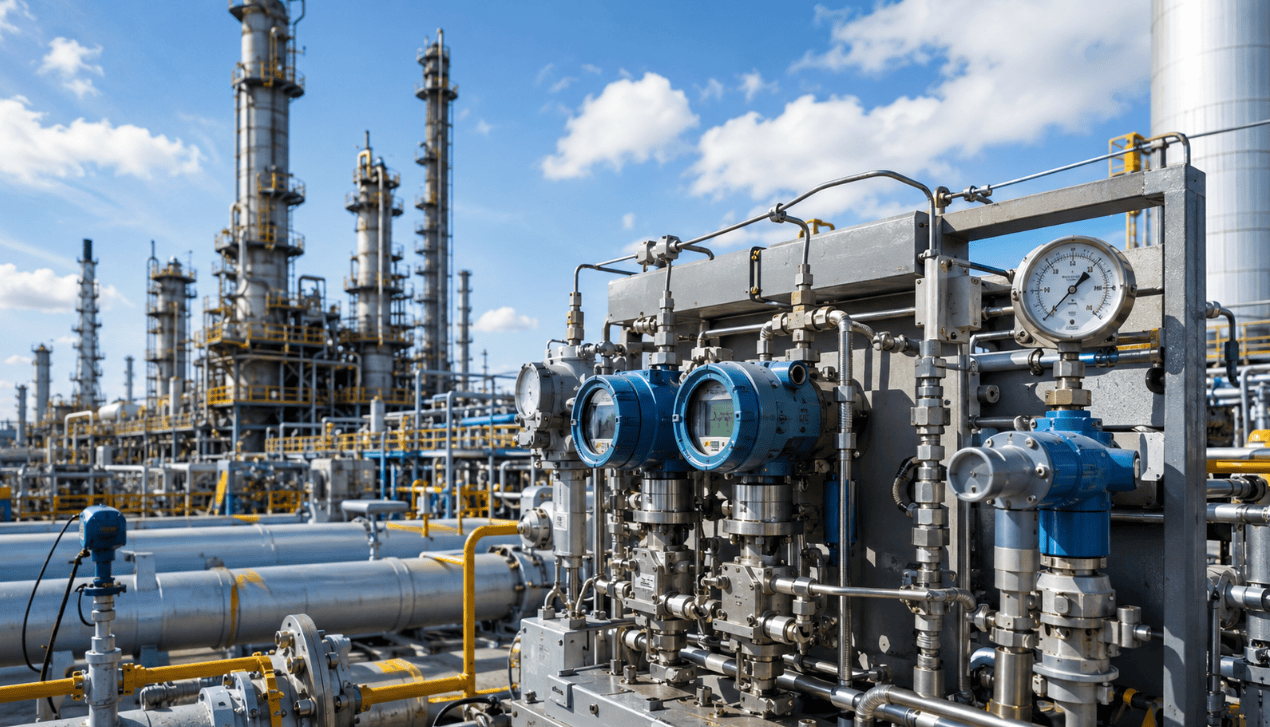
Selection should begin with the purpose of the measurement. A flow value may be used for operator indication, closed-loop control, material balance, custody transfer or a safety function. Each purpose creates a different requirement. A general trend measurement may tolerate moderate error. Commercial metering may need tighter calibration and pressure-temperature compensation. A safety-related measurement requires careful analysis of failure modes, diagnostics and independence.
Measurement range directly affects performance. If a transmitter range is much larger than the normal process value, the device may operate near the bottom of its span for most of its life. This can reduce effective resolution and increase the relative importance of zero error. A range that is too narrow may be exceeded during startup, cleaning, process upsets or emergency operation.
The specification should therefore include normal, minimum, maximum, startup and abnormal conditions. Necessary margin should be provided without automatically setting the instrument to the maximum design pressure or temperature of the equipment. Different operating modes may justify multiple ranges, range switching or separate instruments.
An accuracy statement must also be read carefully. Product documentation may distinguish reference accuracy from the effects of ambient temperature, static pressure, power supply, mounting orientation and long-term drift. Installed performance is normally the result of several error sources rather than one published number.
For a differential-pressure flow measurement, total performance includes more than the transmitter. The primary element dimensions, pressure taps, impulse piping, fluid density, temperature and calculation method all contribute. A highly accurate transmitter cannot correct a poorly installed orifice plate, partially blocked impulse line or incorrect density assumption.
The U.S. National Institute of Standards and Technology describes calibration as the process of ensuring that a measuring device provides accurate measurements. Metrological traceability connects a result to a specified reference through a documented chain of calibrations. NIST also emphasizes that traceability alone does not guarantee fitness for purpose; the associated uncertainty must be sufficiently small for the intended measurement need.
This distinction is important in industrial procurement. A calibration certificate does not prove that the instrument is suitable for the process. The calibration may cover only selected points and controlled conditions. Field performance may be affected by installation, process temperature, vibration, pressure cycling and material compatibility.
Measurement uncertainty expresses the range within which the measured value is believed to lie under stated conditions. Its contributors may include the reference standard, repeatability, resolution, environmental influence, installation and calibration method. Critical quality, energy and commercial measurements should have a defined uncertainty requirement rather than a vague request for high accuracy.
Fluid properties determine whether a measuring principle is appropriate. Electromagnetic flowmeters generally require sufficient electrical conductivity and are not used for ordinary hydrocarbon liquids or gases. Coriolis meters provide direct mass-flow and density measurement, but pipe size, pressure drop, entrained gas and vibration must be considered. Ultrasonic meters can reduce flow obstruction but may be affected by bubbles, solids, acoustic properties and installation geometry.
Level measurement presents similar choices. Non-contact radar may be attractive for corrosive or high-temperature service, but vessel geometry, foam and internal structures can influence the signal. Guided-wave radar provides a defined propagation path but introduces a probe into the vessel. Differential-pressure level depends on density and pressure conditions. Float devices are mechanically direct but may be unsuitable for coating or solids.
Environmental capability must extend beyond the enclosure rating. High and low temperature, vibration, salt spray, corrosive gases, electromagnetic interference and hazardous areas can all affect service life. Diaphragms, seals, fill fluids, process connections and cable entries must be compatible with both the process medium and the surrounding environment.
Dynamic response should match the control objective. A heavy thermowell may improve mechanical strength while slowing temperature response. Excessive damping may create a stable display but hide a rapid process change. A measurement used for control or protection should be evaluated as a complete dynamic chain, including the sensor, transmitter, signal processing, communication and controller scan time.
Calibration intervals should not be identical by default. Instruments in stable, clean and moderate service may remain within tolerance for long periods. Devices exposed to corrosion, thermal cycling, pulsation or plugging may drift more rapidly. Historical calibration data and process risk can be used to extend or shorten intervals.
A complete purchasing specification should define measurement purpose, operating and extreme conditions, fluid composition, allowable pressure loss, hazardous-area requirements, wetted materials, communication, diagnostics and calibration references. Accuracy remains important, but it must be evaluated as part of the complete measurement system. This is the difference between buying an impressive specification and obtaining dependable field data.