Aalto University team discovers two new superconductors with AI
en.Wedoany.com Reported - An international research team involving Aalto University in Finland has discovered two new types of superconductors using artificial intelligence technology, providing a more efficient method for screening superconducting materials. The related research paper has been published in the American academic journal Physical Review Research, and the two materials are YRu₃B₂ and LuRu₃B₂.
The key significance of this achievement lies not only in "discovering new materials," but in introducing machine learning into the screening process for superconductor candidate materials. The combinatorial space for superconducting materials is vast; relying entirely on traditional trial-and-error and case-by-case calculations would result in long development cycles. The research team first used machine learning methods to pre-screen a large number of elemental combinations, then conducted more refined first-principles calculations and experimental verification on potential candidates, ultimately confirming two kagome lattice compounds exhibiting bulk superconducting characteristics. The kagome structure has long attracted attention in condensed matter physics and quantum materials research due to its unique electronic structure and quantum properties. This combination of AI screening and quantum physics calculations indicates that materials research is shifting from experience-driven, manual screening to a collaborative process of algorithm-based prediction, computational verification, and experimental confirmation.
These two new superconductors are not room-temperature superconductors, nor do they imply immediate engineering applications. Their value lies more in methodology: AI can help researchers narrow down the candidate range more quickly, compressing the vast material search space into directions more worthy of experimental verification.
If this approach continues to mature, its impact could extend to the energy, power, computing, and cryogenic equipment industries. Once scalable superconducting materials achieve higher critical temperatures, more stable fabrication, and lower-cost applications, they could be used in low-loss power transmission, high-performance magnets, quantum computing, data centers, medical imaging, particle accelerators, and advanced sensing systems. The practical hurdles remain high; superconducting materials must not only possess ideal physical properties but also address issues such as fabrication processes, material stability, critical current, mechanical strength, cooling conditions, and mass production costs. The AI-discovered two new materials will not directly reshape the industrial landscape, but they provide a new screening tool for superconductor research and development, helping to improve the efficiency of candidate material discovery and accumulating data and methods for future efforts to find superconductors closer to room-temperature conditions.
Related Products


Industrial and Commercial Point-Type Gas Detector
Jinan Benan Technology Development Co., Ltd.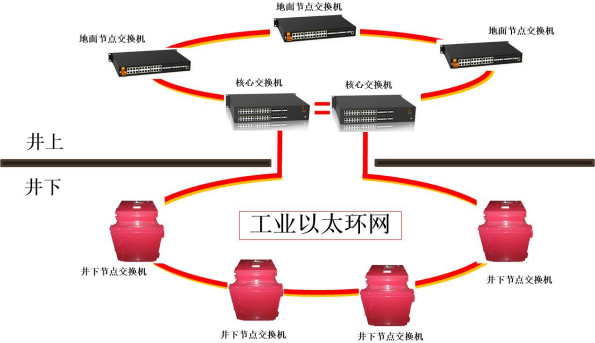
Mine Explosion-proof and Intrinsically Safe Industrial Ethernet Ring Network (10 Gigabit/Gigabit)
Chongqing Mas Sci&Tech Co., Ltd.
G.652.D Wavelength-extended Non-dispersion Shifted Single-mode Optical Fiber
HONGAN GROUP CO., LTD.
Automatic Aiming Laser Remote Obstacle Removal Robot
Pinggao Group Weihai High-Voltage Apparatus Co., Ltd.

Multi-function Marine Monitoring Low-altitude Detection Radar Sea-air Boundary Ocean Dynamic Environment Measurement
Chengdu Dixin Technology Co., Ltd.