en.Wedoany.com Reported - Scientists from Tohoku University in Japan and the Indian Institute of Technology Indore have jointly developed a copper nanocluster catalyst that converts carbon dioxide into methanol while significantly reducing the unwanted byproduct formate. The study achieves the conversion of carbon dioxide into valuable fuels under mild conditions.
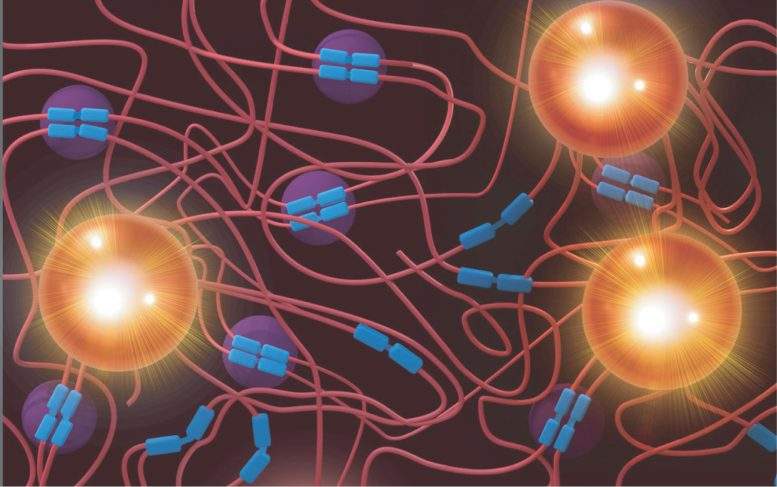
The research team synthesized a sulfide-templated copper nanocluster (S@Cu50S12(StBu)20(CF3COO)12) with a precisely controllable core-shell structure: the core is S@Cu14S12, encased in a Cu36(StBu)20 shell and protected by thiol ligands. By adjusting the ratio of Cu(I) and Cu(II) oxidation states, the team altered the product pathway of the electrochemical reaction without changing the overall geometry of the catalyst. Compared to traditional copper catalysts, this novel nanocluster reduces the Faradaic efficiency of formate from approximately 38% to below 11% at -1.0 V (vs. reversible hydrogen electrode, RHE), while achieving a Faradaic efficiency of about 19% for methanol—a product that the old catalyst did not produce at all.

The team noted that subtle regulation of the Cu(I)/Cu(II) balance can fundamentally redirect the reaction pathway, offering a molecular-level strategy to overcome the inherent selectivity limitations in copper nanocluster catalysis. Adding sulfur ions to the center of the nanocluster alters its electronic structure, affecting the interaction between reaction intermediates and the catalyst surface. Associate Professor Yuichi Negishi from Tohoku University concluded that this study provides the first clear demonstration that precisely controlling the copper valence state in nanoclusters can directly influence the selectivity of the carbon dioxide reduction pathway.
The research has been published in the open-access journal JACS Au.