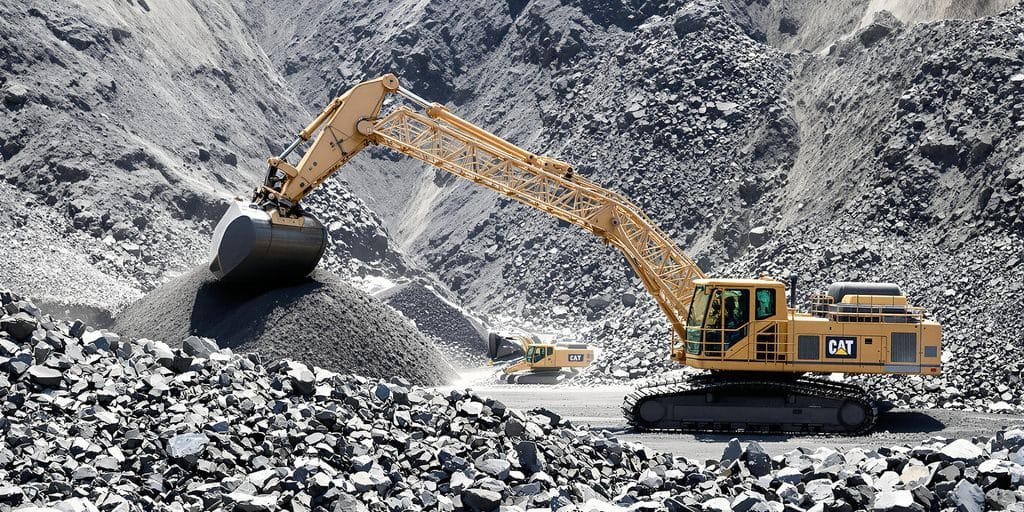
en.Wedoany.com Reported - Pensana has revealed that the development of the Longonjo rare earth mine in Angola is progressing on schedule and within budget, with the first batch of mixed rare earth carbonate (MREC) products expected to be produced in 2027.
According to a report released by Pensana in June this year, the company has invested a total of $36 million in direct construction of the mine and processing plant, with the main project progress at approximately 22%. Currently, earthworks, geotechnical surveys, and test piling have been completed in the main areas of the site, and the supporting concrete batching plant and aggregate plant are now fully operational. Of the total capital expenditure budget of $250 million, approximately $135 million has been committed through procurement plans, and the manufacturing of long-lead process equipment is progressing as scheduled.
Pensana CEO Tim George noted that detailed design work is advancing on schedule, ensuring the smooth execution of most procurement plans and subsequent manufacturing stages, thereby effectively reducing the risk of capital overruns. He stated that through this project in the Huambo district, Pensana is committed to building an independent supply chain from mine to magnet, serving magnet manufacturers, automotive original equipment manufacturers (OEMs), and other industrial sector customers in the United States and globally. He added that the company is awaiting the phased delivery of key process equipment currently being manufactured off-site and plans to complete the remaining work of the main construction phase within the next year.
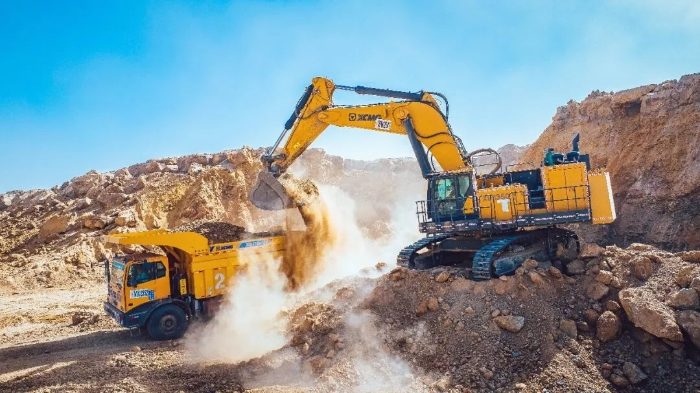
The project's development budget is $250 million, with an expected mine life of 20 years. Initial annual production is set at 20,000 tonnes of clean mixed rare earth carbonate, expanding to approximately 40,000 tonnes in the fourth year after commissioning. The mine adopts open-pit mining methods, extracting, concentrating, calcining, and chemically refining near-surface carbonatite materials to produce high-value mixed rare earth carbonate, which is then transported by rail to the Port of Lobito for international export.
Pensana Chairman Paul Atherley stated that Longonjo is one of the largest rare earth deposits ever developed, leveraging the world-class infrastructure of the Lobito Corridor, hydropower resources, and strong support from the Angolan government and its sovereign wealth fund. He noted that upon full production, the mine will become one of the world's largest producers of light and heavy rare earths, integrated into a comprehensive independent rare earth supply chain serving the economic needs of Japan, the United States, and Europe.
Pensana revealed that it has established a multi-party offtake framework led by supply chain diversification expert Toyota Tsusho, U.S. rare earth element and critical mineral refining innovator ReElement Technologies, and advanced permanent magnet manufacturer VAC/eVAC Magnetics, covering the entire rare earth value chain. Additionally, all major Japanese trading companies and Korean conglomerate Hanwa have joined, with Hanwa supporting the Japanese government's rare earth separation investigation under the Ministry of Economy, Trade and Industry's Global South Initiative. Current partners include Japan's three major magnet producers—Shin-Etsu, Proterial, and TDK—as well as Japanese Tier 1 automotive and electronics suppliers (such as Honda, Nissan, and Daido Electronics), along with European and American automotive OEMs. Pensana also stated that it is preparing for a listing on the Nasdaq to broaden access to U.S. capital markets.
The Longonjo mine is adjacent to the national power grid, connected to the state-owned Laúca hydropower plant with an installed capacity of 2 GW, enabling access to low-cost, low-carbon electricity, thereby enhancing operational economics and strengthening the company's environmental credentials. The mine is located just 4 kilometers from the Lobito Corridor railway line, allowing products to be transported 273 kilometers by rail directly to the Port of Lobito on the Atlantic coast, providing fast and efficient export access to customers in the United States, Europe, and Asia.