By 2026, China's total number of special equipment reaches 24.79 million units
en.Wedoany.com Reported - The 2026 Special Equipment Safety Conference was recently held in Shanghai, focusing on the theme "Safeguarding Special Equipment Safety, Escorting the New Journey of the '15th Five-Year Plan'." The conference systematically discussed key issues such as safety co-governance, industrial integration, and enhancing public safety awareness, exploring implementation pathways for the modernization of the national special equipment governance system.
As core public infrastructure for industrial systems and urban operations, the safety of special equipment directly impacts public safety, industrial chain stability, and the safety of people's lives and property. Entering the "15th Five-Year Plan" period, existing risks such as hazards from aging equipment and non-standard maintenance have not yet been eliminated, while incremental risks from new sectors like hydrogen energy storage and transportation, and new-type energy storage pressure vessels continue to emerge. The industry faces a critical transformation phase where old and new risks intertwine.
Currently, China's special equipment industry continues to expand in scale, and the special inspection industry landscape is rapidly evolving. However, there is a lack of authoritative research covering industry scale, institutional structure, technological innovation, pain points, and trends, making it difficult to meet the practical needs of upgraded safety supervision and high-quality industrial development. During the conference, the "Blue Book on the Development of the Special Equipment Inspection and Testing Industry," released by the China Special Equipment Inspection and Research Institute, provided a panoramic review of the industry's context from a think tank perspective. The institute conducted in-depth research in Guangdong, Shandong, and other regions, holding discussions and seminars with over 20 local inspection agencies. Based on extensive consensus-building, this Blue Book was formed to provide references for regulatory decision-making and industrial transformation.
The Blue Book shows that China's elevators, with 12.3159 million units, account for half of the special equipment. Meanwhile, the number of elevators over 15 years old has exceeded 1.1 million units, and in some petrochemical enterprises, nearly 50% of equipment is operating beyond its designed lifespan. The contradiction between "new and old" is becoming increasingly prominent. The State Administration for Market Regulation has diligently carried out hazard investigation and rectification, continuously advancing the three-year campaign to address root causes and ensure safety in production, and deeply conducting special equipment inspection and rectification in chemical enterprises. It inspected enterprises 44,700 times and urged the rectification of 46,800 hazards. It also implemented a three-year action for elevator safety consolidation, rectifying a total of 132,000 hazardous elevators and urging the recall of 53,000 problematic elevators. Zhou Liang, Deputy Director of the Special Equipment Safety Supervision Bureau of the State Administration for Market Regulation, stated that in the first half of this year, 81 special equipment-related accidents were reported nationwide, resulting in 83 deaths, with the overall safety situation remaining stable.
By the end of 2025, the number of special equipment inspection agencies nationwide reached 5,341, employing approximately 204,500 people, and completing over 12 million inspection tasks annually. A diversified collaborative development pattern has been established, with public welfare inspections providing a safety net and market-based testing empowering the sector. Pan Chuanlong, Deputy Editor-in-Chief of China Market Regulation News, stated that the future will continue to focus on regular science popularization and publicity for special equipment safety, continuously strengthening the safety protection network for special equipment.
In recent years, the State Administration for Market Regulation has made a series of deployments around reform and innovation, technological empowerment, and quality improvement in supervision. The "Guiding Opinions on Promoting Scientific and Technological Innovation for Special Equipment Safety and Energy Conservation," released in March this year, proposes building a "modern design - advanced manufacturing - intelligent operation and maintenance" technology system by 2030, overcoming major engineering challenges, and further increasing the domestic production rate of high-end testing instruments. This conference showcased intelligent equipment such as inspection robots, online monitoring devices, and AI hazard identification systems, reflecting the achievements of the industry's digital transformation. Wang Jun, Party Secretary and President of the China Special Equipment Inspection and Research Institute, believes that the application of numerous independent innovation technologies marks a leap for China's special equipment inspection technology from following to running alongside and leading.
Shanghai is the city with the highest number of elevators globally, possessing over 700,000 units (sets) of special equipment in use and 19,000 kilometers of pressure pipelines. He Qing, Vice Mayor of Shanghai, introduced that in recent years, Shanghai has vigorously promoted the construction of a "one unit, one code" smart supervision system, built a high-standard smart elevator platform, and installed remote monitoring devices on nearly 170,000 elevators, achieving second-level response and minute-level rescue for entrapment incidents. Simultaneously, the city is actively exploring a new "AI + off-site supervision" model, intelligently identifying and capturing unsafe operations, and driving supervision from "finding a needle in a haystack" to "precision-guided" actions.
In terms of urban gas management, the State Administration for Market Regulation has closely cooperated with the Ministry of Housing and Urban-Rural Development, urging and guiding localities to regularly carry out investigations and rectifications of gas safety risks and hazards, as well as special rectifications for urban gas pipeline safety. Wang Kaifeng, Deputy Director of the Urban Construction Department of the Ministry of Housing and Urban-Rural Development, stated that in 2025, the number of gas explosion accidents and fatalities nationwide decreased by 50% and 70% year-on-year, respectively. Multi-party collaboration effectively ensured the progress of gas pipeline renovation and upgrading.
Through multi-faceted efforts, the safety status of special equipment in China has continuously improved. During the "14th Five-Year Plan" period, the number of special equipment nationwide grew at an average annual rate of over 8%. By the first quarter of 2026, the total number of special equipment nationwide reached 24.79 million units, along with 320 million gas cylinders and 1.3 million kilometers of pressure pipelines, firmly establishing China as the world's largest producer and user of special equipment. Over the past decade, the number of special equipment accidents and fatalities nationwide decreased by 38.2% and 45.7%, respectively. Liu Min, Chief Engineer of the State Administration for Market Regulation, stated that the administration will always adhere to the principles of "putting people and lives first," balancing development and safety, and improving the capacity for special equipment safety governance.
Related Products
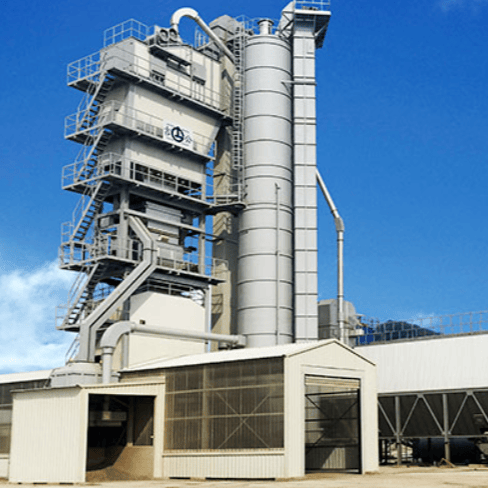

LBH4000 Batch Environmental Protection Asphalt Mixing Plant | Asphalt Batching Plant | Asphalt Mixing Plant
Jilin Province Road Construction Machinery Co., Ltd.
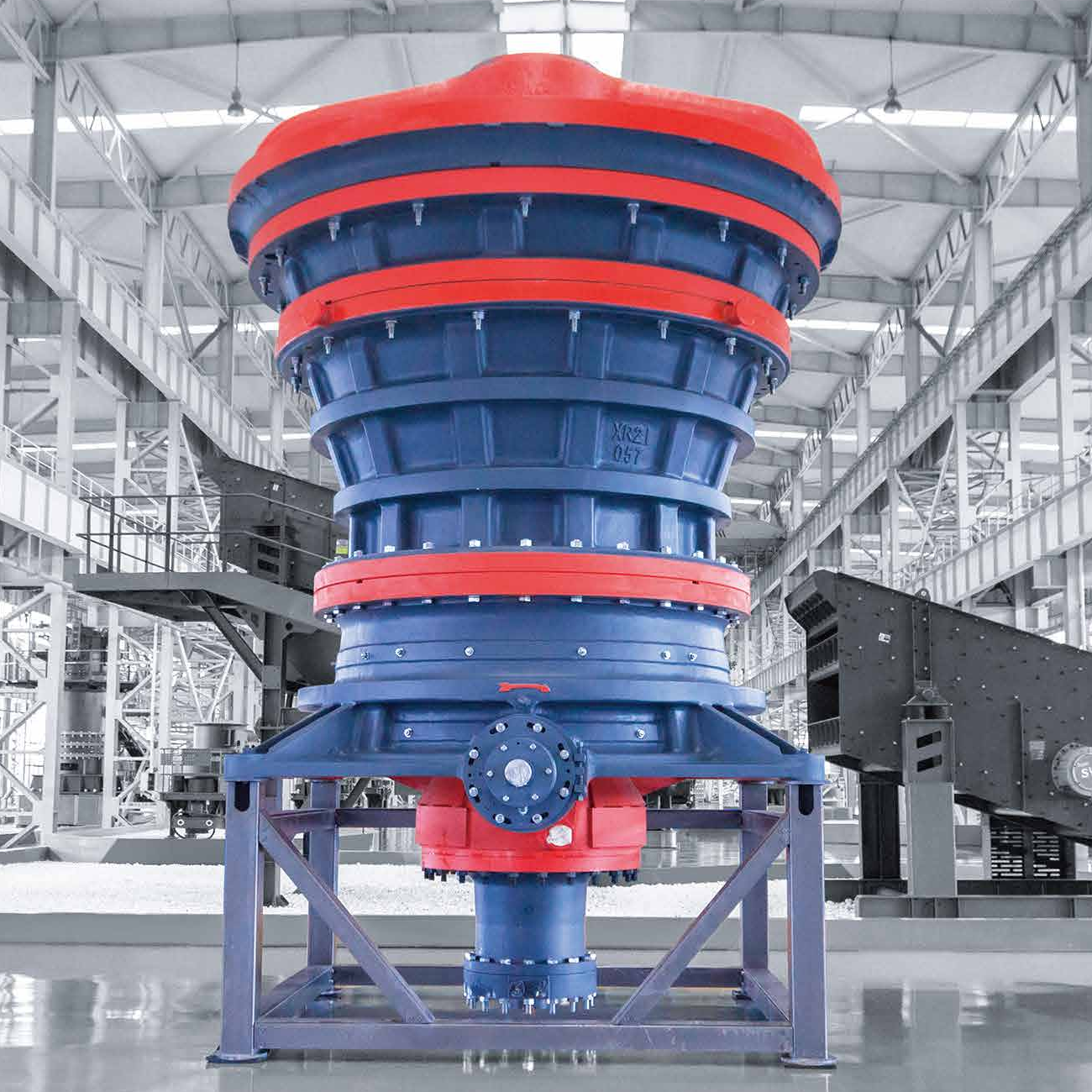
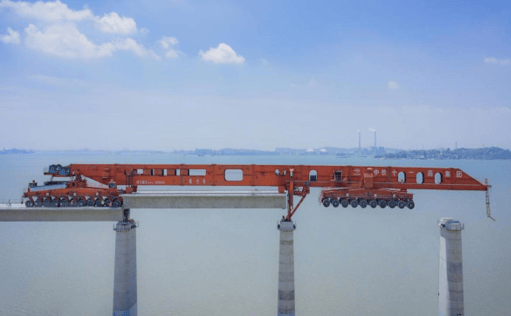
High-Speed Railway Lifting, Transporting, and Erecting Equipment: Integrated Transport and Erection Machine
Hanjiang Heavy Industry Co., Ltd. of China Railway 11th Bureau Group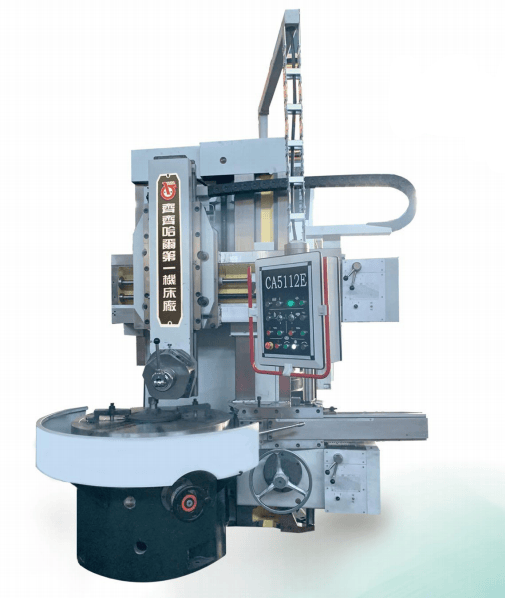
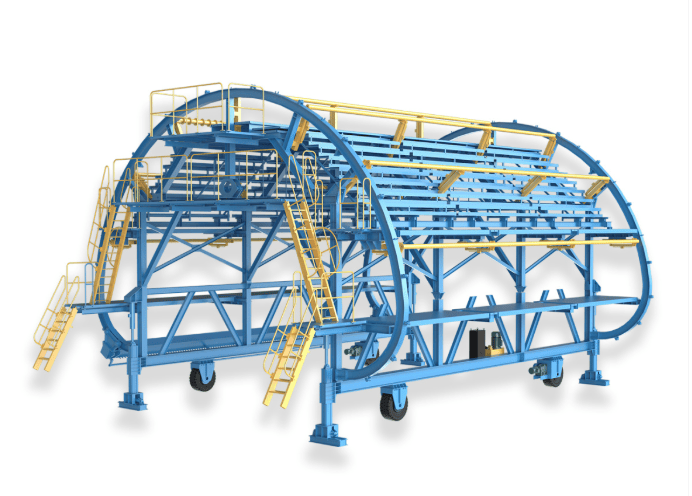
QLZNGJ Intelligent Steel Reinforcement Trolley
Luoyang China Railway Qiangli Machinery Co., Ltd.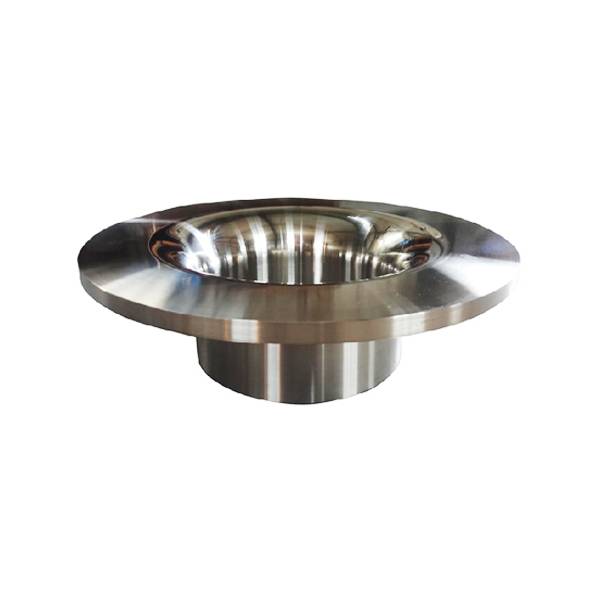
Standard Nozzle Flowmeter
Jinggong Automatic Control Instrument Complete Technology Development Company