Six U.S. Airports Spend Billions on Terminal Upgrades
en.Wedoany.com Reported - The competitive edge of major hub airports is being challenged by smaller and mid-sized airports. With surging passenger numbers and aging infrastructure, several previously overlooked regional airports across the United States are launching multi-billion-dollar terminal modernization projects. Estimated national capital development deficits for U.S. airports stand at $151 billion, prompting six airports in the American heartland to break ground. Below is a breakdown of the most notable projects based on total construction spending, gate capacity expansion, and estimated completion timelines.
6 Sacramento International Airport (SMF) – $1.3 billion investment.
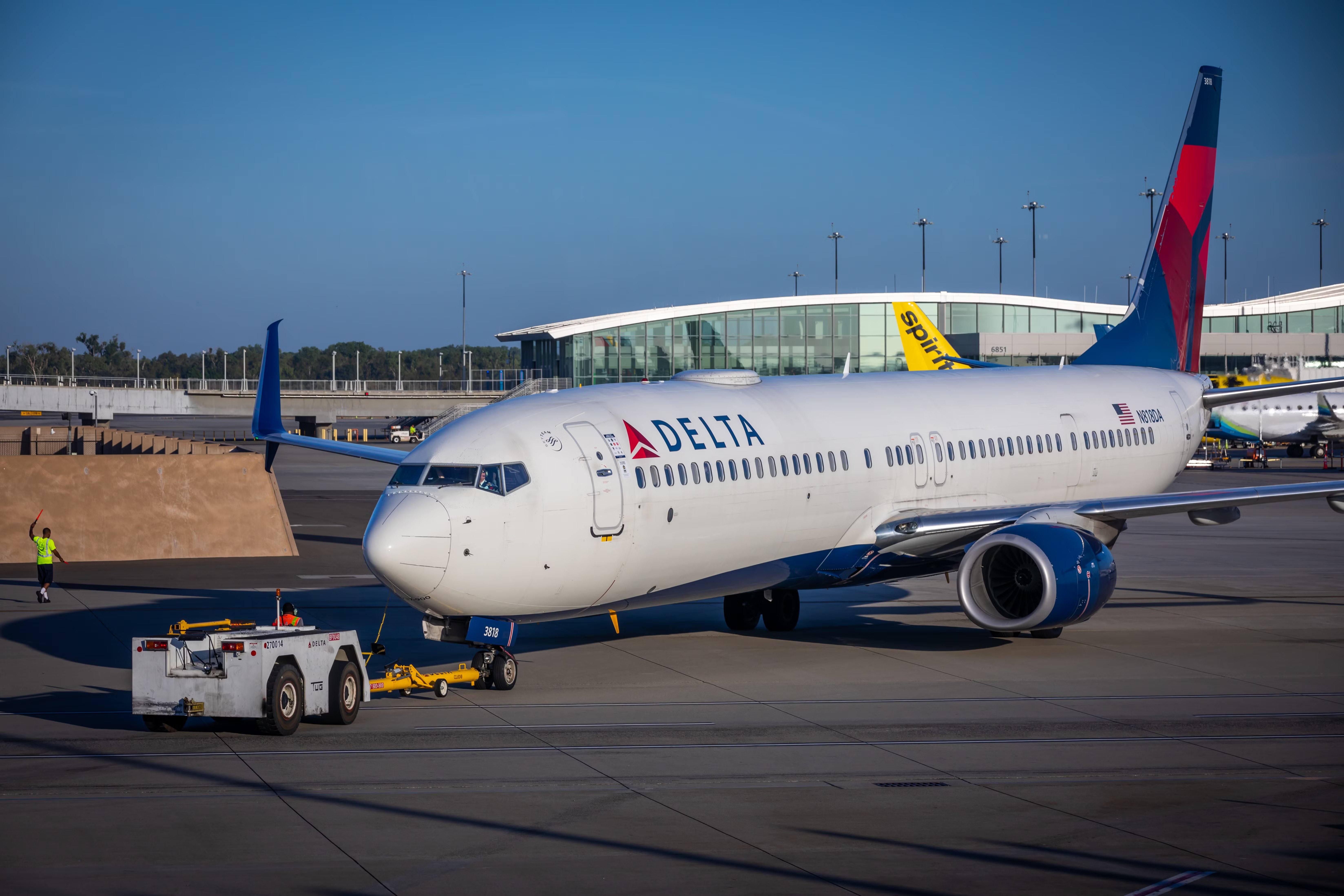
Sacramento International Airport is implementing a $1.3 billion SMForward modernization plan to address record regional travel demand. This five-year master plan aims to reshape the Northern California travel experience without relying on local taxes. A key component of the transformation is a new $140 million pedestrian walkway connecting the terminal complex. This elevated skybridge, spanning 87,400 square feet (8,119 square meters) and featuring moving walkways, is set for completion in mid-2026 and will ensure terminal accessibility during automated shuttle system maintenance. The project also includes expansion of Concourse B (adding six narrow-body gates and expanding the ticketing area, completed by early 2029), a B Terminal parking garage (a six-story structure adding 5,500 spaces, completed by end of 2026), and a consolidated rental car center (aimed at eliminating the need for passenger shuttle bus networks, completed by end of 2027).
5 Tampa International Airport (TPA) – $1.5 billion investment.
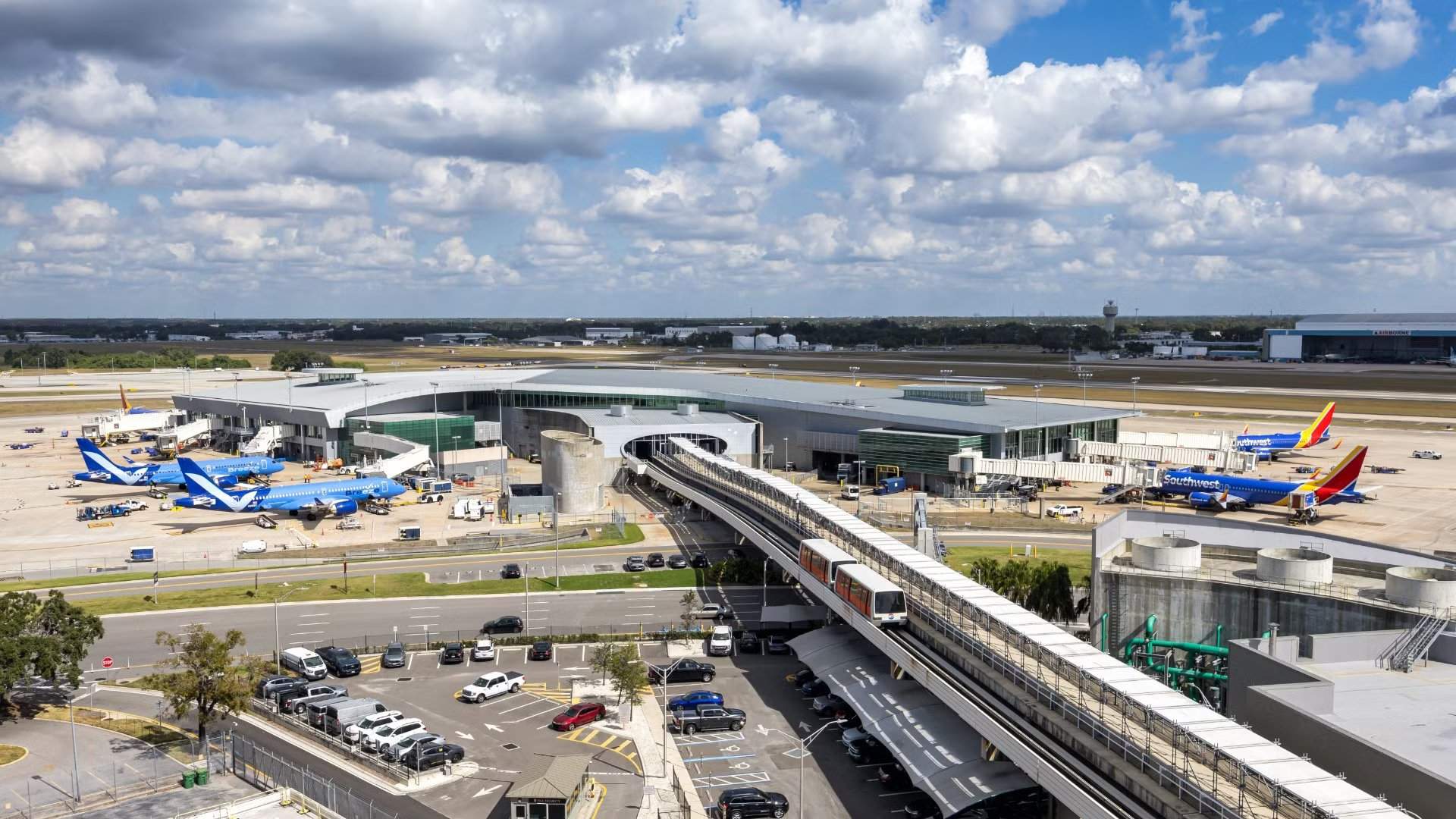
Tampa International Airport is nearing completion of the crown jewel of its long-term master plan—the new Airside D terminal, a $1.5 billion project. The expanded terminal spans 600,000 square feet (55,741 square meters) with a two-level layout, featuring a vast central mezzanine housing two premium airline lounges and local dining options, along with a dedicated Customs and Border Protection hub to expedite international arrivals. The project will boost the airport's annual passenger capacity to 35 million, expected by 2037. The new terminal includes 16 domestic and international gates capable of accommodating aircraft from narrow-body to wide-body models. Construction is led by Hensel Phelps, HNTB, and Gensler, with an official opening expected in 2028.
4 Pittsburgh International Airport (PIT) – $1.7 billion investment.
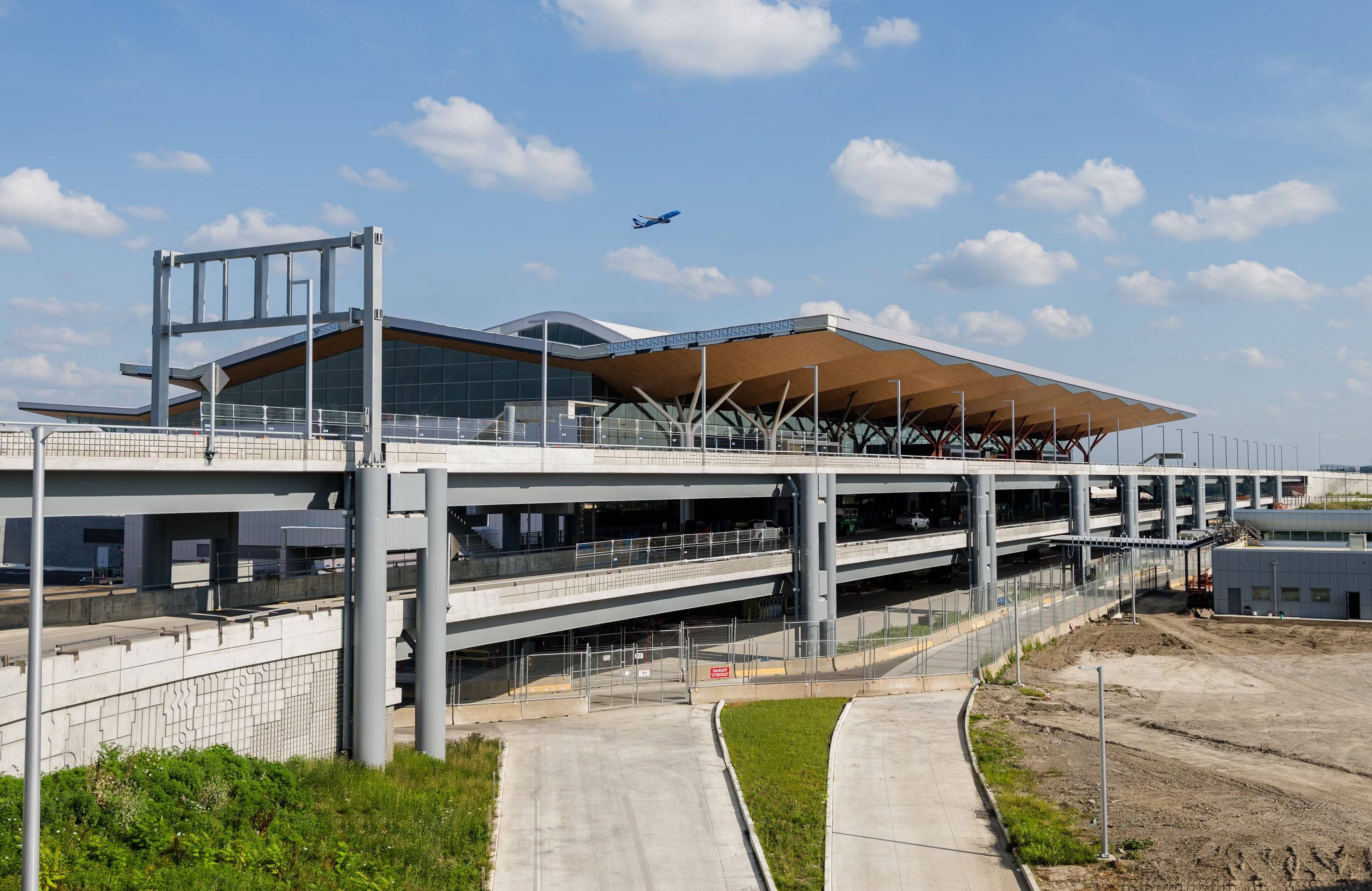
Pittsburgh International Airport's terminal modernization plan, costing $1.7 billion, opened on November 18, 2025. Designed with assistance from Gensler, HDR, and Luis Vidal + architects, the project consolidates facilities into a single 811,000-square-foot (75,344-square-meter) landside terminal, eliminating the need for an expensive, outdated automated people mover system. Built by a joint venture of PJ Dick, Hunt, and Turner, the building operates on an independent solar and natural gas microgrid and has achieved LEED Gold certification. The interior features tree-like structural steel columns and 4,000 integrated constellation lights simulating the local night sky. Passengers access airside gates via a 1,300-foot (396-meter) two-level pedestrian skybridge, and a consolidated 12-lane security checkpoint effectively reduces wait times.
3 John Glenn Columbus International Airport (CMH) – $2 billion investment.
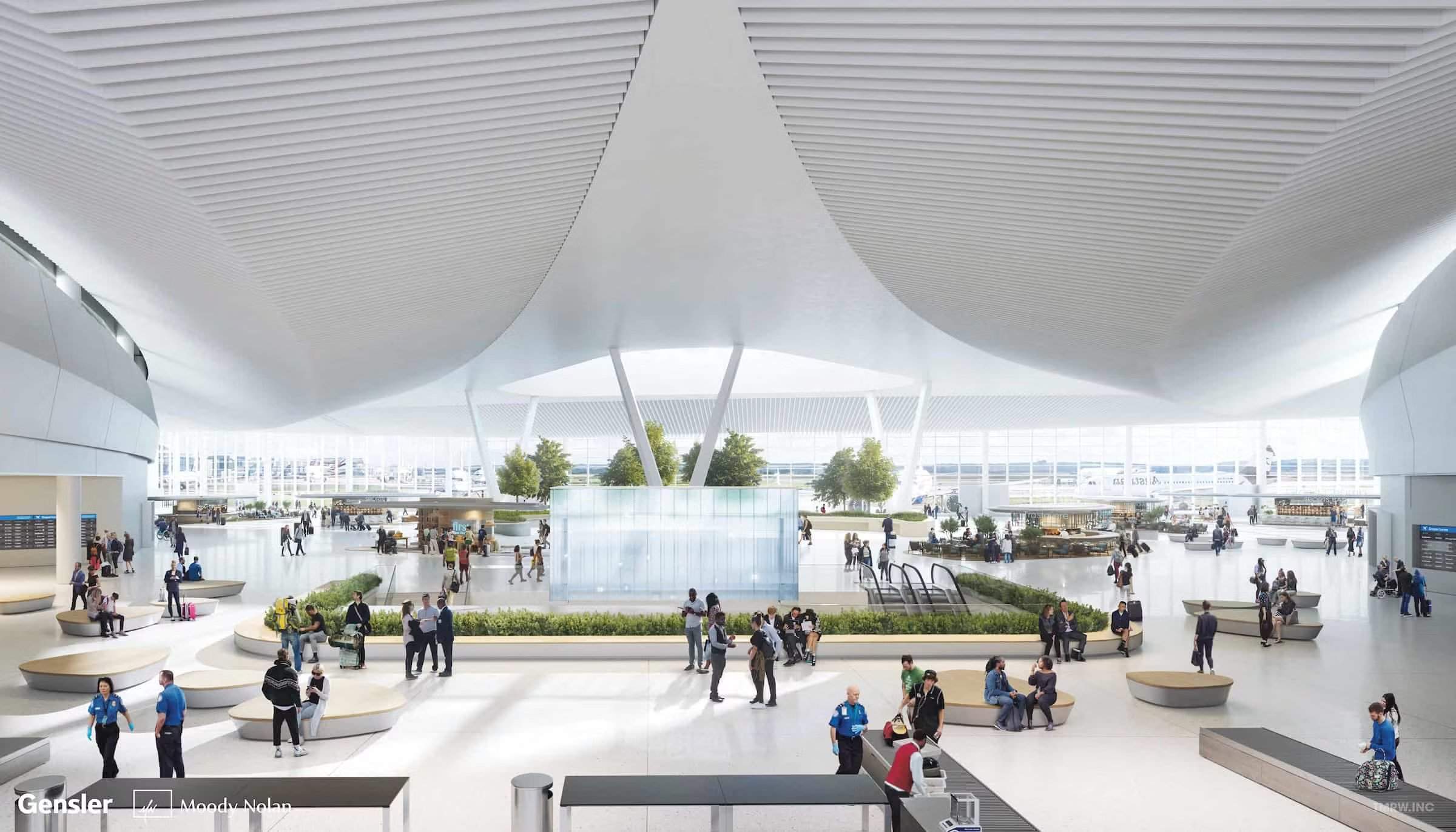
John Glenn Columbus International Airport is constructing a new $2 billion terminal to replace its outdated 1958 facility. The new complex spans 1 million square feet (92,903 square meters), built by construction management firm Hensel Phelps in partnership with Elford, and designed by architecture firms Gensler and Moody Nolan. The project is scheduled for completion in 2029, marking the airport's 100th anniversary. The terminal features a massive 74-foot (22.5-meter) cantilevered exterior canopy and replaces three dispersed security checkpoints with a consolidated one inside. The goal is to expand annual throughput capacity to 13 million passengers. The complex includes 36 standardized gates and a 5,000-space parking garage connected by a covered bridge, funded primarily through federal grants and over $200 million in pre-accumulated operating reserves, without increasing local taxes.
2 San Antonio International Airport (SAT) – $2.5 billion investment.
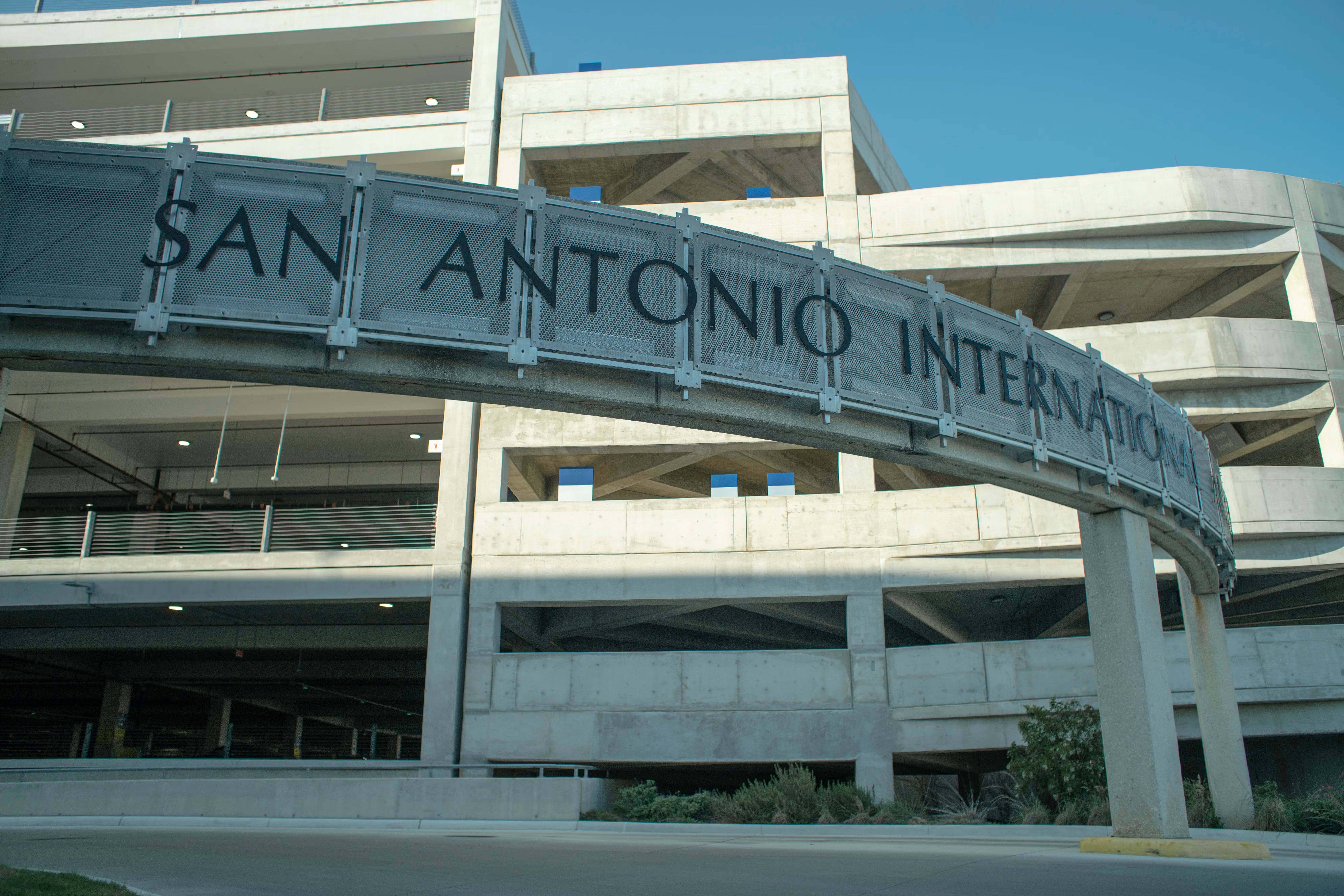
San Antonio International Airport is advancing a $2.5 billion expansion plan, expected to be completed in 2028. The core of the project is a new Terminal C, designed to capture a share of the lucrative international market, adding 17 high-capacity gates with a total capital budget of $2.5 billion. This investment is the largest infrastructure investment in the city's history. For comparison, New York's JFK Airport Terminal 6 has a baseline budget of $4.2 billion but adds only 10 gates. San Antonio's expansion will significantly increase daily flight operations for major domestic and international airlines, introducing advanced baggage handling technology and spacious check-in areas to minimize congestion.
1 Nashville International Airport (BNA) – $3 billion investment.
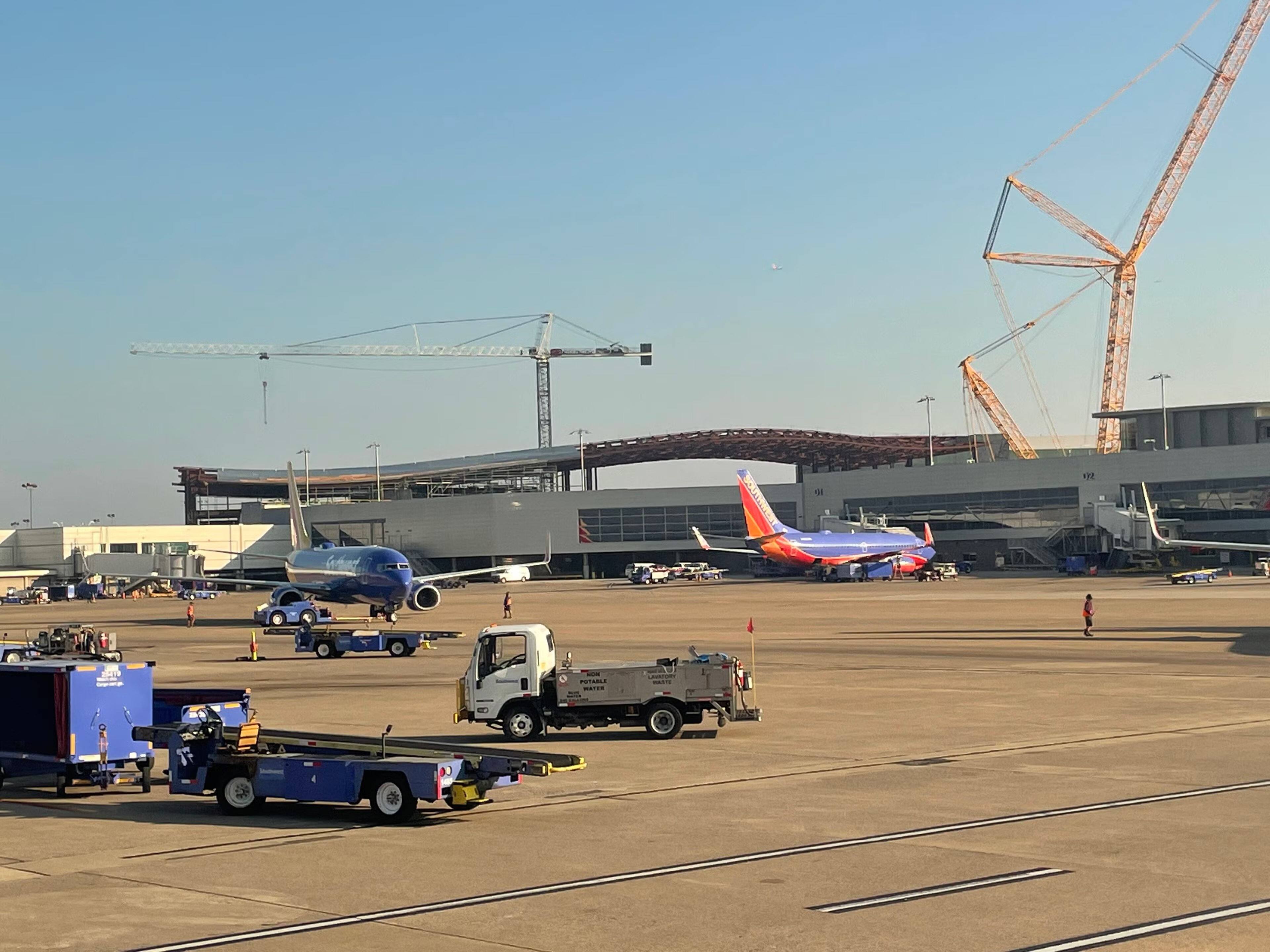
Nashville International Airport has launched its second large-scale infrastructure campaign since 2017, named "New Horizon," with a $3 billion budget. This comprehensive capital plan aims to boost annual passenger capacity to 40 million, targeting a spot among the top 20 busiest U.S. airports. Key milestones include the complete demolition and full reconstruction of Concourse A facilities, a 374,000-square-foot (34,745-square-meter) structure expected to be completed by the end of 2027. Additionally, a 3-mile (4.8-kilometer) central baggage handling system will be operational by mid-2027. Terminal access roads will undergo multi-lane improvements to achieve Level of Service C, planned for completion by the end of 2029. For ground transportation, a six-story transit hub with a 3,000-space parking structure will be built. The airport has approved early completion incentives of up to $6 million to accelerate progress. The entire project is planned to be phased through completion in 2029.
Related Products


ERW Welded Pipe (Black Pipe and Hot-dip Galvanized Steel Pipe)
Handan Zhengda Steel Pipe Co., Ltd.
Explosion-proof lithium battery dispatching monorail crane locomotive (permanent magnet frequency conversion integrated machine)
Xiangtan Hengxin Industrial Co., Ltd.


Wheel and Track Technology Business
Beijing Research & Design Institute of Rubber Industry Co., Ltd.