UK Ministry of Housing, Communities and Local Government and ISPA September Reforms Boost Fibre Deployment
en.Wedoany.com Reported - The UK Ministry of Housing, Communities and Local Government (MHCLG) and the Internet Services Providers' Association (ISPA) have recently announced a series of reforms aimed at addressing approval process issues with the Building Safety Regulator (BSR) in England. This process had previously caused significant delays and cost increases for broadband and mobile operators deploying full-fibre networks in large buildings such as multi-dwelling units.

The House of Lords Industry and Regulators Committee noted in late 2025 that delays in the BSR's update process for minor works had created difficulties for network operators and driven up costs. Several network operators have slowed or paused related broadband deployments as a result. The UK government previously described this issue as an "unintended consequence" of early reforms in 2023. The UK's £5 billion "Project Gigabit" aims to extend gigabit broadband coverage to approximately 99% of UK premises by 2032, with around 91% currently able to access such networks. Ofcom predicts this figure will reach 95% by January 2029.
In response, the MHCLG launched a consultation in January 2026 on "Improving proportionality and safety outcomes in building control for telecoms works," aiming to introduce changes to building works processes related to fibre optic cable installation and mobile base stations. The consultation stated that current rules may be unreasonable and disproportionate, diverting direct regulatory resources from higher-risk types of building work.
The announced reforms grant special exemptions for certain types of works involved in deploying new digital infrastructure in existing buildings. New directions issued under Section 11 of the Building Act 1984 exempt the following three categories of building works from certain procedural requirements of building regulations: building works consisting solely of installing a mobile communications base station and its necessary ancillary connections on the roof of an existing high-risk building, exempted from requirements under Section 11(1) and Section 40(2)(e) of the Building (Higher-Risk Building Procedures) (England) Regulations 2023; building works consisting solely of drilling holes of 25 millimetres or less in diameter in internal or external walls within an existing high-risk building for the installation of fibre optic cables, exempted from requirements under Section 11(1) and Section 40 of those Regulations; and building works consisting solely of drilling holes of 25 millimetres or less in diameter in internal or external walls within an existing non-high-risk building for the installation of fibre optic cables, exempted from requirements under Section 12 and Section 17 of the Building Regulations 2010.
For building works related to mobile communications base stations on the roofs of existing high-risk buildings, the exemption applies only to base stations installed on the roof, not to those installed on external walls. For building works involving drilling holes for fibre optic cable installation, the exemption applies only to holes passing through walls, not to holes passing through floors or ceilings.
These exemptions are planned to come into effect on 1 September 2026. The exemptions for fibre optic cables have a three-year time limit, while those for mobile base stations have no time limit. The exemptions are subject to various conditions, including the use of appropriate fire-stopping, waterproofing, and soundproofing measures. Installers must be appropriately trained and have obtained prior written approval for the works. All materials and products used must also comply with relevant product standards. For works involving drilling holes for fibre optic cables in high-risk buildings, the contractor must notify the BSR as soon as reasonably practicable after the works are completed.
Andrew Kernahan, Head of Public Affairs at ISPA UK, stated that this exemption enables members to accelerate the rollout of much-needed infrastructure upgrades. These works will continue to be carried out in accordance with building safety regulations, strict fire safety measures, and established industry standards. Connectivity is essential for daily life, with 72% of people stating it is important for internet providers to continue investing in infrastructure upgrades. The industry is working towards the government's goal of achieving nationwide gigabit broadband coverage by 2032.
Related Products


Hot Selling 10 Inch Intel N5100 I5 I7 FHD 8 +128GB 16+256GB Win10 Pro Win11 Pro 4G 5G Rugged Tablet PC Pad with NFC Barcode
Highton Electronics Co., Ltd.
GYTA Type Non-Self-Supporting Aerial/Duct Optical Cable
TONGDING INTERCONNECTION INFORMATION CO., LTD.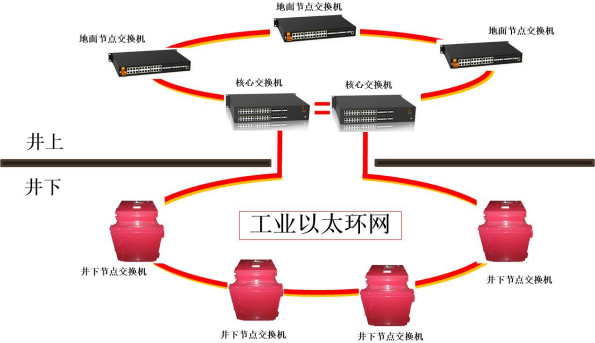
Mine Explosion-proof and Intrinsically Safe Industrial Ethernet Ring Network (10 Gigabit/Gigabit)
Chongqing Mas Sci&Tech Co., Ltd.



Multi-function Marine Monitoring Low-altitude Detection Radar Sea-air Boundary Ocean Dynamic Environment Measurement
Chengdu Dixin Technology Co., Ltd.

Automatic Aiming Laser Remote Obstacle Removal Robot
Pinggao Group Weihai High-Voltage Apparatus Co., Ltd.
Conveyor Belt Intelligent Monitoring System
LUO YANG WIRE ROPE INSPECTION TECHNOLOGY CO., LTD.