Beijing Issues Tender Plan for Vehicle-Road-Cloud Integrated Infrastructure with Estimated Investment of 835 Million Yuan
en.Wedoany.com Reported - The scale of Beijing's "Vehicle-Road-Cloud Integration" new infrastructure construction has further expanded. The Beijing Public Resources Trading Service Platform has issued a tender plan involving the "Vehicle-Road-Cloud Integration" new infrastructure construction projects in Miyun District, Huairou District, Mentougou District, Daxing District, and Fangshan District, with an estimated investment of 835 million yuan and a construction scale of 630 square kilometers. The tender announcement is expected to be released on August 6, 2026. Previously, Dongcheng District, Xicheng District, Shunyi District, Tongzhou District, Changping District, and Haidian District have also released relevant bidding documents.
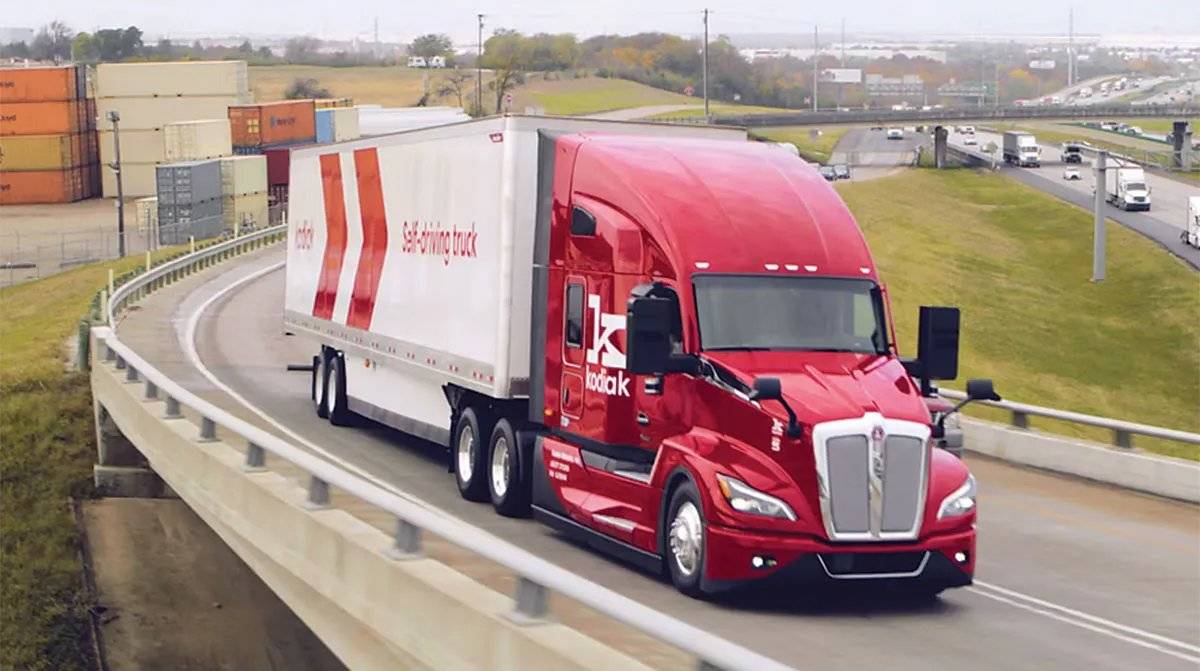
Vehicle-Road-Cloud Integration refers to the realization of information exchange between vehicles, roadside equipment, and cloud platforms through vehicle-road communication technology, achieving comprehensive interconnection among people, vehicles, roads, and clouds. It is the core technology foundation for high-level autonomous driving transitioning from single-vehicle intelligence to system intelligence.
Yuan Shuai, Deputy Secretary-General of the Zhongguancun Internet of Things Industry Alliance, stated that Beijing's promotion of Vehicle-Road-Cloud Integration construction in multiple districts aims to accumulate full-scenario adaptable samples for nationwide implementation. Beijing's benchmark effect will drive other pilot cities to accelerate their construction pace, avoiding detours in technical routes and equipment standards, thereby reducing trial-and-error costs across the industry.
In addition to Beijing, multiple cities are also advancing similar construction. The Chongqing Municipal Economic and Information Technology Commission has drafted the "Chongqing Intelligent Connected New Energy Automotive Industry Chain 'Yu Chain Smart Engine' Action Plan (2025–2027)," proposing the establishment of a roadside infrastructure system with full coverage, diverse technologies, unified standards, and reliable services. In Shiyan City, Hubei Province, the first Vehicle-Road-Cloud Integration—Smart Logistics Application Platform, along with the Dongfeng Logistics (Shiyan) Co., Ltd. Digital Dispatch Center, has been initially completed.
Industry insiders point out that the pilot construction of Vehicle-Road-Cloud Integration has achieved significant results, with various regions accumulating replicable experiences. Some cities have prioritized deploying Vehicle-Road-Cloud systems in closed or semi-closed scenarios such as industrial parks, ports, and mining areas, quickly achieving commercial cost recovery. Other cities have adopted a government-enterprise co-construction model, where the government leads the construction of the infrastructure foundation, while operators and technology companies participate in subsequent operations, reducing fiscal pressure and motivating enterprises to iterate technologies.
The pilot cities for intelligent connected vehicle "Vehicle-Road-Cloud Integration" applications were announced in July 2024. As the first batch of pilots enters its final phase, the industry is transitioning from construction to operation. Zhang Xiang, a visiting professor at Huanghe Science and Technology College, believes that achieving nationwide Vehicle-Road-Cloud coverage still requires substantial capital investment, and the industry has yet to form a complete commercial loop. The core issue lies in the immaturity of underlying technologies such as autonomous driving, insufficient conditions for full-scenario commercial deployment, and a lack of stable revenue sources for projects.
Technical route competition has also intensified industry development resistance. Cui Dongshu, Secretary-General of the China Passenger Car Association's Market Information Joint Committee, stated that the current industry technical route is ambiguous, with long-term competition between "road-centric" and "vehicle-centric" approaches. Inconsistent equipment standards across regions have led to prominent issues of duplicate investment. Roadside infrastructure assets require large investments with long return cycles, putting pressure on local finances. The industry will inevitably shift toward lightweight, low-cost adjustments in the future.
Despite these pain points, the broad market prospects continue to attract industrial capital. A report titled "Vehicle-Road-Cloud Integrated Intelligent Connected Vehicle Industry Output Value Increment Forecast," jointly compiled by the China Society of Automotive Engineers and the National Innovation Center of Intelligent and Connected Vehicles, shows that under a neutral expectation scenario, the incremental output value of the Vehicle-Road-Cloud integrated intelligent connected vehicle industry is expected to reach 729.5 billion yuan in 2025 and 2.5825 trillion yuan in 2030.
Listed companies are actively seizing industry development opportunities. Beijing E-Hualu Information Technology Co., Ltd. stated that it will actively participate in the bidding for Beijing's Vehicle-Road-Cloud Integration projects, believing that the construction opens up incremental market opportunities for the industry, helping to expand sales of self-developed products and create benchmark projects. A relevant person in charge of Beijing Wanji Technology Co., Ltd. said that the company has deeply participated in the construction of pilot city projects in Jinan, Hangzhou, Chengdu, and Wuxi, implementing over a hundred standardized application scenarios and verifying the transformation path from technical solutions to commercial value. The person suggested adopting a "scenario-first, build roads on demand" construction model, changing the approach of "deploying equipment first, then finding scenarios," while opening up roadside perception data service interfaces to provide standardized perception subscription services for automakers and mobility platforms, exploring diversified commercial operation models.
Beijing Haohan Data Technology Co., Ltd. has built a comprehensive "cloud-network-end" vehicle network security protection system. A relevant person in charge of the company stated that the company has developed a series of security products and solutions tailored to vehicle network scenarios, established cooperation with multiple automakers and transportation operators, and actively participated in the formulation of Vehicle-Road-Cloud Integration security standards to enhance industry influence.





![IVECO Cash-in-Transit [DMT5048XYCL3-AM] - Chongqing Dima Industry Co., Ltd](https://img.wedoany.com/2026/0911/20260911030157582.png)