Aduna Partners with Three Major US Carriers to Deploy Network Authentication Service
en.Wedoany.com Reported - Aduna, a US network service platform, is collaborating with AT&T, T-Mobile, and Verizon to deploy the Number Verification solution. This solution leverages the existing mobile network infrastructure of the three carriers to confirm in real-time whether a user's phone number matches the currently used phone and SIM card. The solution embeds identity authentication capabilities directly into the carrier networks, allowing enterprises and developers to access verification services covering the three major US mobile networks after a single integration, reducing reliance on SMS one-time passwords.
SMS verification codes have long been used by banks, e-commerce platforms, social media, and various digital applications for login, payment, and account operation verification. However, the authentication chain involves multiple steps including SMS generation, network transmission, terminal reception, and user input. Phishing websites can trick users into submitting verification codes, SIM swapping may allow attackers to take over a victim's phone number, and social engineering attacks can bypass customer service and account recovery processes. As artificial intelligence is used to generate fake identity documents, simulate communication styles, and scale automated attacks, authentication mechanisms relying solely on "receiving an SMS proves it's you" are no longer sufficient to cover new risks.
Number Verification no longer sends verification codes to users. Instead, it initiates verification requests to carriers through standardized network interfaces. Carriers return verification results based on the number, device, and SIM card status within the mobile network, allowing the application system to determine whether the current operation originates from the device actually bound to that number. The entire process can be completed in the background; users do not need to wait for SMS, copy codes, or switch applications. The authentication step shifts from manual front-end input to real-time network-side verification.
The key to this architecture is that the authentication basis is no longer just the user's ability to access a specific SMS, but the real-time connection relationship held by the carrier network. For scenarios involving man-in-the-middle attacks, SMS interception, and some account takeovers, even if attackers obtain the user's password, it is difficult for them to complete identity confirmation using only intercepted verification codes. Enterprises can also combine network verification with device information, login behavior, and risk control systems to impose stricter judgment conditions for high-risk operations.
Aduna stated that US consumers reported losses of $15.9 billion from digital fraud over the past year, and artificial intelligence is making cybercrime methods more sophisticated. The company views mobile phone numbers as foundational credentials for digital identity confirmation and aims to transform number verification into a basic capability directly accessible by banks, retailers, internet platforms, and public service institutions through carrier networks. Aduna CEO Anthony Bartolo stated that real-time network authentication can reduce fraud risk while minimizing user steps, preventing login interruptions caused by SMS delays, expired verification codes, or input errors.
Another key focus of this deployment is unifying the previously independent network capabilities of the three carriers into a single external interface. In the past, if enterprises wanted to separately access the verification capabilities of AT&T, T-Mobile, and Verizon, they might have had to deal with different technical specifications, business processes, and system configurations. Through the Aduna platform, developers can use a unified method to call network authentication services, ensuring a consistent experience for applications across users of different carriers. For large platforms serving users nationwide, this cross-carrier integration can reduce duplicate development and ongoing maintenance costs.
AT&T believes that standardized application programming interfaces can transform telecom networks from basic connectivity infrastructure into digital security service platforms. T-Mobile stated that it already uses network-based authentication in its own products and is now further opening this capability to enterprises and developers, potentially replacing SMS codes that are susceptible to interception. Verizon noted that new fraud patterns require identity verification technologies to enhance protection without significantly increasing the operational burden on users.
Number Verification is part of the network API ecosystem, such as the GSMA Open Gateway initiative. This ecosystem attempts to open capabilities like number verification, device location, SIM card status, and other carrier network functions to enterprise applications through unified interfaces. With the network verification capabilities of the three major carriers integrated into the Aduna platform, US mobile networks will no longer only handle voice, SMS, and data transmission but will also begin to directly participate in account login, transaction confirmation, and digital identity authentication.
Subsequent deployment priorities will focus on integrating the interfaces of the three carriers, adapting application systems, ensuring verification response speed, and maintaining stability under high-concurrency scenarios. The actual effectiveness still needs to be validated through banks, e-commerce platforms, digital platforms, and other high-frequency authentication scenarios. This includes assessing whether the relationship between the number and device can be accurately identified, whether roaming or device changes could cause misjudgments, and how enterprises can integrate network verification with their existing risk control systems.
Related Products



TWP16 P-Band Tropospheric Wind Profile Radar
China Huayun Meteorological Technology Group Co., Ltd.

Mine Explosion-proof and Intrinsically Safe Industrial Ethernet Ring Network (10 Gigabit/Gigabit)
Chongqing Mas Sci&Tech Co., Ltd.


MUX Series Communication Interface Device for Security and Stability Control System
Nanjing NR Electric Co., Ltd.
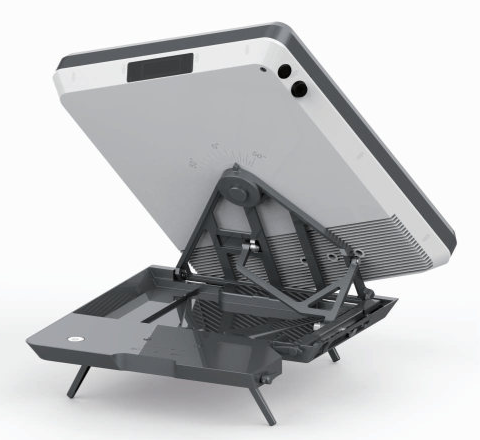
Flat Portable Satellite Terminal 0.35m Aperture Manual Portable Terminal
China Starwin Science & Technology Co., Ltd.