en.Wedoany.com Reported - The EU-funded REACT project is developing a functional electrolytic system that utilizes industrial carbon dioxide waste to produce ethylene, aiming to close the carbon cycle. The project, involving institutions such as the Swiss Federal Laboratories for Materials Science and Technology (Empa), targets the conversion of carbon dioxide into ethylene, a key industrial platform chemical.
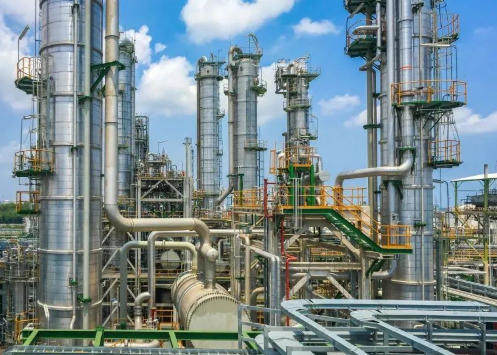
Ethylene is a colorless gas with a sweet odor, used in kitchens as a natural plant hormone to ripen fruit, but industrially it is a crucial platform chemical for manufacturing numerous products, from plastics to pharmaceuticals. Currently, global annual ethylene production exceeds 317 million tons, with over 95% produced through fossil fuel-based steam cracking processes, generating approximately 260 million tons of CO₂ emissions per year. The REACT project (Renewable Electrochemical Advanced Conversion of CO₂ to Target products) aims to transform this carbon-intensive industry by converting industrial emissions into valuable resources.
The project focuses on capturing carbon dioxide from hard-to-abate sectors such as steel, cement, and chemical manufacturing. Through a novel impurity-tolerant tandem electrochemical process, REACT can directly convert low-purity industrial CO₂ streams into valuable chemical mixtures rich in olefins, for sustainable production of polymers, chemicals, and fuels, while significantly reducing the need for costly pre-treatment. Powered by renewable energy, this process transforms otherwise unavoidable CO₂ emissions into feedstocks for next-generation chemicals and materials.
Corsin Battaglia, head of Empa's Laboratory for Materials for Energy Conversion, stated that the team has conducted research on CO₂ electrolysis conversion at the laboratory scale for years, and the goal of the REACT project is to create a functional electrolyzer prototype for CO₂-to-ethylene conversion, advancing its technology readiness level. Battaglia's team will study how impurities in industrial waste CO₂ affect the activity and lifespan of catalysts used in the electrolyzer, relying on a previously developed parallel CO₂ electrolysis reactor whose automated system allows up to ten experiments to be conducted simultaneously.
REACT advances the circular carbon value chain, enhances European industrial autonomy, and contributes to the transition towards climate-neutral chemical production. The project integrates innovative materials, advanced monitoring systems, and digital twin technologies to improve efficiency, durability, scalability, and economic feasibility. Battaglia concluded that the technologies learned during the project will also help advance other CO₂ conversion technologies, such as conversion into synthetic fuels. CO₂ valorization is a core concept of Empa's "Mining the Atmosphere" research initiative, which seeks methods to remove greenhouse gases from the atmosphere and store them long-term or convert them into useful chemicals.
REACT is a "Horizon Europe" project with a 48-month operational period from May 2026 to April 2030, covering the entire value chain from research institutions to raw material suppliers and polymer manufacturers in the packaging industry. The project consortium is coordinated by SINTEF (Norway) and includes 13 partners from 10 countries: VITO (Belgium), Johnson Matthey PLC (UK), eChemicles (Hungary), Procter & Gamble Services Company NV (Belgium), IDENER (Spain), Norner Research AS (Norway), Empa (Switzerland), K1-MET GmbH (Austria), FARPLAS (Turkey), Johnson Matthey Davy Technologies Ltd (UK), Holoss (Portugal), and ETA-Florence Renewable Energies (Italy).