Intel Develops 75 TOPS Space-Grade Chip Starfire for the U.S. Government
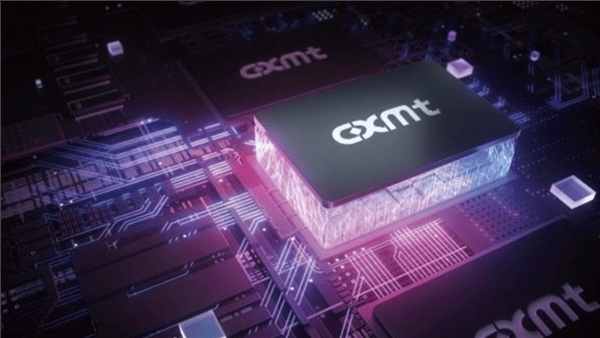
en.Wedoany.com Reported - Intel has unveiled Starfire, a space-grade system-on-a-chip designed specifically for the U.S. government. The chip integrates an eight-core CPU built on the Intel 18A node, a three-tile NPU, and a graphics tile using Intel 3 process technology, all within a single Foveros package. According to Intel's publicly available specifications, Starfire is available in 10-watt and 35-watt versions, delivering 45 TOPS and 75 TOPS of computing power respectively, with an operating temperature range of -55 to 125 degrees Celsius.
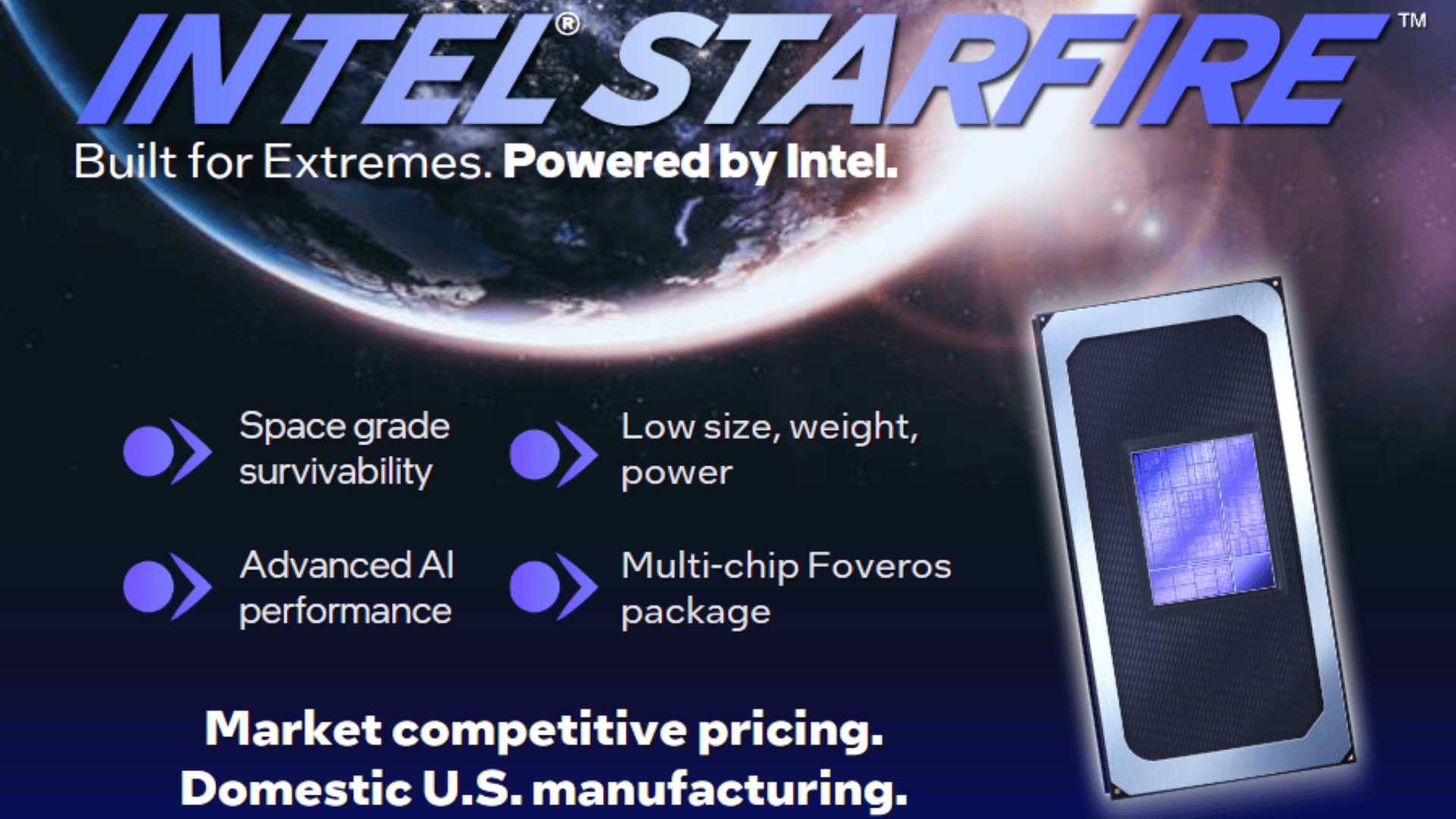
Both chips share the same layout: four Intel 18A P-cores, four low-power efficiency cores, a three-tile NPU also based on the 18A process, and a graphics section based on the Intel 3 process containing four Xe GPU cores (64 execution units). In the low-power version, the P-cores run at 1.0 GHz, the efficiency cores at 850 MHz, and the GPU at 800 MHz to 1.0 GHz. In the high-performance version, the P-cores run at 3.1 GHz, the efficiency cores at 2.1 GHz, and the GPU at 2.0 GHz. Both support 12 PCIe Gen4 lanes, LPDDR5 or DDR5 memory, and have a rated lifespan exceeding 10 years.
The CPU and NPU use the Intel 18A node, while the GPU employs the more mature Intel 3 node, consistent with Intel's node partitioning strategy for Clearwater Forest (288-core Xeon), which stacks 18A compute tiles on Intel 3 base tiles. Since smaller transistors hold less charge per memory bit, advanced silicon is more susceptible to radiation-induced bit flips. Therefore, using the 18A process for space environments relies on the RibbonFET architecture and design-level hardening measures, rather than on mature, more fault-tolerant process nodes.
Starfire targets a market long dominated by BAE Systems' RAD750. According to public information, this radiation-hardened PowerPC chip operates at 110 to 200 MHz, has 10.4 million transistors, and is manufactured using 150nm or 250nm lithography. It has been used in over 150 spacecraft, including Mars rovers, Kepler, and Fermi. BAE's multi-core RAD5545 and processors made by Microchip (which NASA is developing, with throughput potentially 100 times that of current space chips) are more recent upgrades. Starfire's 75 TOPS computing power and dedicated NPU position it in a different tier, targeting on-orbit AI inference rather than traditional telemetry and control.
Intel's published radiation data (covering total ionizing dose, single-event latch-up, and single-event effects) is still in the characterization phase, so the chip has not yet passed radiation certification, and specifications are subject to change. Intel Government Technologies is responsible for the Starfire project, with samples planned for the third quarter of 2026, and promises competitive pricing and domestic U.S. manufacturing. Intel Foundry, as the only domestic advanced logic chip manufacturer with a trusted foundry status, has aligned its 18A process and packaging roadmap with Pentagon programs such as RAMP-C and SHIP, though 18A process yields are not expected to reach industry-standard levels until 2027.
Related Products





Multi-function Marine Monitoring Low-altitude Detection Radar Sea-air Boundary Ocean Dynamic Environment Measurement
Chengdu Dixin Technology Co., Ltd.



MUX Series Communication Interface Device for Security and Stability Control System
Nanjing NR Electric Co., Ltd.
Conveyor Belt Intelligent Monitoring System
LUO YANG WIRE ROPE INSPECTION TECHNOLOGY CO., LTD.