en.Wedoany.com Reported - Researchers at the German Laser Zentrum Hannover (LZH) have successfully used laser welding technology to manufacture glass containers for the safe storage of hazardous waste. With the growing popularity of electric vehicles and the increasing demand for battery material disposal, such containers must meet stringent requirements for environmental protection, safe operation, and long-term stability in Class IV landfills.
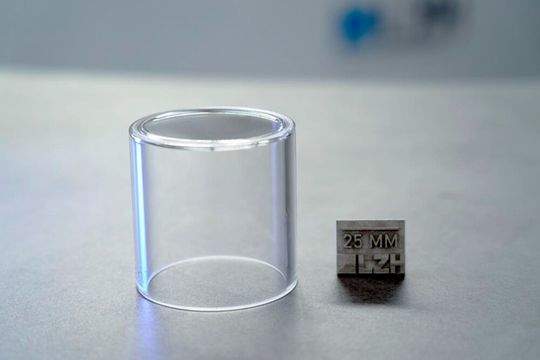
Glass is a promising option due to its chemical inertness and suitability as a thick-walled material for storing hazardous substances. Residual materials stored do not react with the container material, can be easily removed and recycled, which is particularly important for future new recycling methods. However, conventional glass containers are primarily manufactured using hot gas processes, which have limitations such as uncontrolled heat input, high internal stress, and limited automation. In contrast, laser welding offers high processing speeds and excellent automation potential.
The researchers used a CO2 laser as the primary laser source, with a wavelength of 10.6 micrometers and an optical penetration depth of only a few micrometers. Combined with the low thermal conductivity of silicate glass, this laser typically struggles to weld through glass components. However, the researchers demonstrated that using a single CO2 laser source can simultaneously heat both welding partners, thereby producing a sealed glass container. They achieved continuous welds without microcracks or voids across the entire 5 mm thick flat glass. Stress tests after a two-week storage period showed that mechanical strength was maintained despite the heat from the laser beam.
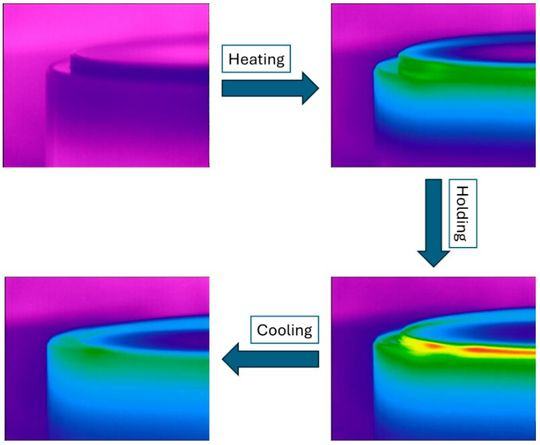
A unique feature of this process is that the container lid automatically falls into the correct position during processing due to gravity, making complex handling systems or clamping devices unnecessary. The researchers are further adjusting the edge geometry of the flat glass, aiming to reduce friction during the welding process and minimize the formation of protrusions and notches at the joints. The project, titled "Novel Manufacturing Technology for the Production of Laser-Welded Glass Hollow Bodies for Storing Residuals" (LasGLaReLa), is supported by the Federal Ministry for Economic Affairs and Energy (BMWi) under funding number VN-KK5111715, with cooperation partners including the TU Bergakademie Freiberg and Glasbiegerei Pfaltz e.K.