German Tool Manufacturer Zecha Develops 0.05 mm Micro PKD Drill
en.Wedoany.com Reported - Precision tool manufacturer Zecha adheres to the "Made in Germany" approach against the backdrop of multiple pressures facing Germany's domestic manufacturing industry, providing innovative tool solutions for industrial challenges through continuous research and development.
Cutting tool specialist Zecha from Königsbach-Stein, a family-owned company rooted in the Northern Black Forest region, has focused on precision manufacturing and technical excellence for over six decades. In 2025, third-generation member Yannik Zecha joined the family business, continuing the company's development alongside his father, Managing Director Stefan Zecha.
The precision tool industry is currently under significant pressure, with raw material prices rising sharply recently, especially for carbide, which is crucial for high-performance tools. Fluctuations in the prices of key starting materials directly impact the cost structures, supply chains, and competitiveness of companies in the sector. At the same time, international competition is intensifying, with companies from other regions, particularly the Far East, often benefiting from lower cost structures and more favorable framework conditions. Zecha's management points out that German and European manufacturers cannot win solely on price; the key lies in improving quality, service life, process reliability, technical consulting, and innovation. When raw materials become more expensive, tool performance becomes even more critical. A tool that is more durable, operates more stably, and reduces waste is ultimately more economical than a cheaper, lower-performance tool.
"Many companies are currently criticizing Germany as a business location," says Stefan Zecha. "This is understandable because the burdens are real. Energy costs, bureaucracy, skilled labor shortages, regulatory requirements, and competitive disadvantages in international markets are not theoretical discussions but daily realities." Despite the difficulties, Zecha remains committed to Germany. He believes Germany still possesses significant advantages: technical knowledge, industrial experience, high-quality training, a strong SME sector, proximity to demanding customers, and a long tradition in mechanical engineering and precision technology.
"But these advantages need to be nurtured; they don't run automatically," emphasizes Stefan Zecha, who also serves as Chairman of the Precision Tools Association within the German Mechanical Engineering Industry Association (VDMA). "We need better framework conditions, more trust in entrepreneurship, less bureaucracy, competitive energy costs, research funding that actually reaches the places where innovation occurs, and technological openness. Furthermore, industrial policy must not be about prematurely excluding entire technologies but must focus on promoting innovation and safeguarding industrial value creation."
Precision tool manufacturers play a central role in the performance of industrial value creation. Without high-precision cutting tools, high-precision products cannot be manufactured. Without the micro-tools produced by Zecha, complex components requiring the strictest tolerances in the micrometer range cannot be produced in fields such as medical and dental technology, the watch industry, tool and die making, micro-cutting, and mechanical engineering. Zecha currently employs 133 people, including engineers, technicians, and specialists in manufacturing, development, quality assurance, and sales.
Zecha specializes in tool solutions for micro-tools, milling tools, and stamping technology, primarily used in mold and tool making, dental and medical technology, stamping die manufacturing, mechanical engineering, jewelry and watchmaking, and micro-cutting. These industries place the highest demands on precision, surface quality, service life, process reliability, and repeat accuracy. The company places great emphasis on research and development, continuously studying new geometries, new tool concepts, and user-specific special tool solutions.
Internationalization is a core component of Zecha's strategy. As early as the late 1990s, the company established and invested in an Indo-German cooperation with Zecha Precision Tools Limited (formerly Dagger Master Tools Limited), located in the Mumbai metropolitan area of India. This company, based in Chhatrapati Sambhajinagar (Aurangabad), focuses on the highest precision micro-drills and employs around 155 people. Zecha believes that its international presence helps secure its German operations by continuing to invest in research, development, and high technology at its home base in Königsbach-Stein. AlienTools, founded in Berlin in 2017, has developed into an important international sales platform, followed by the establishment of AlienTools USA in Tucson, Arizona.
Industry technology trends are partly oriented towards new materials. For example, optimized tool concepts need to be developed for lead-free brass alloys, ceramics, super-hard cutting materials, and hybrid materials. The increasing use of additive manufacturing also requires post-processing, which demands specialized tools. Furthermore, trends towards automation and digitalization require more stable processes, where tools must excel with tighter tolerances, high repeat accuracy, and reliable service life. Zecha addresses requirements such as traceability and process analysis through a lifetime numbering system introduced years ago.
The current global economic situation makes corporate planning more uncertain. Zecha is responding by expanding the "Zecha Innovation Center" at its home base in Königsbach-Stein. This center brings together core future areas such as research and development, application technology, product management, and a modern multimedia training room under one roof, aiming to develop holistic manufacturing solutions and foster dialogue with customers, partners, and employees.
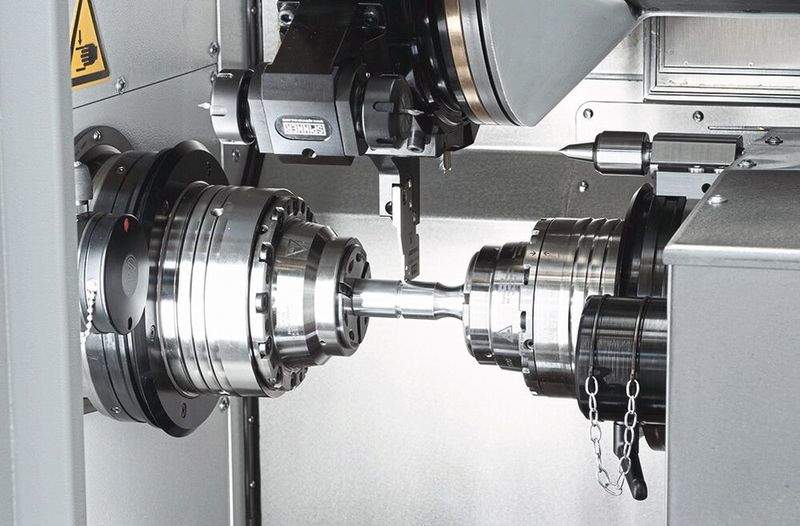
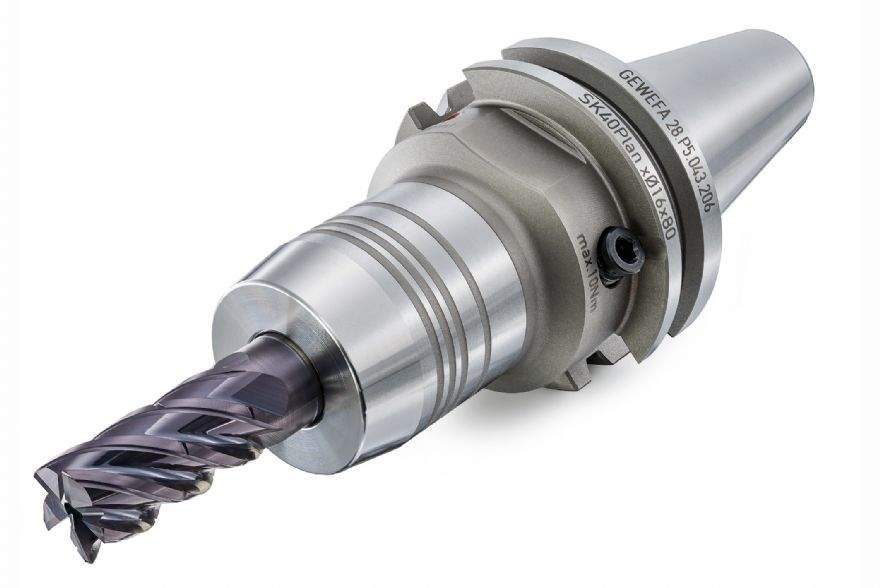
Zecha continuously develops new tool solutions, including the development of laser-sharpened micro-tools and expanding the application of super-hard materials. One example is the new micro PKD drill Marlin/971P Mikro, with sizes ranging from 0.05 to 0.5 millimeters. Using femtosecond lasers, super-hard materials like PKD (polycrystalline diamond) or CBN (cubic boron nitride) can be processed with the highest precision and almost no thermal impact. This technology makes it possible for the first time to economically process PKD and CBN materials in the micro domain, enabling innovative tool geometries that cannot be manufactured using conventional grinding methods, as the result no longer depends on the geometry of the grinding wheel. This technology lays the foundation for manufacturing micro PKD drills with diameters as small as 50 micrometers. Compared to conventional solid carbide tools, the laser-generated cutting edge profile can reduce cutting forces, optimize chip evacuation, and achieve significantly longer service life during the drilling process. These tools are used in fields such as medical technology, precision mechanics, semiconductors, and the jewelry/watch industry, for applications like micro-implants, high-precision flow batteries, or complex 3D contours in zirconia.
Related Products

High-Speed Flexible Fully Automatic Stamping Production Line
JIER Machine-Tool Group Co., Ltd.
Pneumatic high-pressure wear-resistant ball valve
Zhejiang Deca Control Valve Meter Co., Ltd.
High-Speed Railway Lifting, Transporting, and Erecting Equipment: Integrated Transport and Erection Machine
Hanjiang Heavy Industry Co., Ltd. of China Railway 11th Bureau Group
LBH4000 Batch Environmental Protection Asphalt Mixing Plant | Asphalt Batching Plant | Asphalt Mixing Plant
Jilin Province Road Construction Machinery Co., Ltd.
Strip Coating and Plating Production Line Equipment
MCC-SFRE HEAVY INDUSTRY EQUIPMENT CO., LTD.
Standard Nozzle Flowmeter
Jinggong Automatic Control Instrument Complete Technology Development Company
Industrial and Commercial Point-Type Gas Detector
Jinan Benan Technology Development Co., Ltd.
Excavator Bucket Teeth Heat Treatment Production Line
Suzhou Hezhongju Intelligent Equipment Co., Ltd.