China's Industrial Software Pilot Platform Launched in Jinan, the Only Software Platform Among MIIT's Pilot Platforms
en.Wedoany.com Reported - The National AI Application Pilot Base (Industrial Software) recently commenced construction in Jinan, Shandong. Concurrently, the Ministry of Industry and Information Technology (MIIT) published the preliminary list of the second batch of key cultivated pilot platforms, with 111 platforms nationwide selected. In the information technology sector, the "Industrial Software Pilot Platform" is the sole platform listed. This platform aims to solve the "last mile" challenge of transforming domestic industrial software from laboratory achievements to engineering applications, accelerating technological maturity by providing real-world scenario validation and iterative testing environments.
Currently, China's industrial software faces issues such as low product maturity, insufficient large-scale application, and a lack of third-party technical service systems, hindering the industrialization of achievements. Liu Guitang, Deputy Director of the Software Institute under the National Industrial Information Security Development Research Center and Deputy Director of the "Industrial Software Pilot Platform," stated that the platform provides pilot service carriers for the transformation of industrial software in the R&D phase. Through a working mechanism of "scenario traction, model-driven, comprehensive validation, and continuous iteration," it accelerates technological breakthroughs and application of results.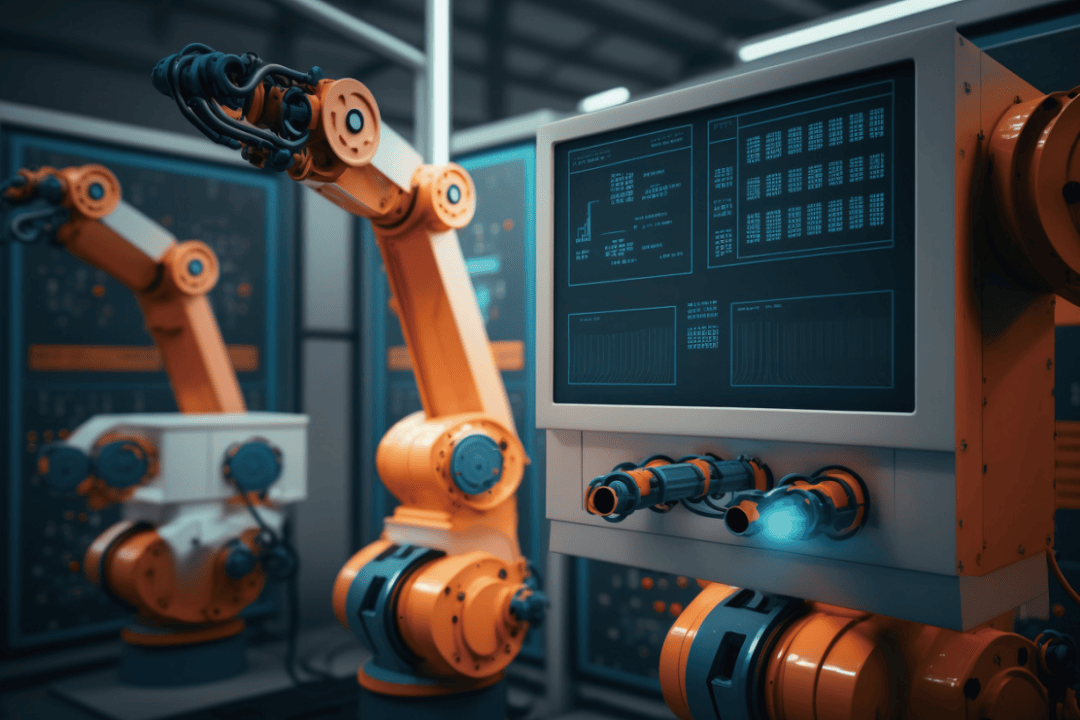
Mei Yue, Professor at the School of Mechanics and Aerospace Engineering, Dalian University of Technology, and Executive Vice President of the Dalian Institute of Industrial Software Innovation and Development, pointed out that the pilot platform offers a new pathway to address the issue of industrial software being "not user-friendly." Its value lies in compensating for the lack of data and scenarios, accelerating the accumulation of validation data by simulating or accessing real industrial scenarios, and shortening the distance between "laboratory results" and "engineering usability." The platform builds a bridge for collaboration among software vendors, application units, and testing platforms, using real-world scenario data to drive software iteration in reverse. Mei Yue also noted that the construction of pilot platforms is still in its early exploratory stage, leaving ample room for differentiated exploration by various regions and industries based on their own characteristics. Given the wide variety of industrial software types, each with different requirements for validation environments, pilot platforms need to possess diverse capabilities.
According to reports, the "Industrial Software Pilot Platform" primarily targets the digital and intelligent transformation needs of high-end equipment manufacturing. It accumulates resources such as application scenario libraries, model libraries, and proprietary software libraries, configures dedicated pilot tools and application systems, and provides comprehensive services including functional and performance validation, reliability validation and enhancement, maturity assessment, integration and adaptation validation, and supply chain resilience and security risk assessment. The platform operates on three dimensions: mechanisms, standards, and technology. It breaks down barriers to the flow of scenarios and data by improving intellectual property protection systems, establishes unified pilot processes and evaluation systems by refining standards and norms, and explores AI empowerment for industrial software piloting by researching specialized large models and intelligent agents to enhance iteration efficiency.
Liu Guitang revealed that the platform has already completed functional, performance, autonomy, and security validation for over 500 software products in fields such as Computer-Aided Design (CAD), Computer-Aided Engineering (CAE), and Electronic Design Automation (EDA) for key industries including aviation, shipbuilding, and electronics. It has formed over 40 sets of optimized multi-software integrated solutions and completed adaptation validation for over 150 software products against mainstream technical routes of domestic CPUs, operating systems, and databases. Domestic industrial software with maturity levels between 5 and 8 can submit for validation, and the platform provides feedback to vendors to help them iterate and improve.
In terms of operational model, the platform adopts a strategy of "first building momentum, then solidifying operations." In the early phase, it invites key software vendors to conduct pilot validation through targeted free services and tiered discounts, creating benchmark cases. In the later phase, it achieves market-based self-sustainability through value-added services such as technical support, result promotion, and consulting training, while collaborating with surrounding industrial platforms to share costs and achieve mutual benefits.
Mei Yue believes that the development of industrial software also requires "deepening the foundation" and "embracing AI" at the technical level. On one hand, it is necessary to address shortcomings in underlying root technologies such as geometric modeling kernels, mesh generation engines, and solver engines, and to persistently tackle fundamental mathematical and physical theories and computational methods. On the other hand, AI technology offers an opportunity for domestic industrial software to "change lanes and overtake." Differentiated advantages can be built by optimizing design processes, enhancing the intelligence level of tool layers, and exploring ways to empower underlying algorithms. However, AI empowerment must be grounded in the mathematical and physical foundation, supported by the dual drivers of "data" and "standards."
From an industrial layout perspective, China's industrial software has initially formed a landscape with multiple types of highlands coexisting. Core city clusters such as Beijing, Shanghai, and Guangzhou host leading companies like Huada Jiutian, Ansys Asia Pacific, Socion, and Zhongwang Software. Shandong, leveraging manufacturing scenarios from Haier, Hisense, and Weichai, has developed a scenario-driven development model. Cities like Shenzhen and Hangzhou have designated "AI + Industrial Software" as a key direction. Mei Yue emphasized that regional clustering is an inherent law of industrial development, and each region must adapt measures to local conditions. For example, Hunan can rely on its engineering machinery and rail transit industries, while Shaanxi can focus on military needs, avoiding homogeneous competition and forming a synergistic and complementary pattern.
Related Products



Industrial and Commercial Point-Type Gas Detector
Jinan Benan Technology Development Co., Ltd.


Comprehensive Mining Automation Control System
Beijing Tianma Intelligent Control Technology Co., Ltd.
Flat Portable Satellite Terminal 0.35m Aperture Manual Portable Terminal
China Starwin Science & Technology Co., Ltd.
G.652.D Wavelength-extended Non-dispersion Shifted Single-mode Optical Fiber
HONGAN GROUP CO., LTD.
MUX Series Communication Interface Device for Security and Stability Control System
Nanjing NR Electric Co., Ltd.

Automatic Aiming Laser Remote Obstacle Removal Robot
Pinggao Group Weihai High-Voltage Apparatus Co., Ltd.