Siemens Germany launches Eigen engineering agent in China, industrial AI enters engineering execution phase
en.Wedoany.com Reported - During the 2026 World Artificial Intelligence Conference, Siemens Germany released the Eigen engineering agent for the Chinese market for the first time, and also showcased the industrial AI orchestration software Intelligence Center X for the first time. The focus of this release is not merely adding two AI software products, but further embedding artificial intelligence into specific processes such as automation engineering, production line control, equipment configuration, experimental R&D, and infrastructure operations, transforming industrial AI from an auxiliary analysis tool into a production system capable of participating in engineering task execution.
Xiao Song, Global Executive Vice President of Siemens Germany, and Chairman, President, and CEO of Siemens China, stated that China's manufacturing sector has a complete range of categories, a deep industrial chain foundation, and a relatively fast pace of technology application. For industrial AI to truly generate productivity, the key is not simply connecting to general-purpose models, but integrating industry knowledge, equipment data, and engineering processes, allowing AI to enter actual production scenarios and gradually expand from single-point applications to large-scale deployment.
The Eigen engineering agent is an AI agent developed by Siemens Germany for industrial automation engineering. Unlike general-purpose AI that can only answer questions or generate text, Eigen can autonomously decompose tasks, plan execution steps, generate control programs, complete system configurations, and verify results based on automation project requirements. Its engineering coverage includes PLC code generation, HMI development, drive parameter configuration, and project configuration support.
In traditional automation projects, engineers need to complete control logic writing, equipment parameter setting, interface development, and system testing separately according to production line requirements, with repeated checks and modifications across different stages. Eigen attempts to connect these scattered tasks into a continuous engineering workflow, enabling AI to generate solutions based on project needs and continuously inspect and optimize during execution. Siemens Germany states that this agent can improve the efficiency of related task execution by 2 to 5 times, increase engineering efficiency by 50%, and improve solution quality by 80%, allowing engineers to devote more time to system architecture, process judgment, and safety decisions.
At the exhibition site, Siemens Germany and China's Beichen Recycling jointly demonstrated a prototype for intelligent battery module disassembly. The equipment is based on the TIA Totally Integrated Automation solution and NX MCD mechanical simulation software, and is connected to the Eigen engineering agent. It can identify different types of battery modules and perform automatic disassembly after manual review.
Waste battery modules vary in structure, connection methods, and internal states, making it difficult for fixed programs alone to adapt to different products. This prototype uses AI recognition, mechanical simulation, human-machine interaction, and automatic control systems to link module identification, disassembly path confirmation, and equipment actions, reducing safety risks from direct human contact with the battery's internal structure. The project is currently displayed as a prototype; whether it can enter large-scale application will require further verification of recognition accuracy, disassembly cycle time, and adaptability to different module structures.
Intelligence Center X, exhibited for the first time in China, handles the unified orchestration and operational management of industrial AI applications. This software integrates an enterprise's internal data, models, and workflows, providing a deployment environment for different AI applications and agents. Its role is not to replace the enterprise's existing production systems, but to connect previously scattered data sources, business processes, and manual tasks, enabling AI to access the information needed on the production floor and participate in handling repetitive work and production issues.
Siemens Germany states that Intelligence Center X has already been applied among the first batch of global enterprise partners, reducing the workload of certain repetitive manual tasks by up to 95% and improving the efficiency of handling production issues by 85%. Whether such software can generate practical value depends on whether the enterprise has a complete data foundation, equipment interfaces, and standardized processes. Only when production equipment, control systems, business software, and personnel operation records can be interconnected can AI agents move from simple Q&A to actual production tasks.
In the life sciences field, Siemens Germany demonstrated a digital laboratory solution that combines data analysis and modeling capabilities with the gPROMS platform for unified management of experimental data, processes, and team collaboration in drug R&D. This solution aims to reduce issues of scattered experimental data and poor process connectivity, with an expected reduction of the overall experimental cycle by approximately 30% and a decrease in early-stage R&D investment by about 20%.
In the consumer goods production field, Siemens Germany showcased the gPROMS process digital twin solution and the industrial AI controller Flamingo. Flamingo uses historical production data and human experience to model key factors affecting product quality and production line stability, and continuously adjusts process parameters based on raw material changes. Currently, this system has been applied in several food companies to improve the production process's adaptability to raw material fluctuations and changing operating conditions.
In automotive manufacturing, Siemens Germany embeds industrial AI into vehicle R&D, production line planning, flexible manufacturing, and quality inspection. During the R&D and design phase, it can use Tecnomatix digital twins, SICAR standardized control, and SIMOVE flexible manufacturing technology to simulate production processes and equipment actions. In the production phase, the Inspekto AI visual quality inspection suite can identify defects in automotive parts, reducing potential missed detections and judgment variations in manual inspection.
Industrial AI is also extending to buildings, campuses, and intelligent computing center infrastructure. The Yicheng Crowne Plaza Hotel in Shanghai, China, has connected the Smart Cooling Cube AI BOX to its chiller plant room automation system. The deployment was completed without affecting normal hotel operations, with a construction period of 3 days, achieving an additional 7% energy savings.
In the zero-carbon factory project of Sichuan CRUN Co., Ltd. in China, the AI-driven Smart ECX platform connects campus energy data and equipment operation systems, reducing campus energy costs by 30%, achieving comprehensive energy efficiency of over 90%, and cumulatively reducing carbon emissions by 64,000 tons since system operation. Its core is not simply predicting energy consumption, but continuously adjusting campus operation modes based on equipment load, energy usage, and production demand.
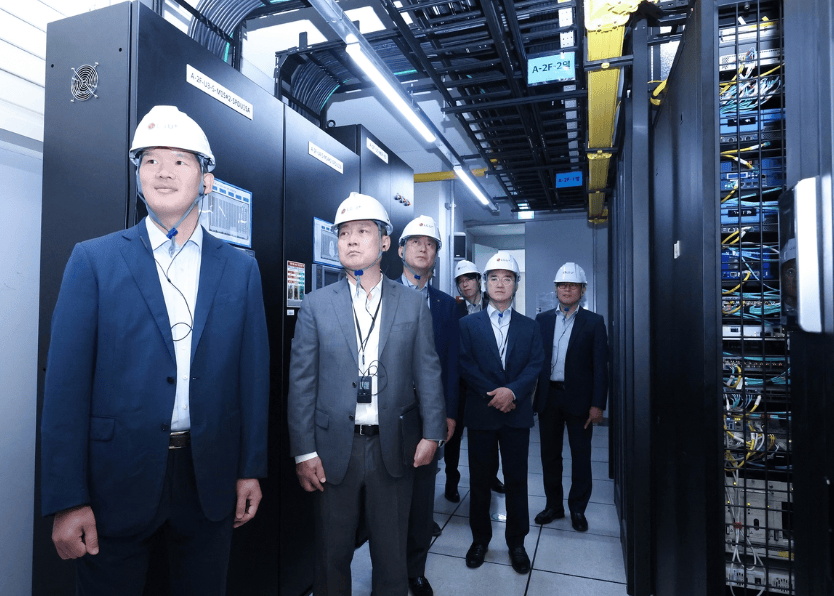
The Ulanqab Zero-Carbon Computing Base of China's CICC Data demonstrates the integration of industrial AI with data center power infrastructure. Siemens Germany provides power distribution equipment such as NXAirS medium-voltage switchgear and SIVACON S8 low-voltage switchgear for this project, ensuring power supply for servers, cooling, and other electromechanical systems. As the power density of intelligent computing centers increases, AI is not only deployed in servers but also used for monitoring and optimizing power, cooling, and energy consumption systems.
The above applications indicate that the implementation of industrial AI is forming two paths: one is to let AI directly participate in PLC programming, equipment configuration, process control, and quality inspection; the other is to connect enterprise data, models, and business processes through a unified platform, enabling different AI agents to operate collaboratively within the production system. The former determines whether individual engineering tasks can be accelerated, while the latter affects whether AI can expand from local pilots to entire production lines and entire campuses.
Currently, Siemens Germany's open digital business platform Xcelerator has over 600,000 registered users and more than 500 ecosystem partners in China, aggregating over 800 products and solutions. On July 18, Siemens Germany will hold the Eigen engineering agent launch event at the Shanghai World Expo Center and officially release the product to the market.
Related Products


CAP1400 main feedwater flow nozzle flowmeter.
Jiangsu Hongda Instrument Technology Co., LTD.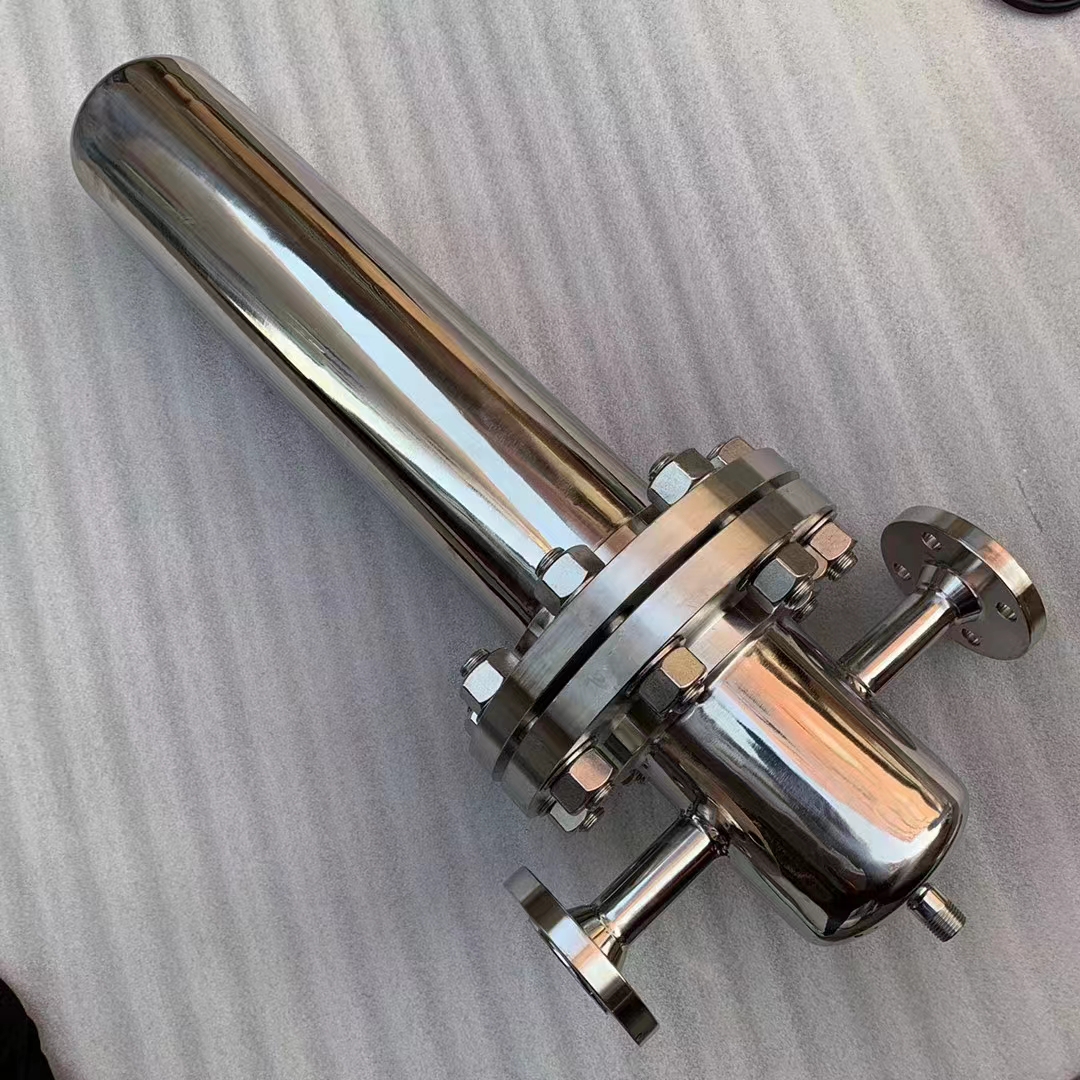
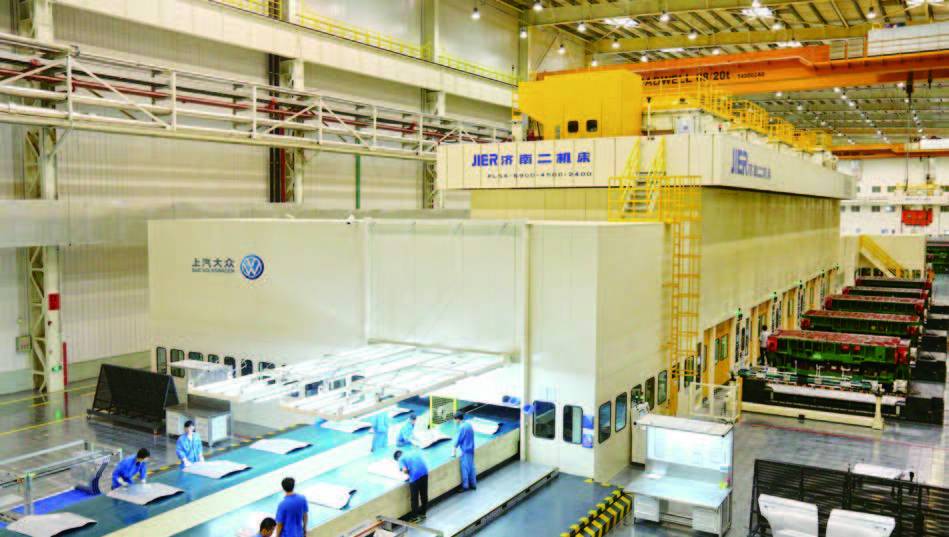
High-Speed Flexible Fully Automatic Stamping Production Line
JIER Machine-Tool Group Co., Ltd.
Strip Coating and Plating Production Line Equipment
MCC-SFRE HEAVY INDUSTRY EQUIPMENT CO., LTD.
Pneumatic high-pressure wear-resistant ball valve
Zhejiang Deca Control Valve Meter Co., Ltd.


Industrial and Commercial Point-Type Gas Detector
Jinan Benan Technology Development Co., Ltd.