Paraguay to Determine Eligibility of Two Operators for 5G Spectrum Tender
en.Wedoany.com Reported - Tigo and Personal are the only two operators participating in Paraguay's second 5G spectrum tender. After submitting applications on July 10, the National Telecommunications Commission (Conatel) confirmed that Telefónica Celular del Paraguay S.A.E. and Núcleo S.A. have submitted bids in Tender No. 01/2026, which aims to allocate 5G spectrum in the 2.3 GHz and 3.5 GHz bands. Conatel will evaluate the applications based on the tender documents and determine next week whether the two operators pass the pre-qualification and the specific allocation mechanism: an auction will be held if the requested frequency bands overlap; otherwise, a simplified procedure will be adopted.
Claro Brasil has launched a network capability called "Quality on Demand" (QoD), allowing applications to request higher quality and stability of mobile connections in real time, suitable for areas such as financial services or telemedicine. The company is the first telecom operator in Latin America to implement this feature on 4G and 5G networks. This capability enables various industries to develop new digital services based on network APIs, while also opening up revenue streams for operators.
Artificial intelligence and hyper-personalization are redefining the guest experience, helping hotels use data to predict needs, personalize services, and optimize operations. Carlos Zenteno, President of Hitss, stated in an interview with DPL News that the industry is advancing the adoption of digital technologies to deliver memorable experiences and build long-term relationships with guests. However, to fully realize the potential, hotels and various organizations must address data fragmentation, as many enterprises still operate with isolated systems, duplicate databases, and platforms that do not exchange information.
A study conducted by Ookla indicates that 5G alone is insufficient to ensure a good experience for artificial intelligence (AI) applications in Brazil. The main issue lies in the connection between operators and cloud providers, where Brazil's median latency ranges from 149.7 milliseconds to 163.6 milliseconds, among the highest in the 22 markets analyzed. The report shows that 5G networks can adequately support text-based and some voice-based AI tools but still fall short in augmented reality and real-time computer vision. Infrastructure is concentrated in São Paulo, and the limited number of direct connections with major cloud providers increase data transmission times. The study emphasizes that factors such as upload speed, latency under load, and cloud connectivity are critical for evaluating networks for generative AI.
Panama's National Public Services Authority is re-discussing the future planning of the 6 GHz band, considering allocating the 5,925 to 6,425 MHz band or the full 5,925 to 7,125 MHz (1200 MHz) band for unlicensed use. Previously, the agency had decided not to modify the allocation plan and to observe global trends; now, it has once again included this topic in strategic discussions on increasing available spectrum for connectivity.
In the analysis of the "Digital T-MEC" series, it is noted that the United States holds a leading position in high-value-added areas of the digital economy, while China has made progress in manufacturing, telecommunications, and electric vehicles. The revision of the T-MEC aims to strengthen the U.S. position in strategic fields. For Mexico, the challenge lies in maintaining balance, as the country attracts record investment driven by nearshoring while also receiving increasing Chinese capital, making the digital chapter of the treaty a key part of the new geopolitical landscape of technology.
Brazil's Chamber of Deputies is reviewing Bill No. 94/26, proposed by Congresswoman Greyce Elias (PL-MG), which seeks to prohibit minors under 16 from using social media, imposing fines of up to 500 million reais on non-compliant platforms. The proposal is seen as strengthening the protective measures in the Digital Statute for Children and Adolescents (ECA Digital). However, the Digital Committee, which brings together platforms such as Google, Meta, TikTok, Discord, Uber, and Amazon, argues that a ban could be counterproductive, potentially increasing fake accounts, shared accounts, and circumvention via VPNs. The entity advocates for implementing digital safety measures already present in the ECA Digital as an alternative, combined with digital education and literacy policies.
Related Products




TWP16 P-Band Tropospheric Wind Profile Radar
China Huayun Meteorological Technology Group Co., Ltd.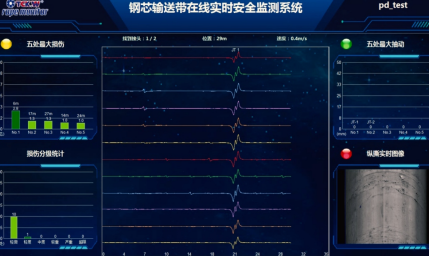
Conveyor Belt Intelligent Monitoring System
LUO YANG WIRE ROPE INSPECTION TECHNOLOGY CO., LTD.



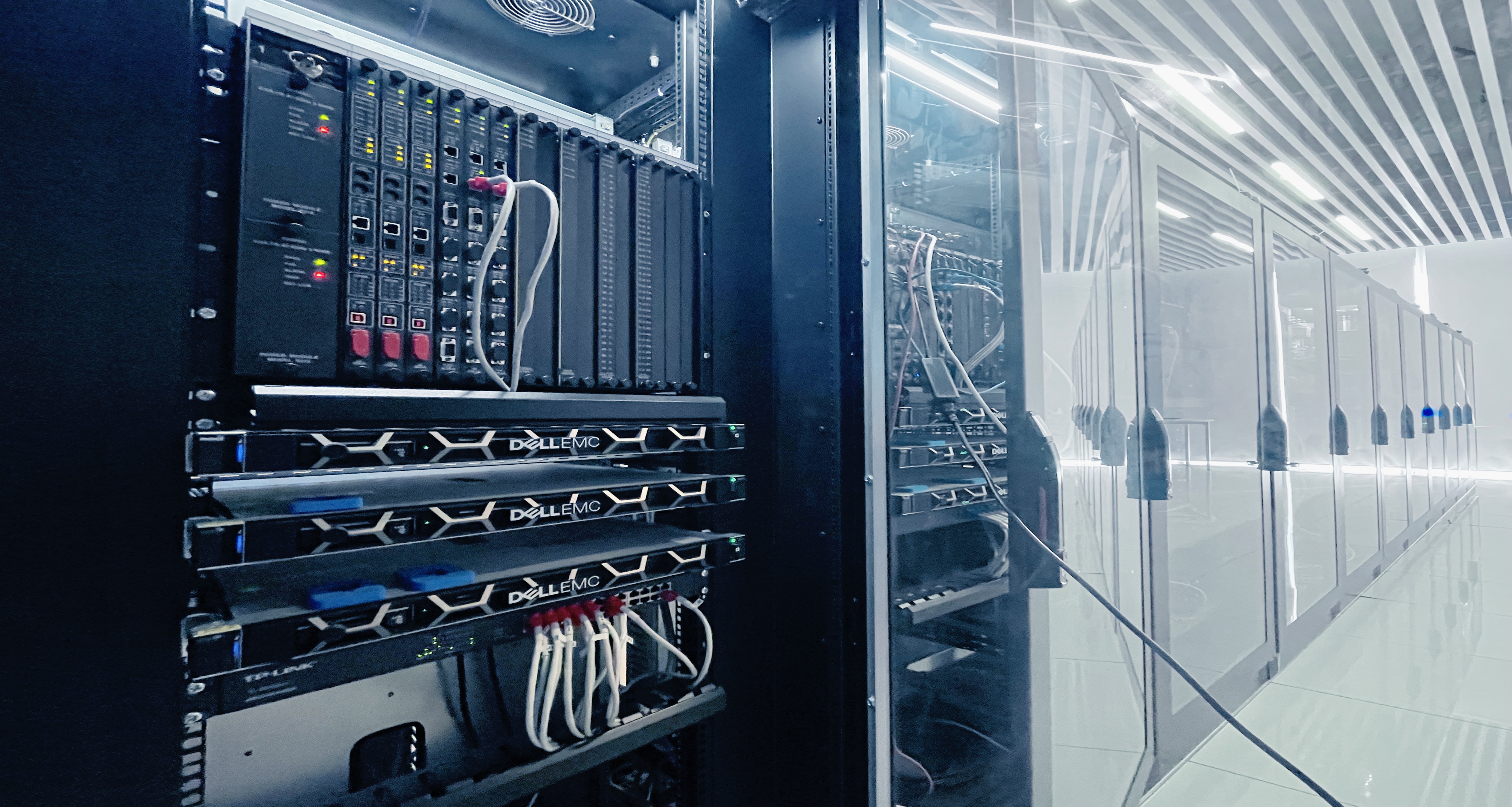

Comprehensive Mining Automation Control System
Beijing Tianma Intelligent Control Technology Co., Ltd.