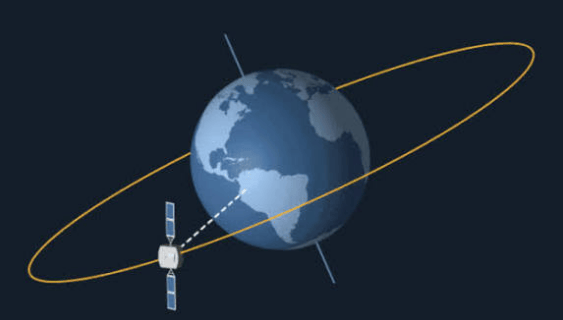
Lithuania's Astrolight Calls on Europe to Accelerate Deployment of Optical Communication Infrastructure
en.Wedoany.com Reported - Lithuanian laser communication technology developer Astrolight is urging European policymakers to accelerate the deployment of optical communication infrastructure to overcome bandwidth congestion and licensing delays faced by traditional radio frequency networks in both commercial and defense sectors. The company argues that while Europe is investing billions of euros in sovereign space systems, achieving true autonomous operation requires an industrialized optical data layer to keep pace with the development of foreign mega-constellations.

In Astrolight's analytical framework, optical communication differs significantly from radio frequency communication: optical communication offers data throughput up to 100 times that of RF networks; its narrow, highly focused pencil beams are difficult to intercept and jam, providing far greater security than broad, dispersed RF signals; optical links are not subject to International Telecommunication Union (ITU) radio frequency spectrum allocations and do not require cumbersome licensing approval processes, whereas RF systems are highly susceptible to terrestrial interference and remote interception.
The push for optical infrastructure deployment comes as Europe advances several major initiatives to reduce reliance on external space services, including the EU flagship IRIS² secure satellite constellation, the European Space Agency's (ESA) multi-orbit HydRON transport network, and Germany's proposed €35 billion defense space modernization plan. However, Astrolight executives emphasize that institutional-level space programs must be supported by a robust commercial manufacturing ecosystem. The company's CEO, Laurynas Mačiulis, stated that if Starlink remains the only widely available commercial space network employing optical communication, European operators will inevitably turn to it in pursuit of faster speeds and data security; optical data transmission is no longer a next-generation technology for specialized missions but is becoming a key strategic and market advantage.
According to Novaspace's market forecast, global satellite connectivity demand will grow more than 11-fold between 2024 and 2034, making satellite-to-ground downlink speeds a critical operational bottleneck. To bridge the gap between flagship projects and commercial execution, Astrolight calls for the rapid industrialization and deployment of large numbers of inter-satellite optical links, ground telescope receiving terminals, and standardized user segment equipment. The company recently partnered with Kepler Communications to develop the user terminal portion of ESA's HydRON Element 3 based on its proprietary ATLAS-X laser terminal, and has built the Holomondas optical ground station in Greece. By expanding these modular, vertically integrated laser communication systems, European operators can gain a highly competitive sovereign alternative, thereby reducing dependence on non-European space connectivity providers.
Related Products


Flat Portable Satellite Terminal 0.35m Aperture Manual Portable Terminal
China Starwin Science & Technology Co., Ltd.

Mine Explosion-proof and Intrinsically Safe Industrial Ethernet Ring Network (10 Gigabit/Gigabit)
Chongqing Mas Sci&Tech Co., Ltd.


Conveyor Belt Intelligent Monitoring System
LUO YANG WIRE ROPE INSPECTION TECHNOLOGY CO., LTD.

GYTA Type Non-Self-Supporting Aerial/Duct Optical Cable
TONGDING INTERCONNECTION INFORMATION CO., LTD.

G.652.D Wavelength-extended Non-dispersion Shifted Single-mode Optical Fiber
HONGAN GROUP CO., LTD.
Multi-function Marine Monitoring Low-altitude Detection Radar Sea-air Boundary Ocean Dynamic Environment Measurement
Chengdu Dixin Technology Co., Ltd.