en.Wedoany.com Reported - Duber Orlando Chinguel Labán, a researcher in the Doctoral Program in Environmental Engineering and Science at the National Agrarian University La Molina (Universidad Nacional Agraria La Molina, UNALM), has developed Peru's first technology for measuring methane emissions in rice paddies, called the "Automated Monitoring System." The information generated by this system can help producers, institutions, and the scientific community make better decisions for more sustainable agriculture.
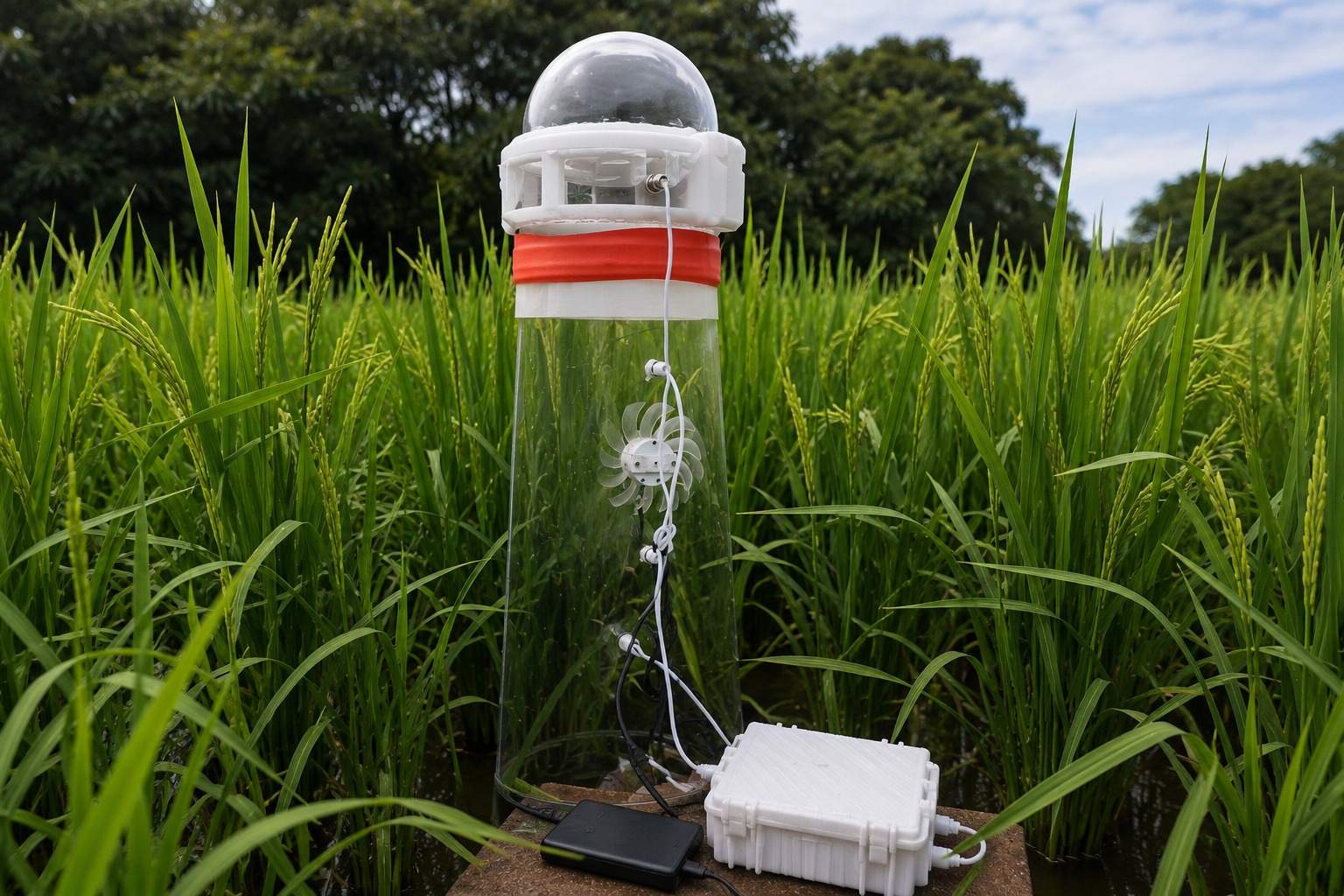
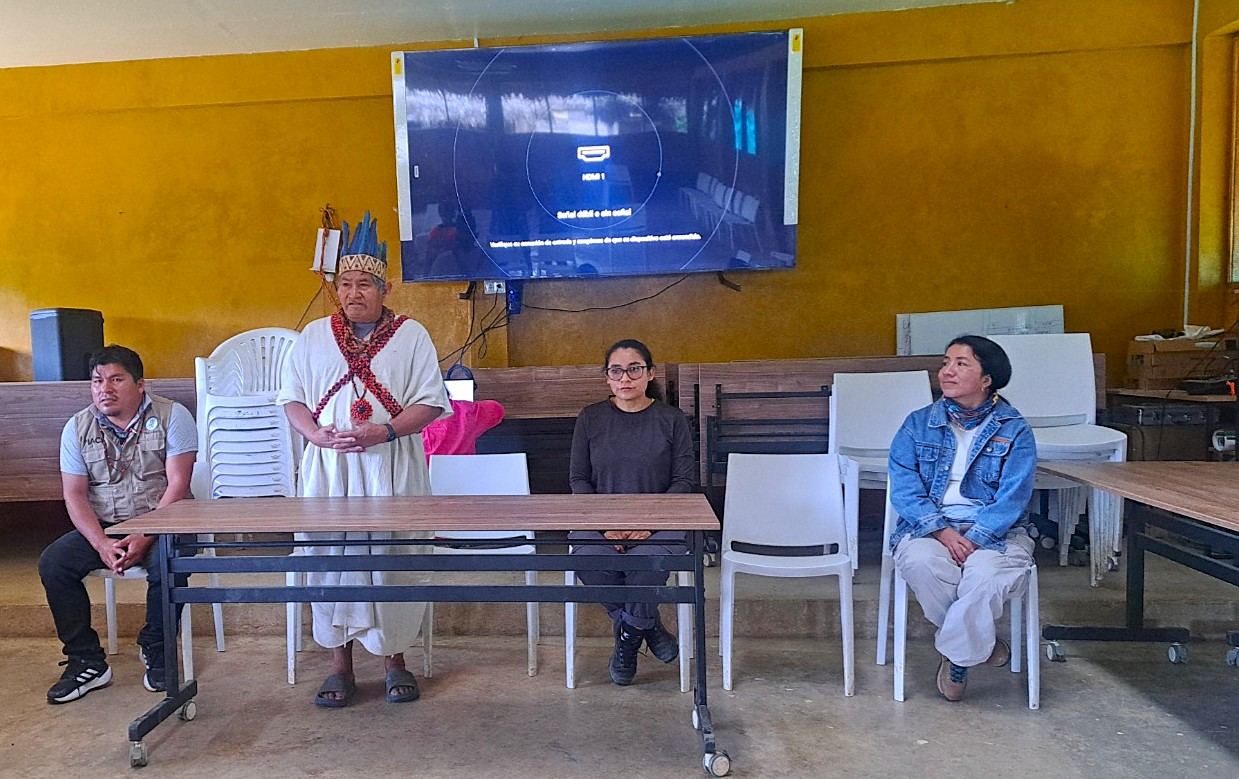
The automated monitoring system consists of a sealed chamber equipped with a high-frequency methane sensor that automatically measures methane emissions in rice paddies. The system also integrates environmental sensors, a wireless communication system, and a real-time monitoring platform, allowing data to be viewed via mobile phone or laptop. On June 25, the project was presented at the Lambayeque Regional Forum on Science, Technology, and Innovation, held at the Lambayeque Chamber of Commerce and Industry and co-organized by Peru's National Council for Science, Technology, and Technological Innovation (Concytec) and the Lambayeque Regional Government.
At the forum, Duber Chinguel introduced the automated monitoring system, the main outcome of his research paper titled "Dynamics and Quantification of Greenhouse Gases in Rice Paddy Systems in the Lambayeque Region." Preliminary results from the paper show that the amount of methane emitted varies across different areas of the same paddy field, making it possible to identify key zones and implement more efficient crop and water management. Duber Chinguel stated that very significant results were obtained thanks to the automated monitoring system, which generates information previously unavailable in Peru, emphasizing the critical importance of having locally generated data. Real-time monitoring of methane emissions helps producers, public institutions, and the scientific community make better decisions.
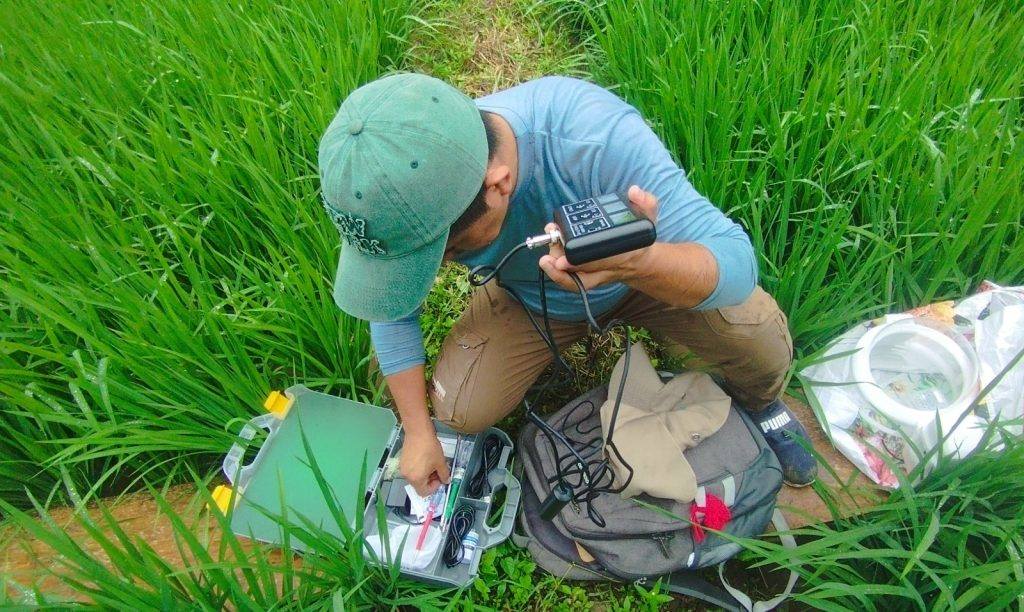
The paper aims to measure the main greenhouse gases produced during rice cultivation, particularly methane (CH₄) and carbon dioxide (CO₂). At the forum, Duber Chinguel presented progress related to methane, as it is the most concerning gas in rice paddies due to its strong impact on climate change. He mentioned that being able to demonstrate that the work of the Doctoral Program in Environmental Engineering and Science not only generates knowledge but can also become a practical tool for producers, authorities, and the development of the Lambayeque region—stepping out of the comfort zone and bringing research closer to decision-makers—was the most valuable takeaway from this participation.