Reservoir Farms to Establish Agricultural Technology Center in Yuma, Arizona
en.Wedoany.com Reported - Reservoir Farms is establishing a new location in Yuma, Arizona, providing a site for agtech startups to test, develop, and validate their technologies.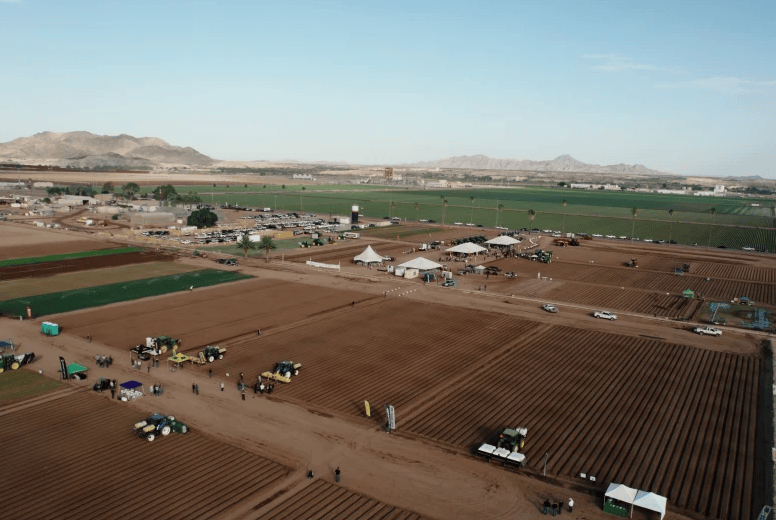
According to data from the University of Arizona, agriculture and agribusiness in Yuma County contributed $4.4 billion in economic activity to the state and $3.9 billion to Yuma County in 2022. Based on data from fillyourplate.org, the region's annual leafy green vegetable cultivation generates $3 billion to $4 billion, accounting for 25% of the nation's annual lettuce production.
Reservoir Farms has been advancing the Yuma facility for over a year. Reservoir is collaborating with the University of Arizona's Yuma Center of Excellence for Desert Agriculture (YCEDA), the Yuma Agricultural Center, John Deere, and the Western Growers Association to secure 500 acres of usage rights at the Yuma Agricultural Center. The research farm will include workshop and office spaces, enabling companies to meet with clients, test products, and modify machinery.
The Yuma Agricultural Center views this as a "pilot project," aiming to develop it into an innovation hub for smart farming and attract more agtech companies. YCEDA sees this collaboration as mutually beneficial: companies can test the latest technologies and may also consider Yuma as a permanent base; startups have the potential to conduct business here and even explore product manufacturing. Tanya Hodges, Executive Director of YCEDA, stated that the community welcomes startups and looks forward to their innovations in agtech. Local Yuma farmer Mike Pasquinelli emphasized the need to bridge the gap between production agriculture and new technologies.
Reservoir plans to open on October 1, 2026, allowing startups to meet with growers, receive feedback, and access test fields. Reservoir will provide them with more structured programs to help them quickly get to work, developing solutions that enhance agricultural resilience and productivity. Yuma's winter temperatures and climatic conditions are suitable for agtech development; the county is also building a broadband network to provide better internet connectivity, helping farmers adopt new technologies.
Reservoir's technology testing is not limited to specialty crops. Founder and CEO Danny Bernstein noted that helping startups incubate is portable, allowing companies to be close to each other to form partnerships and making it convenient for investors to conduct centralized evaluations. For certain machinery, the specialty crop environment is more forgiving, allowing slower operation and covering less land. Reservoir's farm gives startups the opportunity to scale up equipment and improve performance; companies can start with specialty crops and transition to broad-acre crops as they grow. Bernstein stated that after one, two, or three years, when startups complete trials, begin generating revenue, and establish a business model, they can start considering broad-acre crops. Reservoir's facility is not only for specialty crop technologies; some companies have already begun exploring broad-acre opportunities. Partners include John Deere, Nutrien, and Netafim, whose businesses span different crops; Reservoir recently also hosted a visit from Beck's Hybrids.
Regarding challenges for agtech startups, Bernstein emphasized the need to immerse technical personnel in the agricultural environment to help bridge the gap between the lab and the field. He described this as a "city mouse to country mouse" issue. Reservoir helps technicians accelerate their learning, calling it "Agriculture 101," getting them into the environment, onto the farm, testing, and absorbing the local culture. Another obstacle is transitioning technology from prototype to a production-ready environment; Reservoir helps startups understand the realities of precision manufacturing and connect with partners early on. Bernstein advises startups to enter the commercial environment as soon as possible, to "learn everything, rather than think you know everything," while deeply understanding the economics behind the product to avoid "solving a $10,000 problem with a $1 million solution."
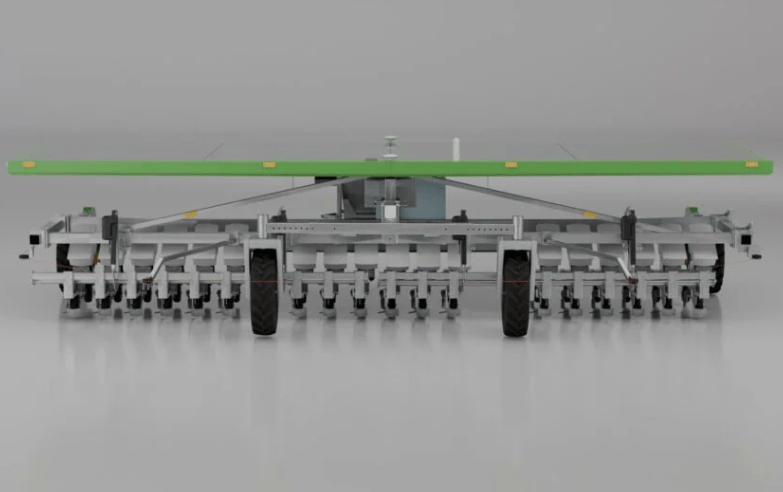
The Western Growers Innovation and Technology Association has selected Sami Robotics as its first sponsored resident at Reservoir Farms in Salinas. Sami Robotics is developing a versatile robotic platform capable of performing multiple field tasks. Walt Duflock, Senior Vice President of Innovation at Western Growers Association, stated that harvesting is the most challenging part of mechanization for growers, and the Sami Robotics team may provide an effective solution, with Reservoir Farms being the best location for field testing. In May, the Western Growers Association announced it would provide $1.5 million in collaborative funding to Reservoir Farms over the next three years. Éric Lapalme, Chief Product Officer and Co-founder of Sami Robotics, said that receiving feedback from industry professionals during the residency is crucial for technology development; building agricultural robots is one thing, but proving they can create value under real field conditions is another.
Related Products


714CD Series C-Band Weather Radar
Chengdu Zhongdian Jinjiang Information Industry Co., Ltd.
4HS-8 High-efficiency Peanut Inverted-laying Harvester
Hebei Yongfa Hongtian Agricultural Machinery Manufacturing Co., Ltd.
Industrial and Commercial Point-Type Gas Detector
Jinan Benan Technology Development Co., Ltd.