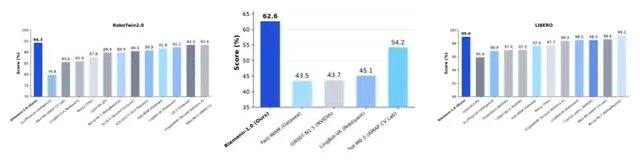
en.Wedoany.com Reported - Riemann-1.0, a robotic manipulation world model released by China's Riemann Dynamics, achieved a 62.6% success rate on the industry-recognized high-difficulty household simulation benchmark RoboCasa-365, surpassing the previous best result by 8.4 percentage points. The model was trained using 232,000 hours of data, with the majority consisting of first-person human video footage.
Riemann Dynamics is a subsidiary of Kunlun Tech, specifically established for embodied intelligence. Riemann-1.0 was first unveiled at WAIC 2026, with its technical approach centered on learning physical world interaction patterns from massive amounts of unlabeled human videos, then using a small amount of robot data for action alignment to achieve universal control across different robot embodiments. The model demonstrates sim-to-real transfer capabilities in specific operations, such as completing sequential steps in a table-clearing task, including picking up a thin spoon, pouring out soup, and wiping the table surface.
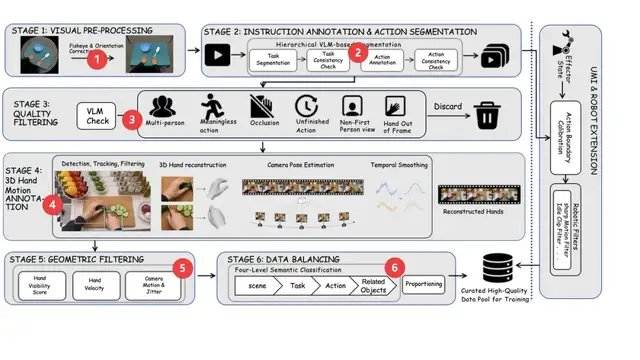
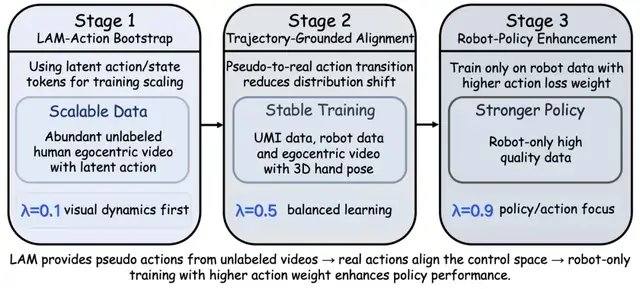
In terms of data composition, the Riemann-1.0 training set includes 200,000 hours of first-person human video, 12,000 hours of UMI and exoskeleton glove data, and 20,000 hours of real robot and simulation trajectory data, covering 41 robot embodiments and thousands of interaction methods. The team developed an automated data processing pipeline that converts human videos into machine-readable action signals through steps such as image correction, VLM-based action label segmentation, quality inspection filtering, and 3D hand pose reconstruction. The model adopts a fully causal action-video joint modeling framework based on a diffusion architecture, and transitions smoothly from world understanding to action execution through a three-stage training process—with action loss weights of 0.1 in the first stage, 0.5 in the second, and 0.9 in the third.


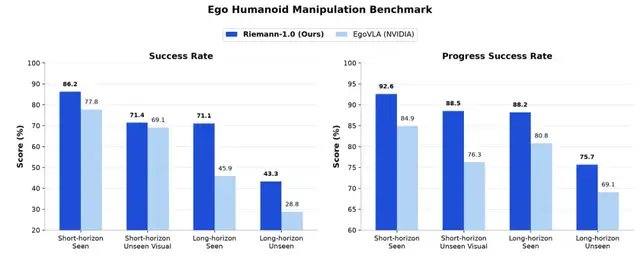
Ablation studies validated the value of human video data: on RoboCasa-365 alone, the baseline training success rate was 38.2%; adding robot data increased it to 43.4%; further adding UMI data raised it to 48.2%; and finally, incorporating human video data boosted the success rate to 62.6%. On the EgoVLA benchmark, specifically designed for dual-dexterous-hand humanoid robots, the success rate for long-horizon multi-stage tasks improved from 42.96% to 71.11%, and on completely unfamiliar visual backgrounds, it increased from 26.36% to 43.33%.
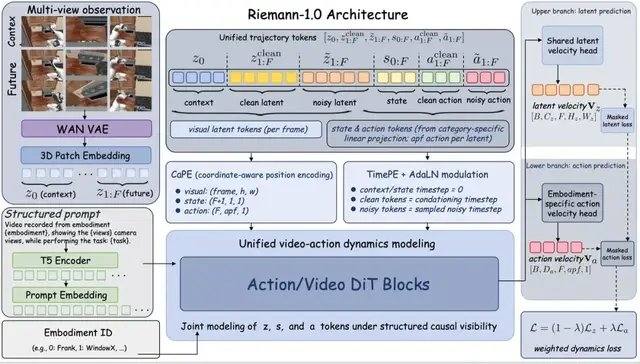
In simulation evaluations, Riemann-1.0 achieved a 99.0% success rate on LIBERO, 94.3% on RoboTwin 2.0, and 62.6% on RoboCasa-365, ranking first. To verify real-world performance, the team constructed four typical household scenarios: orderly block stacking, flexible fabric folding, desktop clutter organization, and kitchen utensil storage. Demonstration data was collected via manual teleoperation and used for joint training. Compared against open-source foundation models from the same starting point, Riemann-1.0 achieved an average success rate of 85.00% and a process completion rate of 94.43%, both ranking first, leading the best open-source model by 15 percentage points, with each task's process completion rate exceeding 91%.
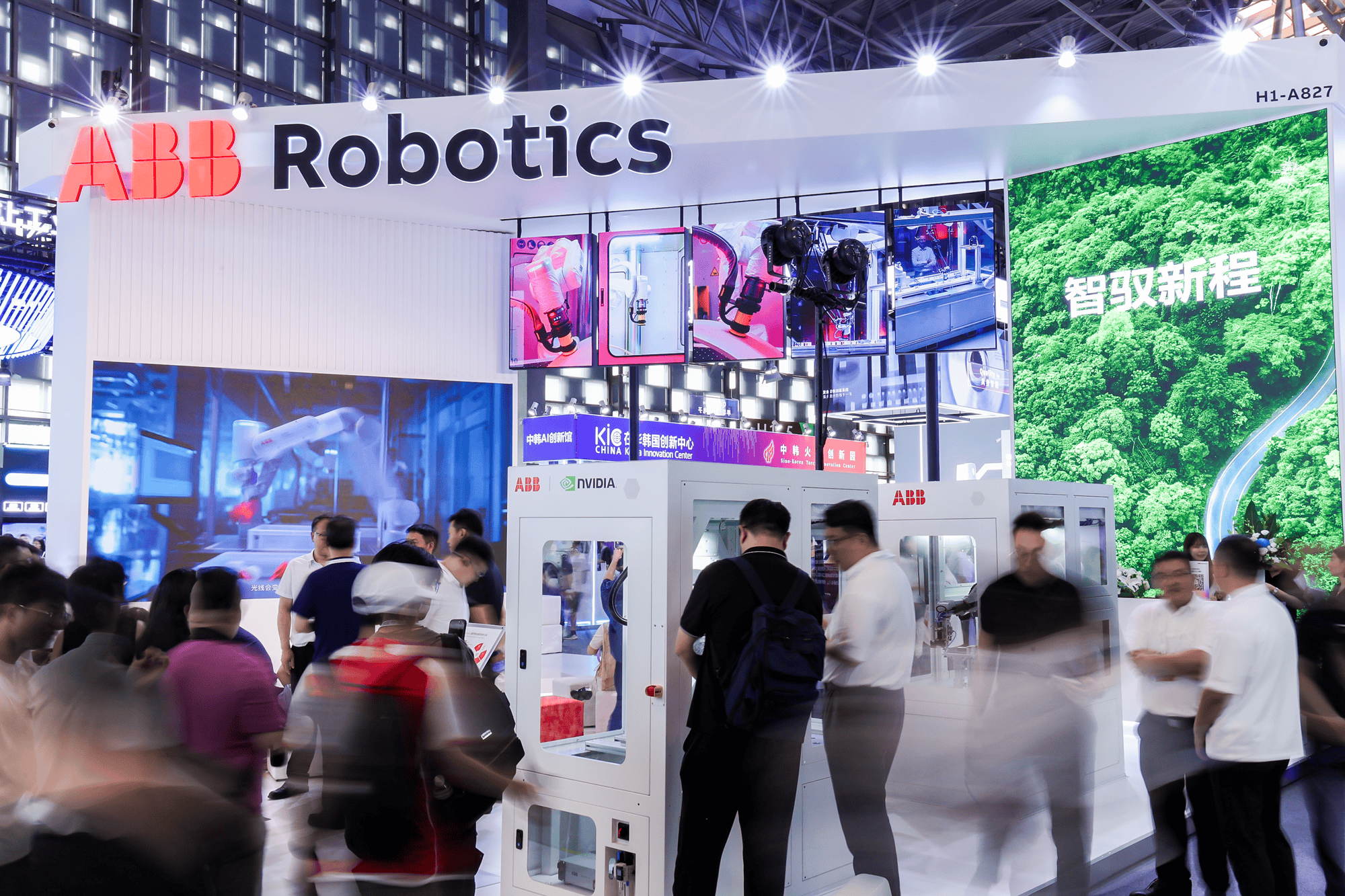
At WAIC 2026, Kunlun Tech also showcased the world model Matrix-3.5, the AI music model Mureka v9.5, and Riemann-1.0. Extending digital world generation capabilities to physical world interaction is seen as an inevitable path toward achieving general artificial intelligence. Riemann Dynamics operates as an independent subsidiary, aiming to allow the core team to independently access dedicated resources for long-term technical investment.