en.Wedoany.com Reported - Lithium Plus Minerals (ASX:LPM) has completed a resource upgrade at the Lei deposit in the Bynoe lithium field, Northern Territory, Australia, with a grade of 1.5% lithium oxide, containing 78,420 tonnes of lithium oxide (at a cut-off grade of 0.5%), representing a 34% increase. This update boosts the higher-confidence indicated category resource by over 730% to 42,550 tonnes of lithium oxide, making it one of the highest-grade undeveloped lithium deposits in Australia.
The Bynoe lithium field is located on the Cox Peninsula, approximately 35-45 kilometers southwest of Darwin, and hosts hundreds of historically known pegmatite bodies. Due to flat terrain, extensive weathering profiles, and dense vegetation, these pegmatites have poor surface exposure, hindering early exploration. It was not until explorers began drilling deeper reverse circulation and diamond holes that their lithium-rich potential emerged, with grades typically at the high end of those found in Australia. This led to Core Lithium (ASX:CXO) discovering the Finniss orebody in 2016, which was subsequently developed and entered commercial production in early 2023. Due to a 75% decline in lithium prices, mining operations ceased in January 2024, with stockpile processing continuing until mid-year. The Finniss mine has been on care and maintenance until rising electric vehicle demand triggered a lithium price rebound, prompting the company to restart operations in the June quarter, with first spodumene concentrate shipments expected in the December quarter of 2026.
Simon Kidston, Non-Executive Director of Lithium Plus Minerals, stated that Core Lithium's success fully demonstrates the exploration potential of the Bynoe lithium field. The company's drilling on its own tenements has confirmed the same mineralization, with multiple high-grade mineralized pegmatites on tenements identical to Core Lithium's, and proximity to infrastructure resulting in lower development costs. Founder Dr. Bin Guo initially acquired the leases comprising the Bynoe project from Kingston Resources in 2018 for A$1.8 million. Kingston Resources itself entered the area after Core Lithium and conducted some drilling around the Lei target. Kidston noted that Dr. Guo confirmed the presence of mineralized pegmatites after acquiring the project, but lacked sufficient funding to advance it until Lithium Plus Minerals listed in April 2022.
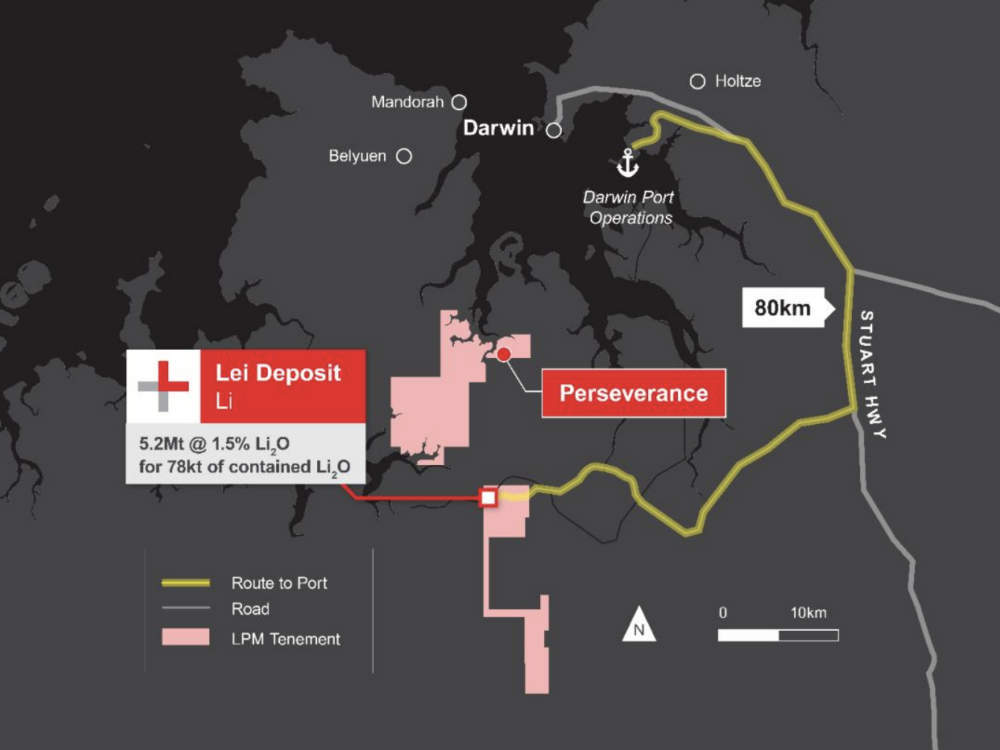
Another boost came from Core Lithium's drilling at the Kylie target on the other side of the tenement boundary, which confirmed the same high-grade mineralization after encountering thick intercepts. Kidston pointed out that Core Lithium recognizes the Kylie-Lei deposit could potentially be as large as its BP33 project, which is currently under mine development.
The upgraded resource reduces the risk for Lithium Plus Minerals' plan to develop a direct shipping ore (DSO) business using material from the Lei deposit. This development model features lower mine development and processing costs, with proximity to Darwin meaning ore only needs to be trucked 70 kilometers for export shipment. Ore from the Lei deposit will be excavated and subjected to a simple ore sorting process for low-cost upgrading. Kidston cited Develop Global (ASX:DVP), which has begun mine construction for its Pioneer Dome project, also a DSO mining operation; compared to Develop Global, Lithium Plus Minerals has the advantage of higher-grade pegmatites. He also noted that Core Lithium's nearby Carlston deposit has an estimated pre-production capital cost of approximately A$66 million, and with a similar scale but slightly lower grade than the Lei deposit, it serves as a comparable benchmark.
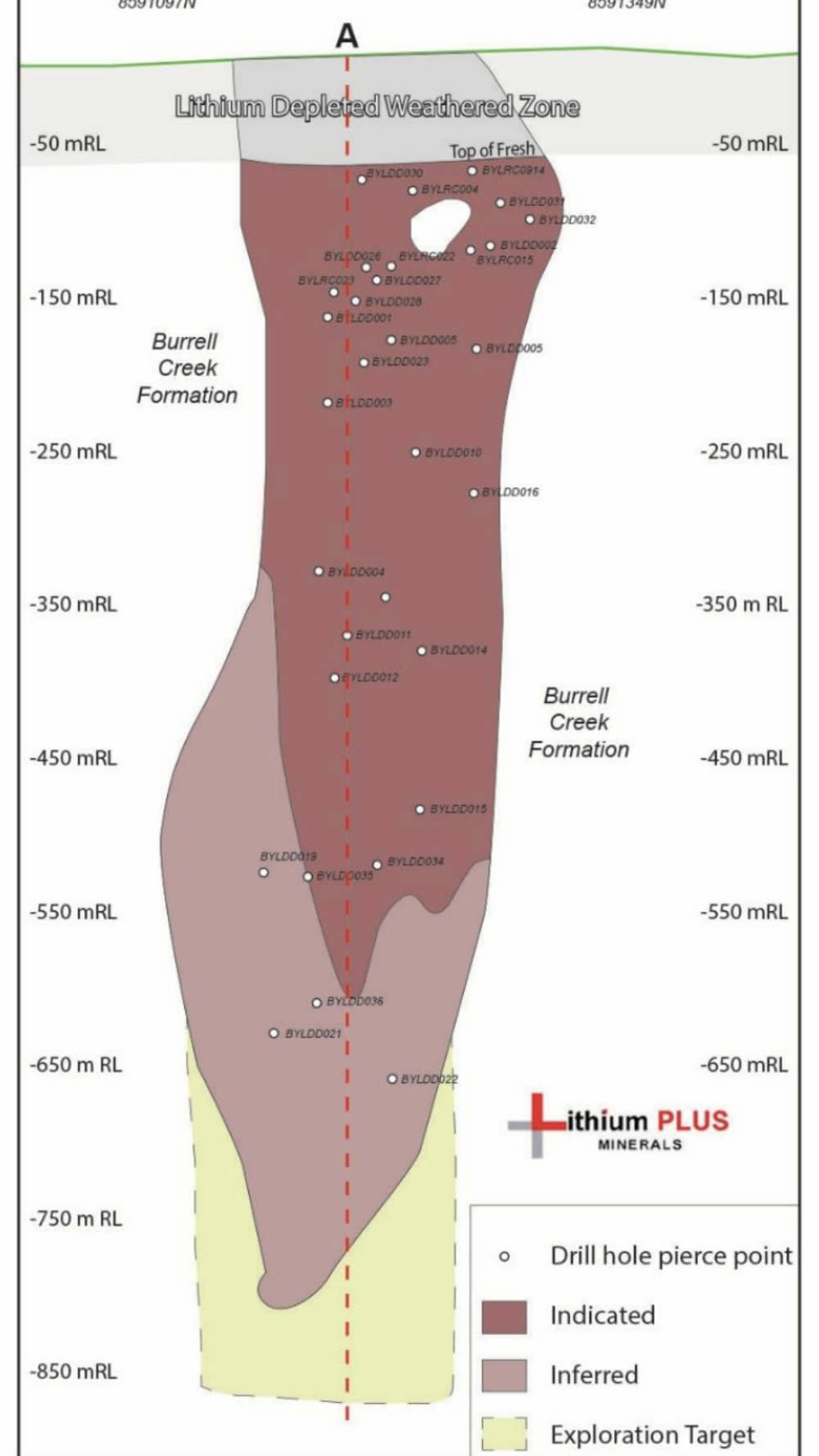
Lithium Plus Minerals has identified multiple pathways to increase resources, including through deeper drilling (the resource remains open at depth) and a parallel mineralized pegmatite approximately 180 meters from the Lei deposit. The exploration target for this parallel pegmatite is 3.2-6.5 million tonnes (grade 1.2%-1.6% Li2O), while the main Lei pegmatite has an exploration target of 0.8-3.2 million tonnes (grade 1.2%-1.6% Li2O). The company sees potential to develop both mineralized pegmatites together.
Lithium Plus Minerals is currently focused on completing a scoping study, expected in the fourth quarter of 2026, with the next priority being environmental studies. Kidston stated that with mining licenses now obtained, assuming environmental approvals are completed this year, the project is essentially ready for mining, requiring only financing and the start of mining in early calendar year 2027. The company is discussing financing options with CATL, a significant shareholder that has maintained its stake. Lithium Plus Minerals hopes to secure some form of non-dilutive financing, such as prepayments, repaid by supplying DSO products to CATL in China.