Wedoany.com Report-Jun 5, In the first quarter of 2025, the United States added 7.4 gigawatts (GW) of utility-scale solar, wind, and energy storage, slightly below the record 8.1 GW installed in the same period of 2024, according to the American Clean Power Association (ACP). Solar led with 4.4 GW, followed by a record 1.6 GW of energy storage and 1.3 GW of wind.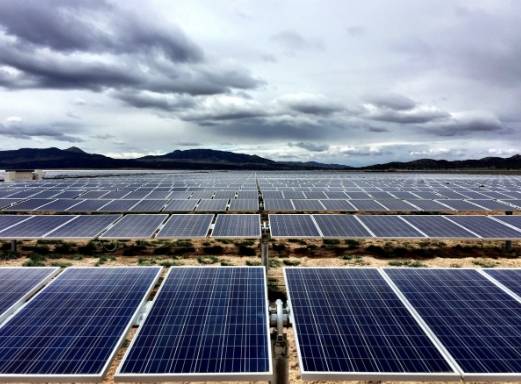
Solar installations, down 30% from the first quarter of 2024, were led by Florida, which contributed 894 MW, accounting for over 20% of the quarter’s grid-scale solar capacity. The largest project was the 435 MW Dunns Bridge Solar II in Starke County, Indiana, developed by NextEra Energy Resources and owned by Northern Indiana Public Service Company. It includes a 56 MW/225 MWh battery storage system, supplying power to northern Indiana customers.
Grid-scale battery storage saw a 65% year-over-year increase, with major projects including NextEra’s Silver State South Storage in Nevada and AES Indiana’s Pike County Energy Storage in Indiana, each with 200 MW and four-hour duration. The U.S. now has 156 GW of wind, 134 GW of solar, and 30.6 GW/83 GWh of battery storage, totaling 321 GW of clean power, enough to supply 80 million homes.
The clean energy project pipeline grew to over 184 GW, up 12% from the previous year, driven by 35 GW of battery storage and 21 GW of solar added since Q1 2022. ACP CEO Jason Grumet stated: “Clean power is shovel-ready at scale. With unprecedented demand growth for electricity, we must send consistent investment signals across the energy sector.”
The industry supports nearly 650,000 direct and indirect jobs and generates $3.4 billion annually in tax revenue and landowner payments, particularly in rural areas. However, legislative uncertainty poses challenges. A budget reconciliation bill passed by the House of Representatives, described by the Solar Energy Industries Association as unworkable, could eliminate clean energy tax credits by 2028, five years early. This uncertainty has led to $14 billion in canceled clean energy projects and factories in 2025. The bill awaits a Senate vote.
The ACP emphasized the industry’s growth potential, driven by strong demand and technological advancements, but stressed the need for stable policies to sustain investment and development in clean energy infrastructure across the United States.