Colorado State University Develops New Process to Convert CO2 into Recyclable Plastics
en.Wedoany.com Reported - A research team at Colorado State University has developed a new process that uses carbon dioxide as a feedstock to synthesize recyclable, high-performance materials that could replace some traditional plastics.
The process triggers a chemical reaction between carbon dioxide and a special molecule called a bicycloalkane, facilitated by an organic catalyst, to produce a new type of synthetic plastic. These materials exhibit high mechanical strength, elasticity, and resistance to high temperatures and chemical attack.
A standout feature of these materials is their recyclability. At the end of a product's life, its basic chemical building blocks can be recovered and reused, helping to reduce plastic waste and promote a more sustainable circular economy.
The research was led by Colorado State University Professor Eugene Chen and postdoctoral researcher Min Zhu, with participation from researchers at Colorado State University and Northwestern University. The project was funded by the National Science Foundation and the BOTTLE Consortium, a nationwide research initiative supported by the U.S. Department of Energy that focuses on developing new methods for plastic recycling and more sustainable polymers.
Chen plays a leading role in the consortium, which develops chemical and biological methods to break down and reuse plastic materials, with the goal of making polymers easier to recycle or degrade after use. Chen believes carbon dioxide is an ideal feedstock for producing new materials because it is naturally abundant, inexpensive, odorless, and non-flammable.
"Processes for synthesizing polymers from carbon dioxide have existed since the 1960s, and the challenge lies in maximizing the incorporation of inert CO2 into plastic products while producing polyesters that are more environmentally friendly, recyclable, and degradable," Chen said. "Our approach demonstrates the potential of CO2 as a renewable, low-cost resource for producing recyclable polyesters that offer both performance advantages and favorable end-of-life properties."
Zhu added that the new polymers can be tailored to exhibit a range of properties, from strong, durable materials to softer, more elastic rubber substitutes. "This method could help close the carbon cycle by effectively reusing these emissions."
Chen has long been engaged in research on sustainability and the circular economy, seeking ways to reduce waste and harmful environmental impacts. In this new project, the team aims to use captured carbon dioxide as a raw material rather than storing it or releasing it back into the atmosphere.
Related Products

Steel Pipes for Refining and Coal Chemical Industries
YANGZHOU LONTRIN ENERGY EQUIPMENT CO.,LTD.
Steel Plates for Chemical Pressure Equipment
Gansu JISCO Group Hongxing Iron and Steel Co., Ltd.
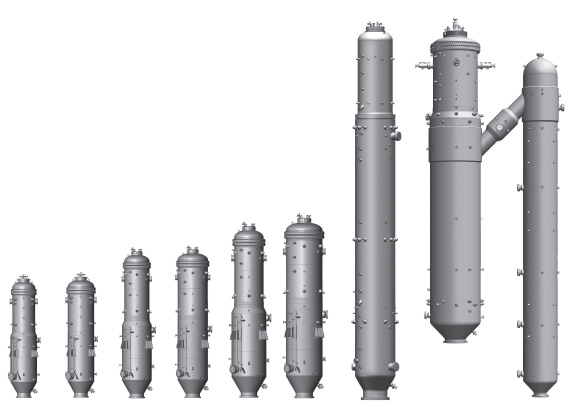
Gasification Furnace Series: Freely Combinable Aerospace Furnace
CHANGZHENG ENGLINEERING CO., LTD.
PVC Impact-Modified Chlorinated Polyethylene
Gansu Jinchuan Hengxin Polymer Technology Co., Ltd.