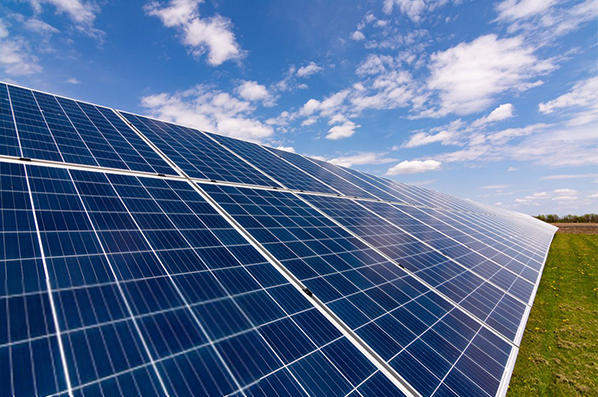
Wedoany.com Report-Jun 21, Construction has started on the Enesolar-3 solar power facility in Nicaragua, marking a significant step forward in the country’s renewable energy development. Located in Nindirí, in the Masaya department of western Nicaragua, the plant will have a capacity of 70 MW, making it the largest solar installation in the country to date.
Led by China Communications Construction, the project officially began earlier this month with an inauguration ceremony. Construction is expected to take approximately 18 months. Once operational, Enesolar-3 will provide electricity to Nicaragua’s national water utility, Enacal, covering around 40% of its annual energy needs. This is anticipated to enhance both the reliability and quality of water supply and sanitation services across the region.
The Enesolar-3 project is part of a broader collaboration between Nicaragua and China. It was approved in 2023 and received financial backing from the Chinese government earlier in 2025. This project is one of three solar facilities currently being developed in the country by China Communications Construction, with a total combined capacity approaching 200 MW.
At the inauguration event, Gan Xingqiu, President of China Communications Construction, provided updates on the other two projects. The 61 MW Enesolar AP-AS 1 facility in San Isidro is in its final construction phase, while development is ongoing at the 67 MW El Hato plant in Ciudad Darío.
According to the International Renewable Energy Agency (IRENA), Nicaragua had installed 36 MW of solar capacity by the end of 2024, doubling from 18 MW in 2023. With the completion of these three projects, the country’s solar capacity will expand significantly, contributing to its long-term energy diversification and sustainability goals.
The development of Enesolar-3 and its associated projects reflects growing efforts to enhance renewable energy infrastructure in Nicaragua. It also demonstrates increased international cooperation in clean energy investment, particularly in support of essential public services.
The successful integration of this solar capacity will not only support Nicaragua’s national grid but also help reduce dependence on fossil fuels and improve energy security. By aligning infrastructure development with environmental goals, the Enesolar-3 project represents a strategic milestone for the country’s energy transition.