Fermi Explorer Mission Aims to Launch 80,000-Year Voyage to Alpha Centauri by 2029
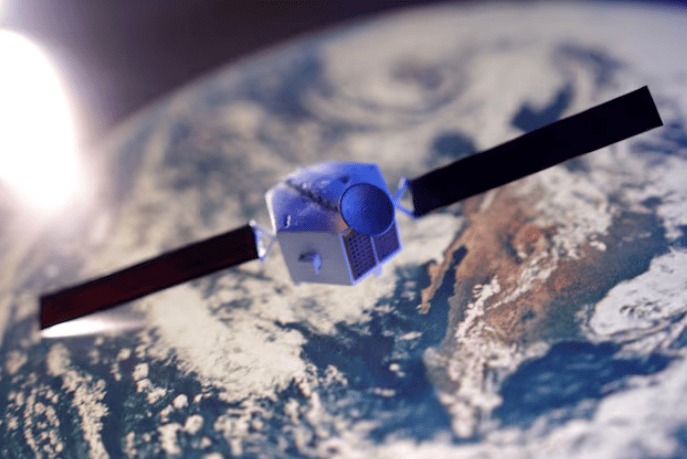
en.Wedoany.com Reported - The nonprofit organization Fermi Explorer Mission announced on September 1 its plan to launch a small interstellar probe toward the Alpha Centauri triple-star system by 2029. Located approximately 4.4 light-years from Earth, this system is the Sun's nearest stellar neighbor; the probe's journey is expected to take about 80,000 years, meaning the project's founders and team members will not live to witness its arrival. The total mission cost is capped at under $15 million.
Philip Johnston, co-founder and president of the project, said in a statement that he hopes it will become the interstellar flight that "departs first and arrives last"; by the time the probe finally reaches its destination, those involved today will no longer be alive—and that is precisely the point: to take the first step achievable now, inspiring future generations to build on that foundation and continue pushing boundaries. Johnston also serves as co-founder and CEO of Starcloud, a space data center startup, and launched this project alongside fellow Starcloud co-founders Ezra Feilden and Adi Oldean, with day-to-day operations led by Garrett Jamison, a former U.S. Air Force officer. Space industry figures including Rob Meyerson, former president of Blue Origin, and Matt Gialich, co-founder and CEO of asteroid mining company AstroForge, have been invited to serve as advisors.
Johnston and his colleagues say that while the project is ambitious, it is achievable with current engineering capabilities. The flight would also mark humanity's first interstellar probe launched with a specific star as its target. By comparison, NASA's Voyager 1 and Voyager 2, though already in interstellar space, are not headed toward any star but are instead departing the solar system along trajectories set after their "Grand Tour" explorations of Jupiter, Saturn, Uranus, and Neptune.
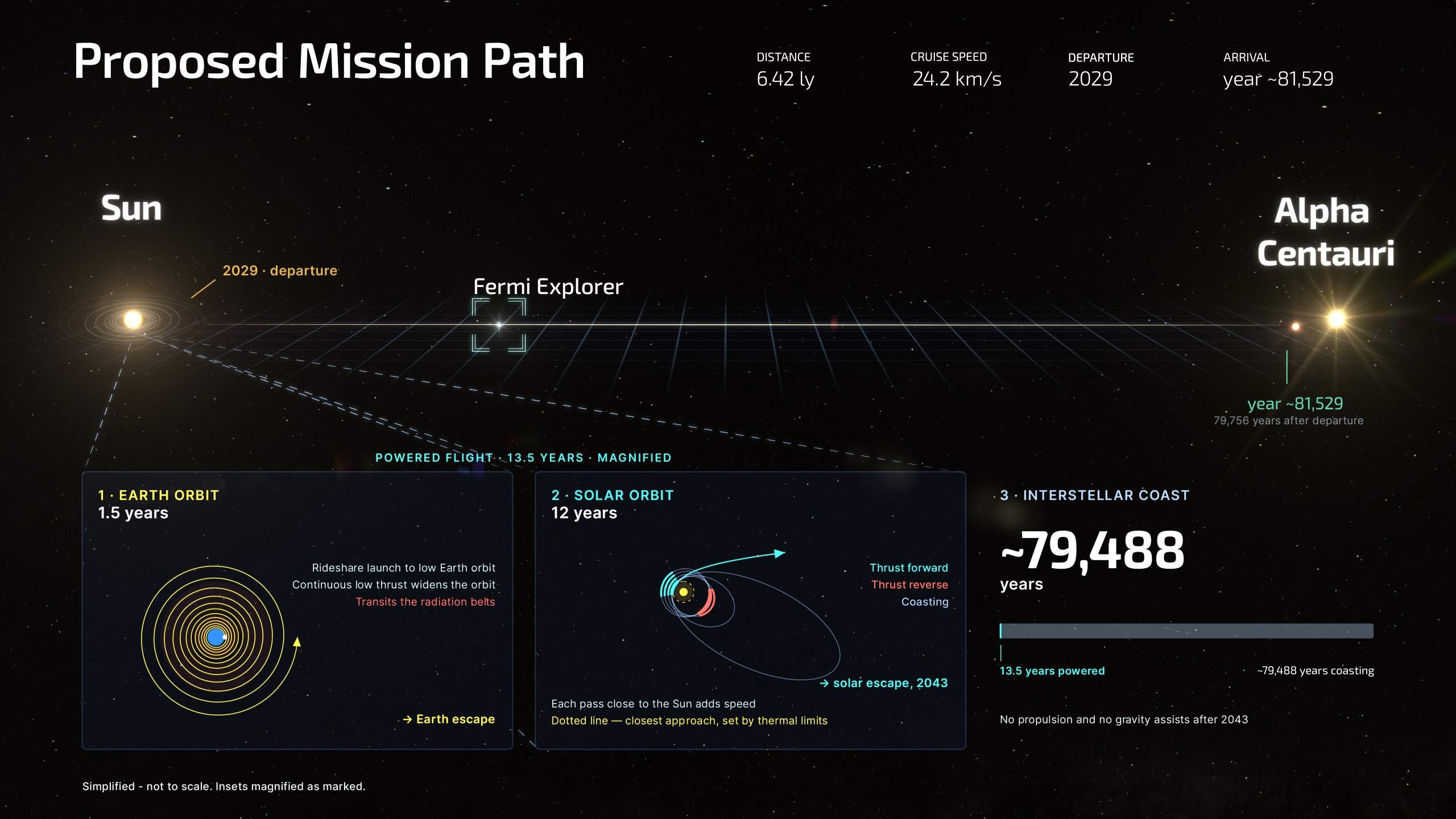
Under the plan, the probe will carry a payload of at least 2.2 pounds (1 kilogram). The team stated via the X platform that the mission aims to turn interstellar travel from concept into reality, prompting more people to confront one of the biggest unanswered questions humanity faces when looking beyond Earth—"Where is everybody?"—known as the Fermi Paradox.
The Fermi Paradox takes its name from the question posed by physicist Enrico Fermi in 1950. Over the past decade, it has drawn growing attention as the scientific community has increasingly recognized that exoplanets—these potential habitats for life—are common throughout the Milky Way. The project team believes the Fermi Paradox has only three possible explanations: intelligent life similar to humans is rare in the universe; such life is not rare but does not last long; or it is both common and long-lasting, yet generally does not reveal its presence to other beings in the cosmos, whether by choice or due to environmental factors.
Launching an interstellar mission with a clear destination will not directly resolve the paradox, but it can provide data that did not exist before. The team wrote in the mission's FAQ that after completing this flight, humanity will be more confident in two things: that an intelligent species can reach the nearest star without excessively consuming resources, and that at least some intelligent species will attempt the journey—humans being one of them. This makes the Fermi Paradox even more pronounced.
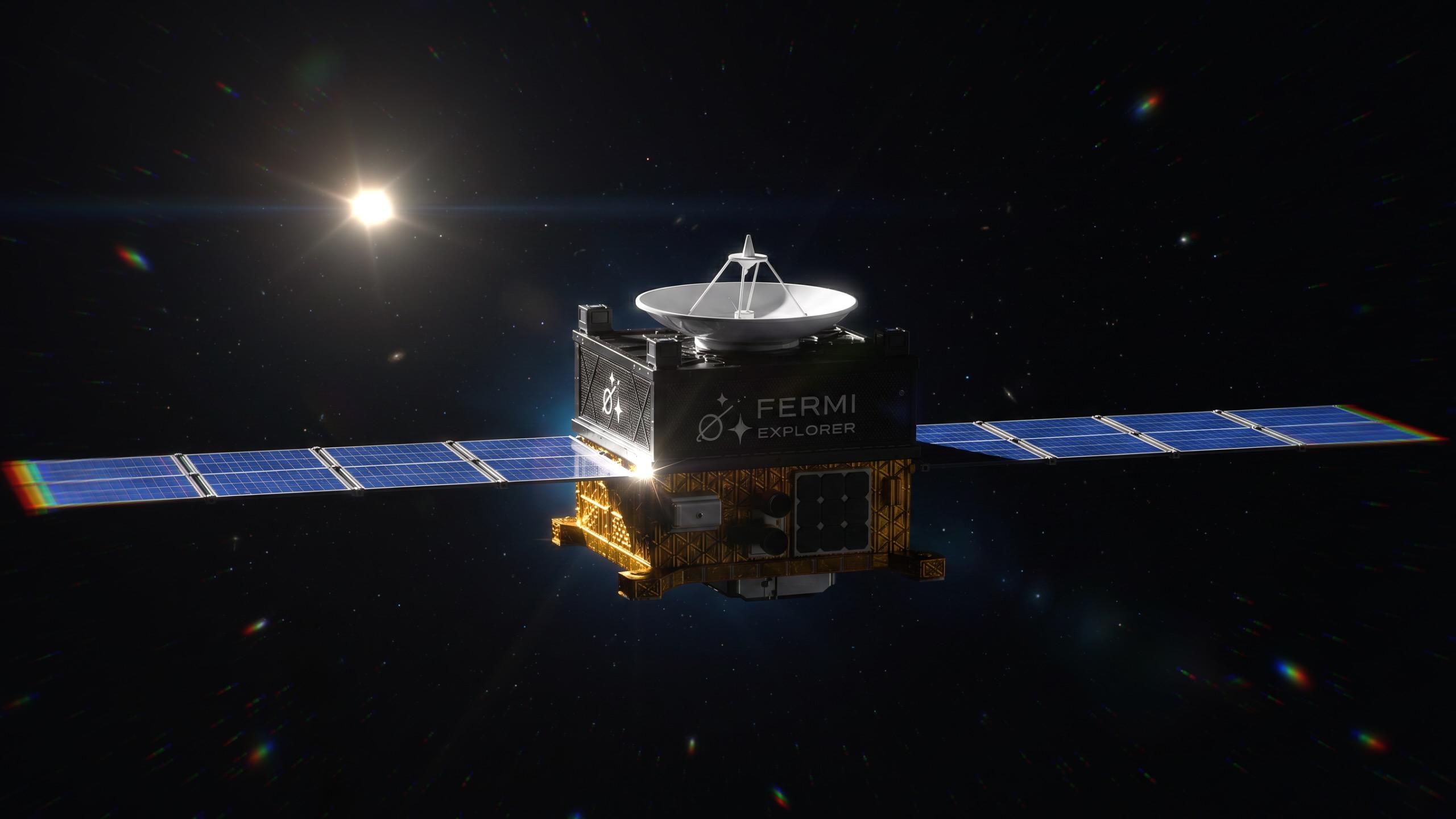
The team's envisioned small probe would weigh approximately 220 to 440 pounds (100 to 200 kilograms) on Earth and is planned to use electric propulsion. This type of propulsion is superior to traditional chemical thrusters and has already been validated in real missions, meaning the project does not rely on unproven cutting-edge technology—a constraint that has hampered other interstellar initiatives. For example, the Breakthrough Starshot project once hoped to use powerful lasers to send miniature light sails to Proxima Centauri in the Alpha Centauri system, but that project now appears to be no longer operational; if such technology were realized, nanocraft could accelerate to roughly 20% of the speed of light and reach Proxima Centauri in about 20 years.
Details such as which manufacturer will build the probe and what scientific payloads it will carry are expected to be finalized in the coming months. The project team stated that a major satellite manufacturer has already proposed a plan within the $15 million cost cap. As a 501(c)(3) nonprofit organization, Fermi Explorer Mission is currently seeking funding to initiate the mission.
Related Products



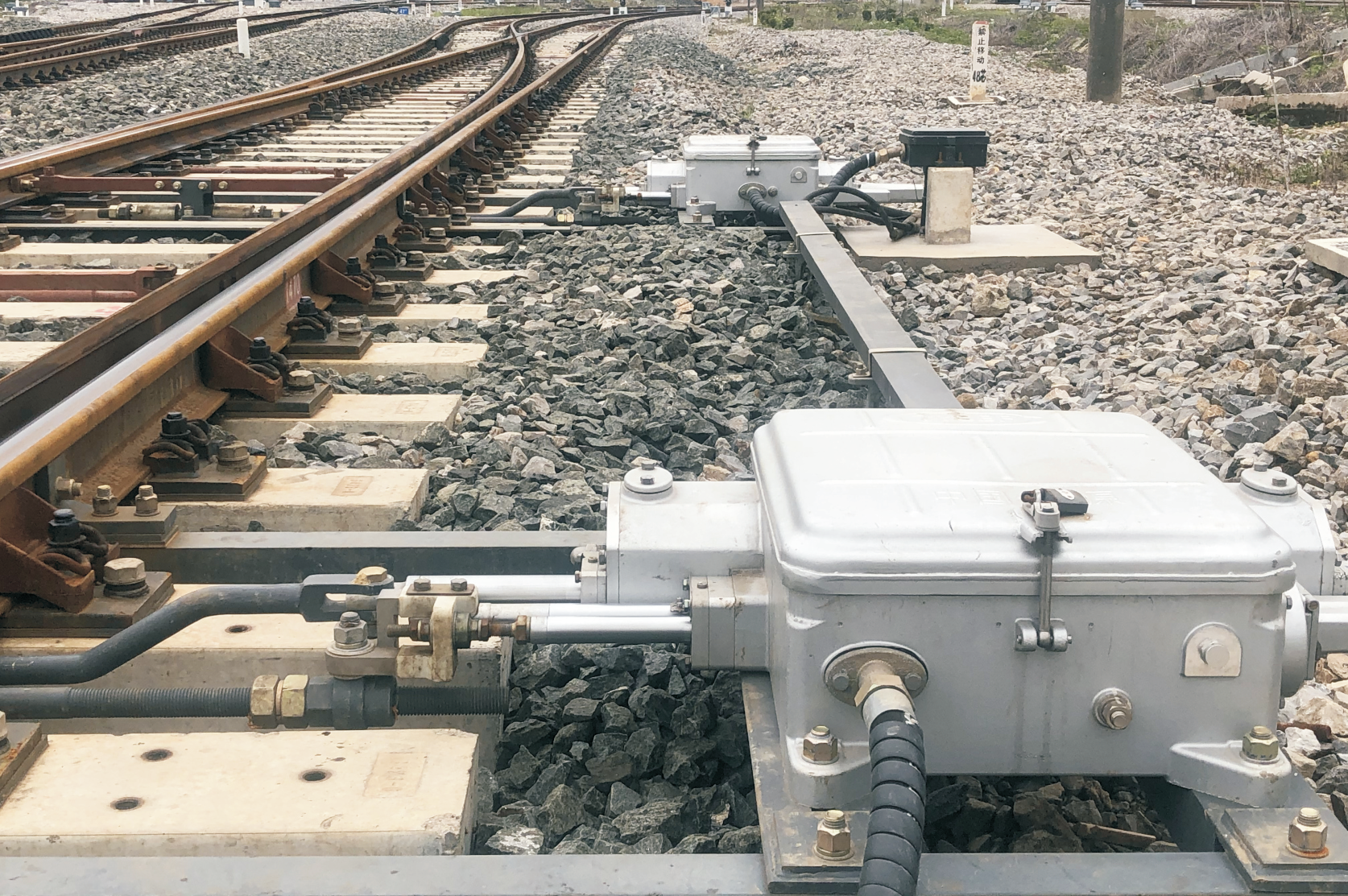
ZY(J)7(M) Sealed Type Electro-Hydraulic Turnout Machine
TAIYUAN CR JINGFENG EQUIPMENT TECHNOLOGY CO., LTD.
D12 Humanoid Robot
Automation Research Institute Co., Ltd. of China South Industries Group Corporation
Explosion-proof lithium battery dispatching monorail crane locomotive (permanent magnet frequency conversion integrated machine)
Xiangtan Hengxin Industrial Co., Ltd.



CLW5180TXSD6 Dongfeng Tianjin Washing and Sweeping Truck
ChengLi Special Automobile Co., Ltd.

Wheel and Track Technology Business
Beijing Research & Design Institute of Rubber Industry Co., Ltd.