Vietnam's Revised Electricity Law: Investment Rules for Grid, Offshore Wind, and Energy Storage Are Changing
en.Wedoany.com Reported - Vietnam is once again adjusting the underlying rules of its electricity market.
On September 21, the Standing Committee of Vietnam's National Assembly reviewed the Draft Law on Amendments and Supplements to Certain Articles of the Electricity Law. Although this revision comes not long after the passage of the new Electricity Law in 2024, its scope has already extended to multiple key areas including power source project investment, transmission networks, offshore wind, energy storage, direct power purchase, electricity licensing, and electricity pricing mechanisms.
The draft consists of 3 articles, primarily amending and supplementing 23 articles of the current Electricity Law and repealing 3 articles. The policy direction given by Vietnam's Ministry of Industry and Trade is very clear: reduce administrative procedures for power projects, adjust investor selection mechanisms, introduce more social capital participation in transmission facility construction, while continuing to improve the institutional framework for new energy, power storage, and the competitive electricity market.
For enterprises planning to enter Vietnam's electricity market, what truly deserves attention in this revision is not the number of provisions, but the fact that project development models are changing. The question of "whether one can enter the market" is gradually shifting to "through what mechanism one enters, how project revenue is generated, and which risks investors must bear themselves."
I. Power Project Approval Is Being Streamlined, and Investor Selection Mechanisms Are Changing
The first area adjusted by this draft is the construction and investment phase of power projects.
According to the draft content disclosed by Vietnam's Ministry of Industry and Trade, provisions concerning power development planning, power supply network development direction, power plan implementation, and project investor selection will be amended, including the removal of certain investment policy requirements and the introduction of a bid-winning electricity price mechanism in project investor selection.
This change directly affects the early-stage development process of power source projects.
In the past, a large power project often had to go through multi-level administrative procedures from entering the plan to obtaining investment qualification. The draft now attempts to reduce certain preliminary steps while strengthening the path of determining investors and electricity prices through competitive mechanisms. In the future, competition for certain projects may further concentrate on project development capability, financing costs, construction plans, and final bid price levels.
Administrative procedures themselves are also being compressed simultaneously. According to disclosures from Vietnam's Ministry of Industry and Trade, the draft plans to repeal 3 administrative procedures, add 1 new one, and amend 19 existing administrative procedures, while reducing certain approval steps through delegation of authority and process adjustments.
For EPC companies, equipment suppliers, and project developers, the pace of project development may change as a result. In the past, a large amount of time was concentrated on obtaining preliminary administrative permits; in the future, competition may enter the stage of investment plans, electricity prices, and implementation capability earlier.
II. Transmission Grid Becomes One of the Key Directions for Social Capital Entry for the First Time
In this revision, a change that deserves particular attention from industry chain enterprises is the transmission network investment mechanism.
The draft plans to adjust provisions related to PPP project contracts and add circumstances in which transmission grid projects adopt the PPP model for investment, in order to attract social capital participation in transmission network construction.
This adjustment is consistent with the reform direction of Vietnam's current Electricity Law. The Electricity Law passed in 2024 has already established a price formation mechanism for non-state capital investment in transmission networks and requires the formulation of corresponding transmission service pricing methods for transmission facilities built by social capital. This draft continues to extend toward the PPP model, which is equivalent to further supplementing the implementation path for social capital participation in transmission infrastructure.
This will change the project structure of Vietnam's power investment.
In the past, when overseas enterprises focused on the Vietnamese market, the emphasis was often placed on power source projects such as solar, wind, and gas-fired power stations. As the transmission investment mechanism gradually opens up, segments such as substations, transmission lines, offshore wind power delivery projects, energy storage supporting facilities, grid control and digital systems may also form a more independent investment and engineering market.
Power source construction and grid construction therefore need to be evaluated within the same project model. Whether a large offshore wind project can materialize no longer depends only on wind resources, turbine costs, and PPA conditions; delivery lines, grid connection capacity, and transmission project investment arrangements will increasingly directly affect project progress and capital returns.
III. Offshore Wind and Energy Storage Continue to Move from "Policy Direction" into a Specific Legal Framework
Offshore wind and energy storage are the other two core sections of this round of revision.
The draft plans to amend provisions related to renewable energy and new energy development, explicitly covering offshore wind, power storage systems, and other content, and further strengthen supervision over resource development and utilization, while authorizing the government to formulate specific implementation rules according to development needs in different periods.
This point is particularly important for Vietnam's new energy projects.
Offshore wind projects themselves involve multiple institutional interfaces such as sea area use, wind measurement, survey, offshore infrastructure, grid connection, project investment, and power sales. Having installed capacity planning alone is not sufficient to support a project entering the FID and construction stages. After the legal level continues to improve offshore wind provisions, what will truly determine whether a project can be implemented will be further supporting rules issued by the government on investor selection, sea area use, price formation, PPA, and grid connection.
The situation for energy storage is similar.
The current Electricity Law has already incorporated "building supporting energy storage systems for renewable energy projects" into the price mechanism design. This draft once again brings power storage systems into the scope of investment and price policy adjustments, indicating that energy storage is gradually moving from a technical supporting facility for new energy projects into an independent institutional framework in Vietnam's electricity market.
For energy storage equipment suppliers, system integrators, and EPC companies, what is more worth tracking going forward is not simply energy storage installation targets, but whether energy storage can independently participate in the market, how revenue is formed, whether it can simultaneously obtain capacity, energy, and ancillary service revenues, and how electricity prices are determined for new energy projects with storage.
These detailed rules will directly determine the business model of energy storage projects.
IV. DPPA Continues to Expand, and New Energy Project Revenue Models Begin to Differentiate
The direct power purchase mechanism (DPPA) is also a focus of this revision.
The draft explicitly proposes expanding the participants in the direct power purchase mechanism, while adjusting relevant provisions on the electricity market, power trading, payment, and power quality responsibility.
The significance of DPPA lies in providing new energy developers with a sales pathway different from the traditional single-buyer model.
If large industrial enterprises, data centers, electronics manufacturers, and other high-power-consumption users can establish long-term power trading relationships with new energy stations through the direct power purchase mechanism, the revenue structure of project developers may gradually shift from traditional grid power purchase to a parallel model of "centralized electricity market + direct power purchase contracts."
For Chinese manufacturing enterprises entering Vietnam, this will also have an impact.
In the future, when assessing the energy costs of an industrial park, data center, or manufacturing base, one cannot only look at Vietnam's unified retail electricity price, but also pay attention to whether DPPA participation eligibility exists, the types of power sources that can be procured, transmission fees, settlement mechanisms, and contract terms.
For new energy developers, it is necessary to simultaneously assess three conditions: power source projects, electricity customers, and grid connection.
Having resources at a power station does not mean a DPPA can be formed; having green electricity demand at an enterprise does not mean a long-term contract can be signed directly. What truly determines whether a project materializes is whether a stable physical and commercial connection can be formed among the three.
V. The Focus of Electricity Price Reform Is Shifting from "How Much Is the Price" to "Who Bears the Investment Risk"
In this round of revision, the electricity pricing mechanism deserves separate observation.
The draft plans to adjust the exit path for cross-subsidies between different user groups, while further clarifying the purchase and sale contract prices for certain types of power sources, as well as the supportive price mechanisms for renewable energy, new energy, and energy storage projects.
Vietnam's current Electricity Law has already introduced a two-part electricity pricing mechanism combining capacity price and energy price, and established corresponding pricing systems for certain renewable energy, power storage, and social capital-invested transmission facilities. This revision continues to refine this framework.
For investing enterprises, the core concern is no longer just the "electricity price level."
Whether a project can obtain long-term stable cash flow depends on a series of parameters: electricity price formation method, capacity revenue, utilization hours, market settlement price, transmission fees, curtailment risk, exchange rate, financing costs, and risk allocation in contracts.
Especially as competitive investor selection and bid-winning electricity price mechanisms gradually strengthen, the more aggressive a developer's early bid, the higher its sensitivity to equipment costs, financing costs, and project utilization rates later on.
Project returns need to be supported more by the project's own economics.
VI. Chinese Enterprises Entering Vietnam's Electricity Market Need to Shift from "Finding Projects" to "Calculating Projects"
After this round of institutional adjustments, Chinese enterprises observing the Vietnamese market can focus on four project threads.
The first is power source projects, including offshore wind, onshore new energy, gas-fired power generation, and other new power sources. Key areas to track include investor selection methods, bidding mechanisms, PPA, and project implementation conditions.
The second is grid projects. As transmission PPP and non-state capital participation mechanisms gradually improve, transmission lines, substations, offshore wind power delivery projects, grid automation, and dispatch systems may form new project entry points.
The third is energy storage. The focus is not simply finding equipment orders, but assessing the revenue mechanism of energy storage in Vietnam's electricity market. Only after pricing, dispatch, and market participation rules are clarified can large-scale independent energy storage projects have a stable basis for investment calculation.
The fourth is DPPA. Direct trading between new energy projects and industrial customers will connect power generation enterprises, manufacturing enterprises, grid companies, and electricity market operating mechanisms together. In the future, when large manufacturing enterprises choose locations in Vietnam, power procurement capability may become an important parameter in site assessment.
The signal released by Vietnam's revision of the Electricity Law this time is very clear: the electricity market is further opening up, but opening up does not mean project risks are decreasing.
After approval steps are reduced, project competition will move more into the dimensions of price, financing, construction, and operational capability; after social capital enters the grid, transmission projects need to form independent investment return models; after DPPA expands, new energy projects need to find real, long-term electricity customers; after the legal framework for offshore wind and energy storage is improved, enterprises still need to wait for more specific implementation rules to determine whether projects meet investment conditions.
For energy enterprises preparing to enter the Vietnamese market, the capability truly needed is to convert legal provisions into project parameters, and then convert project parameters into investment models.
Who can invest, through what method the project is obtained, who purchases the electricity, how the electricity price is formed, who builds the grid, and who bears the risk—only after these questions are determined does a project truly have the basis to enter the bidding, financing, and equipment procurement stages.
Related Products


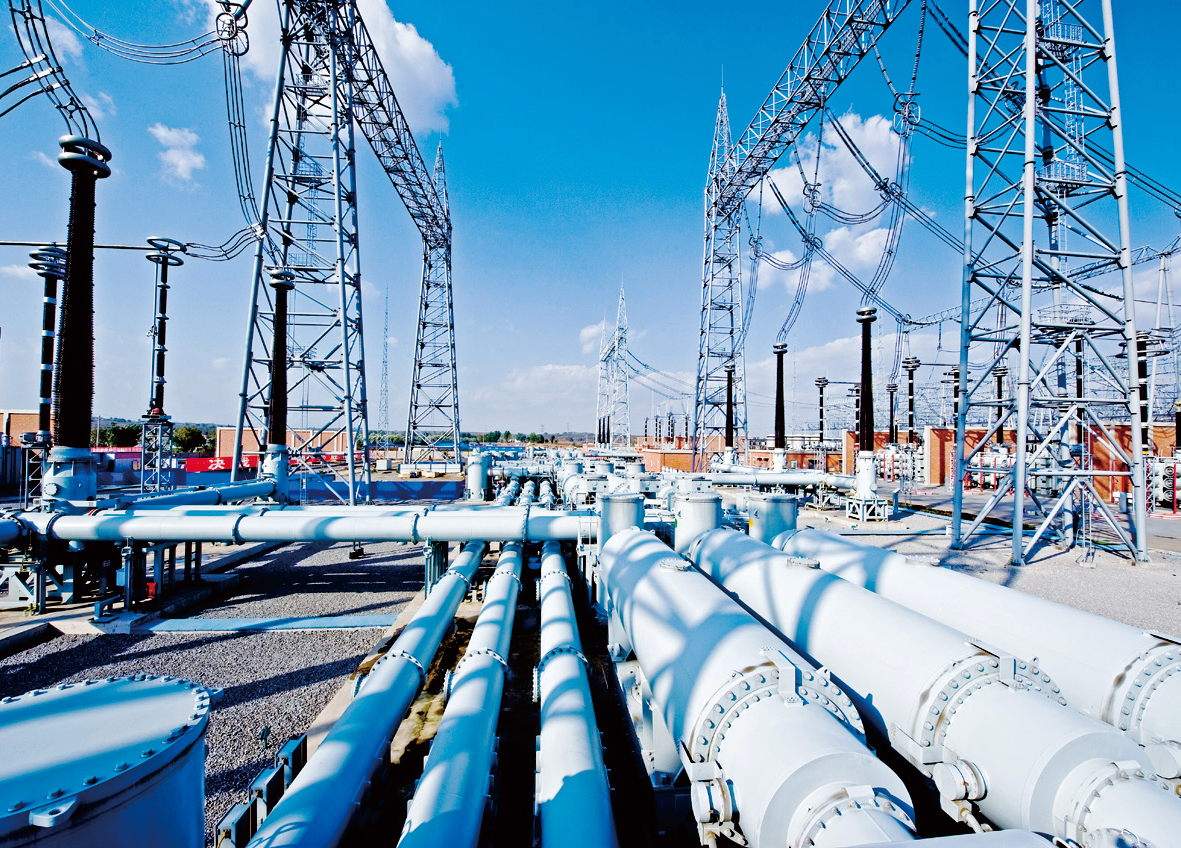
40.5kV-1100kV Gas Insulated Metal-Enclosed Switchgear (GIS)
Henan Pinggao Electric Co., Ltd.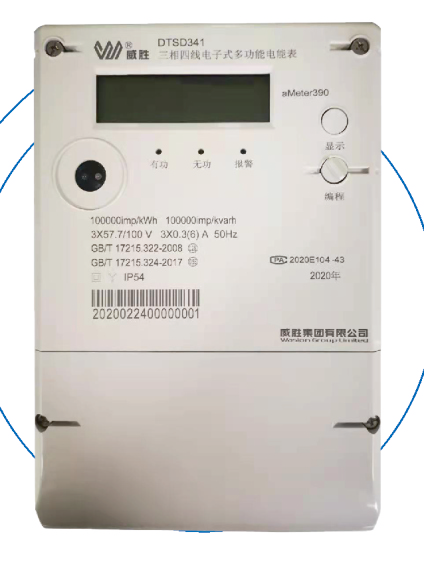
Overseas IEC Gateway Energy Meter - DTSD341/DSSD331-aMeter390
Wasion Group Limited Co., Ltd.
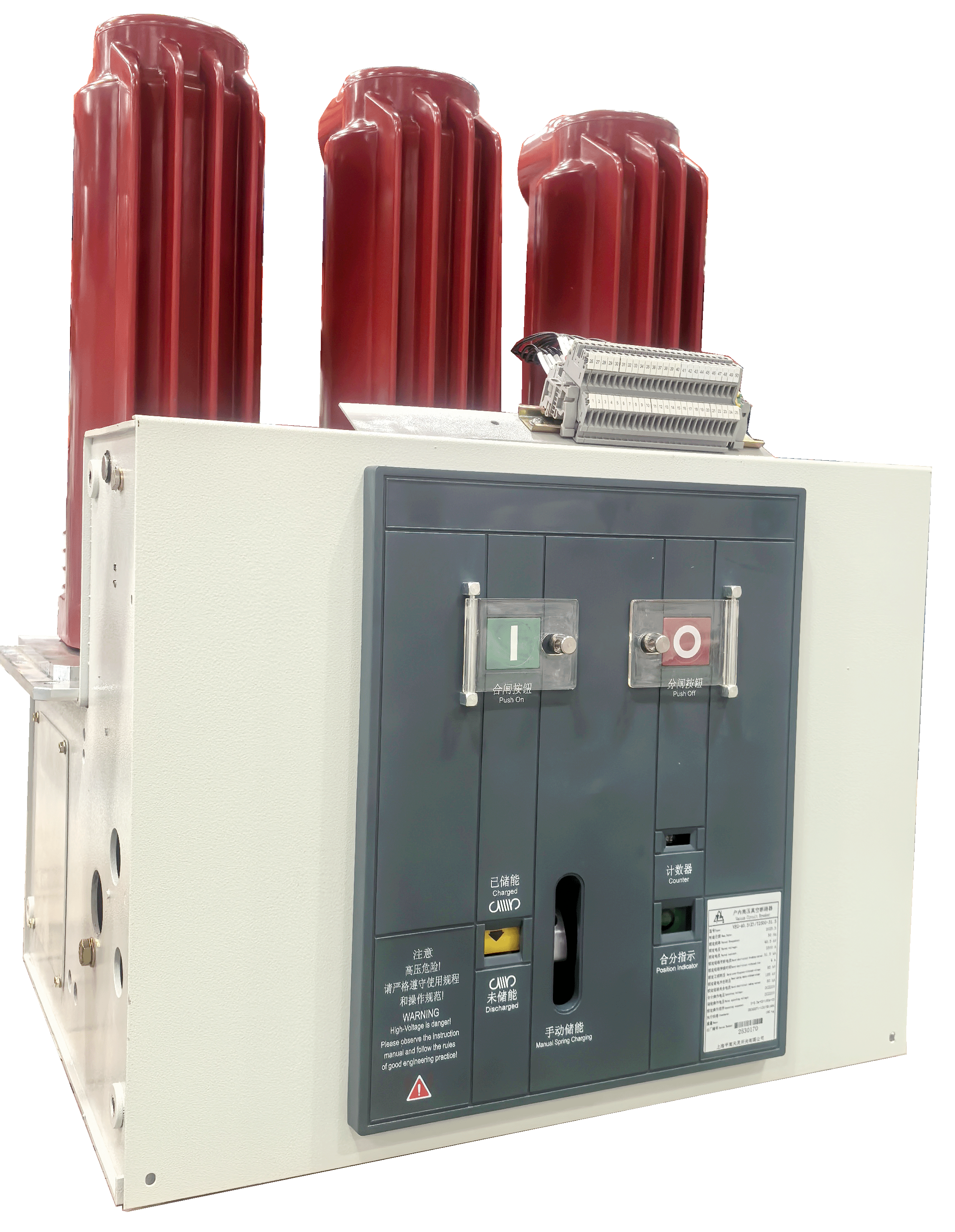
VEG-12/24/40.5 Series Vacuum Circuit Breaker
SHANGHAI PINGGAO TIANLING SWITCHGEAR CO., LTD.