Bain Expects No Full Recovery in European Residential Construction Before 2029
en.Wedoany.com Reported - On October 27, global consultancy Bain & Company released the new edition of its European construction industry study, the Building Blocks Construction Indicator, forecasting that the European construction market will gradually return to growth from 2026 to 2029, but that the new residential construction market will be unlikely to achieve a full rebound before 2029. The study notes that insufficient housing affordability, high construction costs, tighter financing conditions and geoeconomic uncertainty are delaying the conversion of Europe's pent-up housing demand into actual construction activity.

In terms of regional performance, the Nordic countries and the Netherlands are expected to lead the near-term recovery. Bain forecasts real average annual growth of 2% to 4% in the Nordic construction industry from 2026 to 2029, with new residential construction growing 4.5% to 6.5%; the Dutch construction industry is expected to grow 1.5% to 3.5%, with new residential construction growing 2% to 4%. Residential construction in the Netherlands remains constrained by nitrogen emission permit restrictions and insufficient grid connection capacity.
Germany's construction industry is expected to achieve average annual growth of 2% to 4% over the same period, supported mainly by infrastructure investment and pent-up housing demand. The German government's EUR 500 billion special infrastructure fund will support related engineering projects, but housing affordability still limits the release of new residential demand. The UK construction industry is expected to grow at an average annual rate of 1.5% to 3.5%, with infrastructure growing 3% to 5%, residential renovation growing 2% to 4%, and new residential construction growing only 0% to 2%.
France's construction industry is expected to grow at an average annual rate of 0.5% to 2.5%, with new residential construction growing 3% to 5%. France's housing recovery plan introduced in January 2026 is expected to support new home construction, but infrastructure growth over the same period is forecast at only 0% to 1%. Italy's overall construction growth is expected at 0% to 2%, making it one of the weakest growth prospects among the major markets covered by the study, with its residential construction still affected by the gradual phase-out of previous construction subsidy policies.
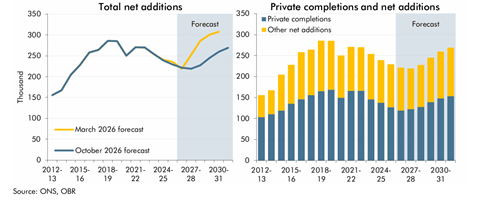
The housing supply gap remains prominent. Bain estimates that Europe currently builds about 1.6 million homes per year, and will need an additional average of about 650,000 homes per year over the next decade to meet housing demand. The UK added about 209,000 net new homes in 2025, 43% below the government's target of 370,000 per year; France's housing starts grew about 28% year on year in the first half of 2026, but actual housing completions remain below the policy target of 400,000 per year. Germany's housing completions are expected to fall about 10% in 2026.
Costs and financing conditions further constrain construction activity. Bain notes that European construction costs remain about 31% higher than in 2020, and the price-to-income ratio in some major markets exceeds 6 times. The European Central Bank raised interest rates consecutively in June and September 2026, further increasing the financing costs of housing development and purchase. Although building permits, starts and order indicators in Germany, France and the UK have begun to improve, most markets have not yet seen broad-based growth in housing completions.
In the non-residential construction sector, Bain expects data centers to become an important growth driver of industrial building demand, but grid connection constraints may still affect project implementation. In infrastructure, both Germany and the UK are expected to see average annual growth of 3% to 5% from 2026 to 2029; France is forecast at only 0% to 1% over the same period. Bain believes that medium-term growth in the European construction market will rely more on the combined support of new residential construction, infrastructure investment and data center construction, while the actual pace of recovery will still be constrained by interest rates, energy costs and macroeconomic changes.
Related Products






YHTank8400N Solvent-Free Liquid Epoxy Coating
JIANGSU YUNHU NEW MATERIAL TECHNOLOGY CO., LTD.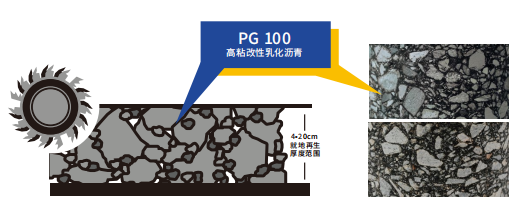
High-toughness in-Situ Cold Recycling Technology for Original Structural Layers
Central Fortune Creation Technology Group Co., Ltd.


Aoxuan Intelligent Precision Air Conditioning Unit
SHANGHAI AOXUAN PURIFICATION TECHNOLOGY CO., LTD.