Trump Plans to Impose 100 Pct Tariff on Imported Semiconductors
Wedoany.com Report-Aug. 7, U.S. President Donald Trump announced plans to impose a 100 percent tariff on imported semiconductors, encouraging domestic production. Speaking at the White House, he stated: “We'll be putting a tariff of approximately 100 percent on chips and semiconductors. But if you're building in the United States of America, there's no charge.”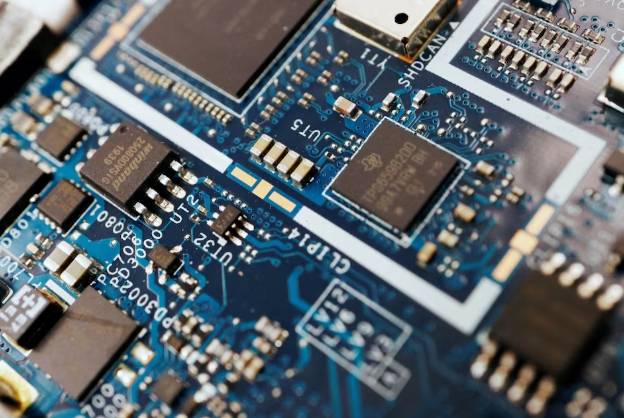
Semiconductor chips are seen on a circuit board of a computer in this illustration picture taken February 25, 2022.
During the same event, alongside Apple CEO Tim Cook, Trump revealed that Apple will invest an additional $100 billion in the United States. Apple’s press release detailed that this commitment accelerates its U.S. investment, totaling $600 billion over the next four years. The company also introduced the American Manufacturing Program, aimed at expanding its domestic investment and encouraging global companies to produce critical components in the U.S.
The initiative aligns with Apple’s efforts to strengthen its U.S.-based supply chain and advanced manufacturing. By increasing local production, Apple aims to support economic growth and enhance supply chain resilience. The announcement follows reports from May, when Trump indicated a potential 25 percent tariff on products manufactured abroad, including smartphones.
Apple’s expanded investment is expected to create opportunities for advanced manufacturing across the United States. The American Manufacturing Program will incentivize both Apple and its global partners to produce essential components domestically, fostering job creation and technological innovation. This move supports broader industry trends toward localizing production to meet market demands efficiently.
Tim Cook emphasized the company’s commitment, stating: “Our new commitment is a significant acceleration of our U.S. investment that now totals 600 billion dollars over the next four years.” The program is designed to bolster the U.S. economy while addressing the growing need for sustainable and reliable manufacturing solutions.
The focus on domestic production aligns with efforts to reduce reliance on imported components, particularly in the semiconductor industry, which is critical for products like smartphones and other electronics. Apple’s strategy is expected to contribute to the development of a robust manufacturing ecosystem in the United States, supporting both economic and technological advancements.
This announcement reflects a collaborative effort between industry leaders and policymakers to strengthen domestic manufacturing capabilities, ensuring long-term economic benefits and supply chain stability.
Related Products


Mine Explosion-proof and Intrinsically Safe Industrial Ethernet Ring Network (10 Gigabit/Gigabit)
Chongqing Mas Sci&Tech Co., Ltd.
Automatic Aiming Laser Remote Obstacle Removal Robot
Pinggao Group Weihai High-Voltage Apparatus Co., Ltd.

Conveyor Belt Intelligent Monitoring System
LUO YANG WIRE ROPE INSPECTION TECHNOLOGY CO., LTD.
Industrial and Commercial Point-Type Gas Detector
Jinan Benan Technology Development Co., Ltd.
Multi-function Marine Monitoring Low-altitude Detection Radar Sea-air Boundary Ocean Dynamic Environment Measurement
Chengdu Dixin Technology Co., Ltd.
TWP16 P-Band Tropospheric Wind Profile Radar
China Huayun Meteorological Technology Group Co., Ltd.

20 Inch 1600*900 Full HD 60Hz TFT LED Monitor with VGA and DP Interfaces for Desktop Computers-Business Use
Guangzhou Zanying Optoelectronics Technology Co., Ltd.