Wedoany.com Report-Sept. 16, The U.S. Environmental Protection Agency (EPA) announced on Monday that it has issued an air permit for Sentinel Midstream’s proposed Texas GulfLink deepwater oil export terminal off the Texas coast. The permit, granted under the Clean Air Act, authorizes the company to use an offshore support vessel to manage volatile organic compound emissions at the facility. This development moves the project closer to a final investment decision.
Signage at the headquarters of the United States Environmental Protection Agency (EPA) in Washington, D.C., U.S., February 18, 2025.
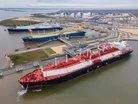
The Texas GulfLink project is designed to load very large crude carriers (VLCCs) directly offshore. Located about 30.5 miles off Freeport, Texas, the port would have the capacity to fully load a supertanker with around 2 million barrels of oil per day. This is a significant step for U.S. oil infrastructure, as currently only the Louisiana Offshore Oil Port (LOOP) is able to fully load supertankers. Other U.S. terminals face draft limitations, meaning large vessels must be partially loaded and then topped off using smaller ships, a process that adds time and cost.
The EPA noted that this permit marks the first U.S. use of such technology alongside a VLCC during loading. The approach, which involves deploying emission-control systems via an offshore support vessel, has previously been used in the North Sea with shuttle tankers. By adopting this system, the project aims to enhance environmental compliance while facilitating large-scale oil exports.
Earlier in February, the project had received a record of decision, which is considered a major milestone in the federal permitting process. The project is still awaiting a license to begin construction, but the issuance of the air permit represents significant progress. Sentinel Midstream, the company behind Texas GulfLink, has positioned the terminal as an important addition to U.S. energy infrastructure, intended to meet global demand for crude exports efficiently.
The project is also linked to broader energy policies in the United States. Regulatory agencies are working to ensure that new energy projects balance environmental requirements with the expansion of oil export capacity. The permit granted by the EPA highlights the agency’s role in overseeing both environmental compliance and industry growth.
EPA Regional Administrator Scott Mason stated: “In issuing the first Clean Air Act deepwater port permit since President Trump returned to office, EPA is keeping its promise to unleash American energy dominance and economic prosperity.” His comments emphasized the significance of the permit not only for Texas GulfLink but also for broader U.S. energy export capabilities.
The Texas GulfLink terminal, once completed, would provide the U.S. with additional capacity to export crude oil directly to global markets, improving logistics and reducing reliance on intermediary shipping methods. By enabling full loading of supertankers, the facility would strengthen the competitiveness of U.S. crude exports and add resilience to the national energy infrastructure.
Overall, the EPA’s decision to issue this permit marks an important milestone in the development of the Texas GulfLink project. With its large capacity, innovative environmental controls, and strategic offshore location, the project could play a key role in shaping future U.S. oil exports.