FAST Fusion Project Completes Conceptual Design
Wedoany.com Report-Dec.1, Starlight Engine (SLE) and Kyoto Fusioneering (KF) have completed the conceptual design phase for FAST, Japan's first privately led fusion power demonstration plant. The milestone was achieved one year after the project officially started in November 2024.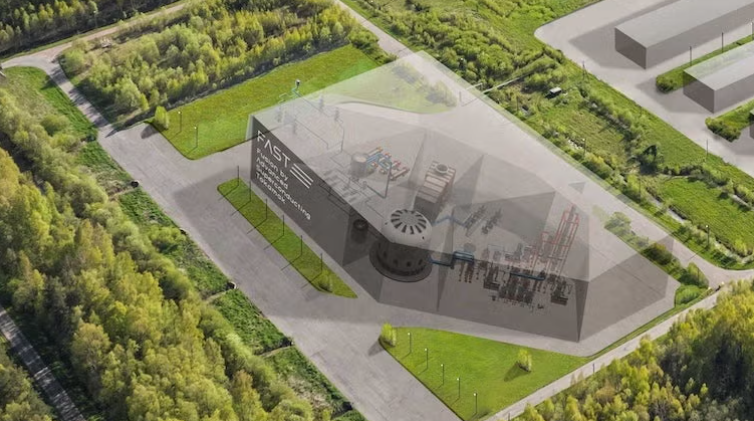
A rendering of the FAST demonstration plant.
The two companies have published a comprehensive Conceptual Design Report (CDR) that details the plant's technical objectives, performance targets, overall system layout, feasibility assessment, estimated costs, and construction timeline. This document represents the first privately prepared CDR for a fusion power demonstration in Japan and aligns with the national Fusion Energy Innovation Strategy.
FAST is designed as a low-aspect-ratio spherical tokamak that will generate and sustain deuterium-tritium fusion plasma. The facility targets approximately 50 MW of fusion power output using neutral beam injection heating in a device of similar scale to the existing JT-60SA tokamak. The project integrates key systems required for commercial fusion plants, including energy conversion, tritium breeding blankets, fuel cycle management, and remote maintenance capabilities.
The initiative is led by SLE in collaboration with Kyoto Fusioneering and prominent researchers from the University of Tokyo, Nagoya University, and Osaka University. It receives support from major Japanese corporations such as Fujikura, Furukawa Electric, Hitachi, JGC JAPAN, J-Power, Kajima, Kyocera, Marubeni, Mitsubishi Corporation, Mitsui & Co., Mitsui Fudosan, and Sumitomo Mitsui Banking Corporation.
The conceptual design builds on extensive Japanese expertise gained through participation in JT-60SA, ITER, and national DEMO studies. It incorporates advanced technologies, including high-temperature superconducting magnets and liquid-metal breeding blankets. The project team highlighted that completing the conceptual design within one year is notably rapid for a programme of this scale.
With the conceptual phase concluded, FAST now advances to detailed engineering design. An Engineering Design Report is scheduled for completion in 2028, with construction expected to begin after that date.
In parallel, the project team is preparing site selection criteria, discussing potential host locations with regional authorities, holding preliminary safety consultations with the Nuclear Regulation Authority, and working to secure funding for the next engineering and research phases starting from 2026.
Related Products
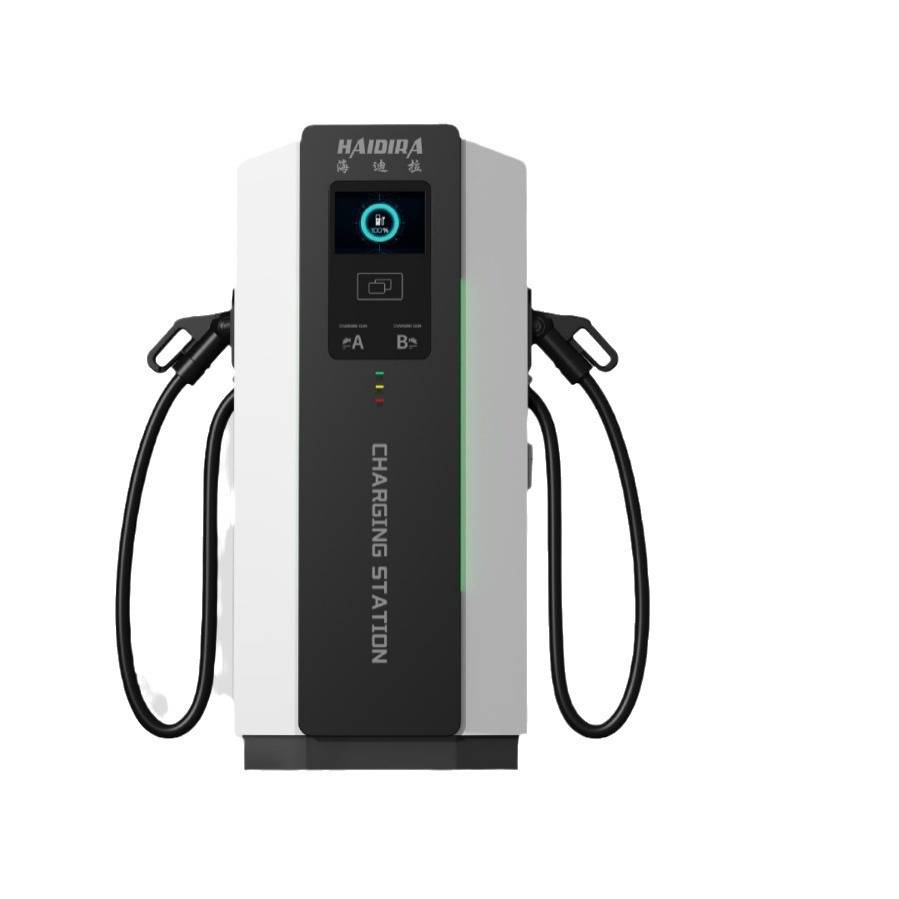

Manufacturer Direct Sales Tesla New Energy Electric Vehicle Universal DC 180kW Dual-gun Charging Pile Commercial Fast Charger
Anhui Haidira Electric Technology Co., Ltd.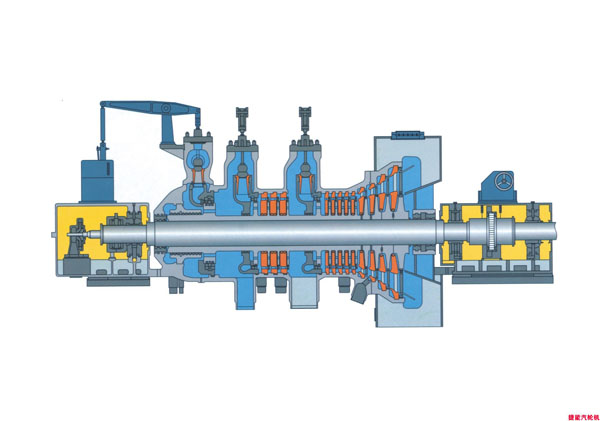
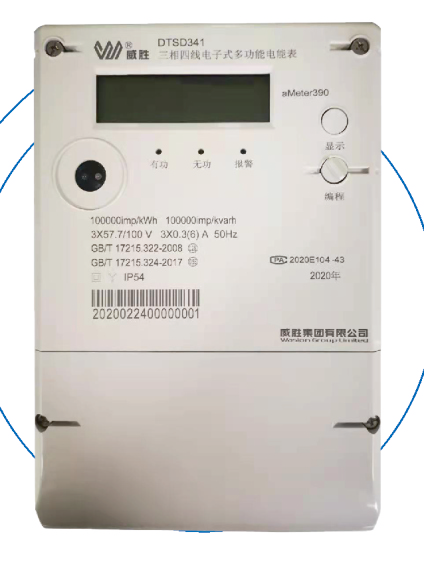
Overseas IEC Gateway Energy Meter - DTSD341/DSSD331-aMeter390
Wasion Group Limited Co., Ltd.
80kW Megawatt Supercharging Module TH80F10030C9
Shijiazhuang Tonhe Electronics Technologies Co., Ltd.
Modular Multifunctional Water Supply and Drainage Vehicle (18T)
Changsha Dewater Machinery Technology Co., Ltd.
Bidirectional Metal Hard Sealed Seawater Butterfly Valve
Henan Quanshun Flow Control Science & Technology Co., Ltd.