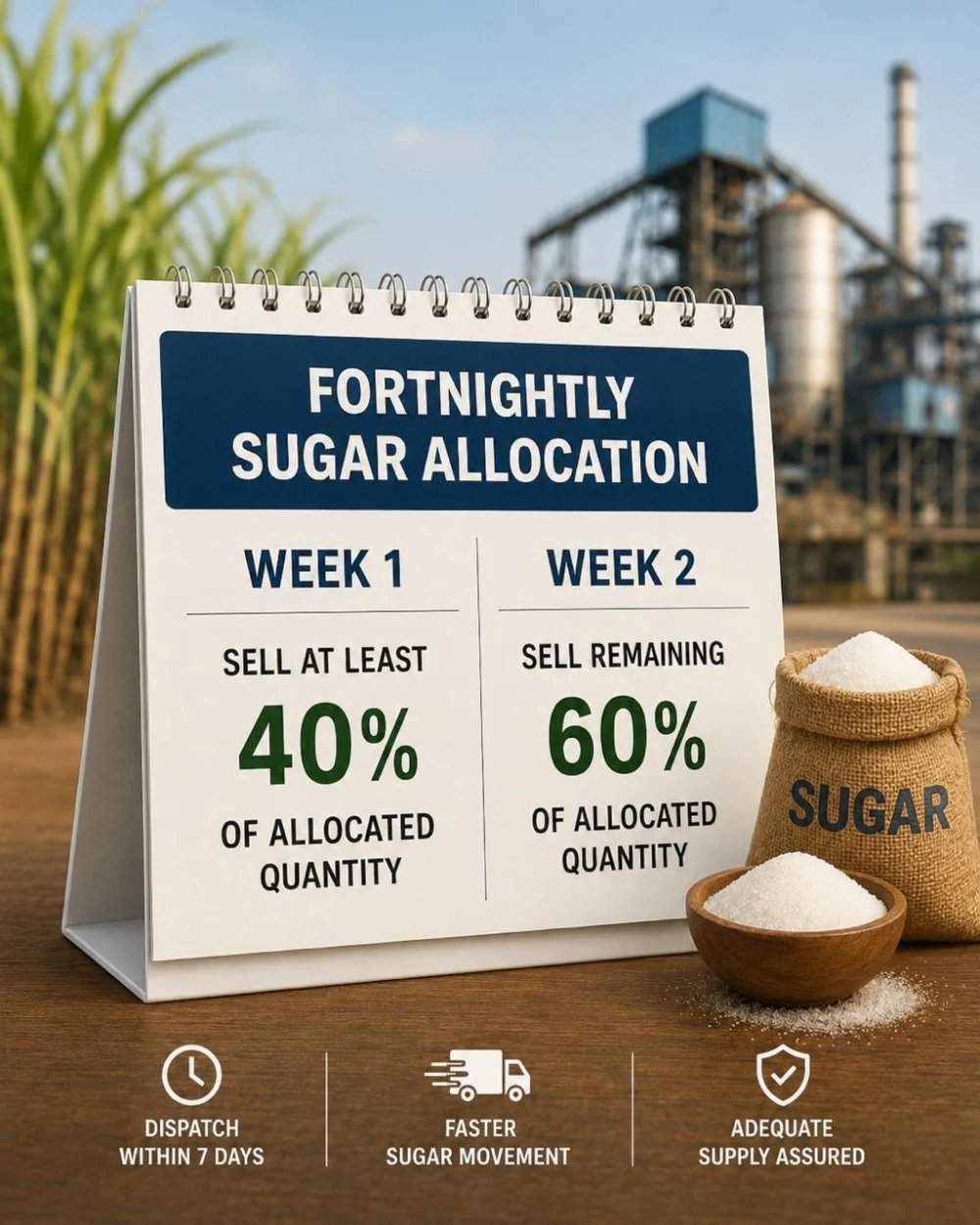
India’s October-November Sugar Output Rises 43% on Higher Recovery Rates
Wedoany.com Report-Dec.3, India's sugar production in the 2025-26 season (October-September) reached 4.1 million metric tons in the first two months that began October 1, marking a 43 percent increase compared with 2.88 million tons produced in the same period last year, two leading industry associations reported on Tuesday.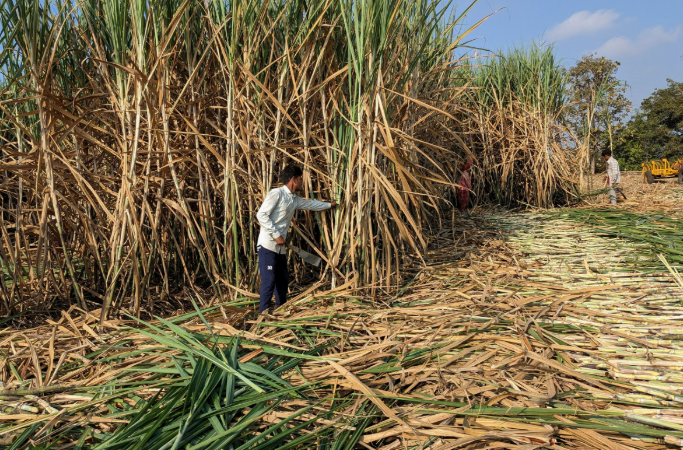
The sharp rise resulted from higher sugarcane crushing volumes and improved sugar recovery rates across most key growing regions.
Maharashtra, the country's largest sugar-producing state in the west, recorded output of 1.7 million tons, more than three times the volume achieved a year earlier. Uttar Pradesh in the north produced 1.4 million tons, up 9 percent year-on-year. In contrast, Karnataka in the south registered 774,000 tons, slightly below the previous season's 812,000 tons due to temporary interruptions in mill operations linked to discussions over cane pricing.
The average sugar recovery rate for October-November improved to 8.51 percent from 8.29 percent last season, according to the National Federation of Cooperative Sugar Factories (NFCSF). This indicator reflects the proportion of sugar successfully extracted from processed sugarcane.
Strong early-season output has created a comfortable domestic stock position, enabling India—the world's second-largest sugar producer—to make additional volumes available for international markets without affecting local supply.
The NFCSF recommended that authorities permit an extra 1 million metric tons of exports beyond the 1.5 million tons already approved last month for the current season. Reduced diversion of sugarcane toward ethanol production this year has contributed to a larger exportable surplus.
Indian mills have found limited overseas buyers so far because global sugar prices remain lower than domestic levels.
Separately, the Indian Sugar & Bio-Energy Manufacturers Association (ISMA) has requested the government to review and adjust the minimum selling price for sugar in the domestic market, noting that it has stayed unchanged for over six years while input and production costs have continued to rise.
Higher production volumes, if sustained, are expected to support both domestic availability and export opportunities while potentially adding downward pressure on international sugar prices in the coming months. Industry groups continue to work with authorities to balance farmer remuneration, mill viability, and consumer affordability.
Related Products



714CD Series C-Band Weather Radar
Chengdu Zhongdian Jinjiang Information Industry Co., Ltd.
Industrial and Commercial Point-Type Gas Detector
Jinan Benan Technology Development Co., Ltd.
MH220E Two-Row Hybrid Packaged Cotton Picker
CHINA RAILWAY CONSTRUCTION HEAVY NDUSTRY XINJIANG CO., LTD.
4HS-8 High-efficiency Peanut Inverted-laying Harvester
Hebei Yongfa Hongtian Agricultural Machinery Manufacturing Co., Ltd.