
Google Targets 2027 for Launch of Space Data Centres
Wedoany.com Report-Dec.3, In early November 2025, Google introduced Project Suncatcher, a research initiative focused on developing advanced solar-powered data centers in orbit. This effort seeks to enhance efficiency by utilizing satellites equipped with the company's custom Tensor Processing Units (TPUs), which support various AI models. The project draws from Google's legacy of innovative explorations, including advancements in quantum computing and self-driving technology. As outlined in a detailed research paper, the system would feature clusters of satellites in a sun-synchronous low-Earth orbit, ensuring nearly continuous sunlight exposure for optimal energy capture.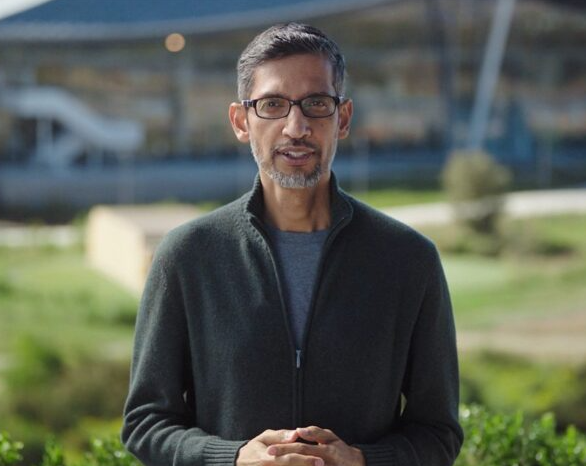
During a recent appearance on Fox News Sunday, Google CEO Sundar Pichai elaborated on the timeline and vision for these orbital facilities. He confirmed the company's intention to deploy space-based data centers in the coming years, emphasizing the potential for sustainable computing. "We are taking our first step in '27," he said. “We'll send tiny, tiny racks of machines, and have them in satellites, test them out, and then start scaling from there." Pichai highlighted the project's alignment with broader goals for energy utilization. "One of our moonshots is to, how do we one day have data centers in space so that we can better harness the energy from the sun that is 100 trillion times more energy than what we produce on all of Earth today?" he said. He further noted that such developments could become commonplace within a decade, reflecting growing feasibility due to declining launch costs and improved hardware resilience.
This approach addresses key challenges in scaling AI infrastructure, where solar panels in space can operate up to eight times more effectively than ground-based ones, free from atmospheric interference. Google plans to collaborate with satellite specialist Planet Labs to launch two prototype satellites by early 2027, each carrying TPUs to evaluate performance in orbit. These tests will inform the expansion to larger constellations linked by high-speed optical connections, forming distributed networks capable of handling machine learning tasks.
The initiative echoes similar forward-thinking strategies in the industry. In October 2025, at Italian Tech Week in Turin, Amazon founder Jeff Bezos discussed prospects for large-scale orbital computing powered by uninterrupted solar resources. He projected that such facilities could emerge within 10 to 20 years, offering advantages over Earth-bound operations. "One of the things that's going to happen next – is we're going to start building these giant gigawatt data centres in space," says Jeff. "These giant training clusters, those will be better built in space, because we have solar power there, 24/7. There are no clouds and no rain, no weather. "We will be able to beat the cost of terrestrial data centres in space in the next couple of decades," he added.
Both leaders underscore the transformative role of space in managing rising computational demands. By leveraging abundant solar energy, these efforts aim to support AI growth while minimizing environmental impacts on Earth. As prototypes advance, they could pave the way for hybrid systems blending terrestrial and orbital resources, fostering more resilient global data ecosystems. This convergence of innovation highlights a shared commitment to sustainable technology expansion.
Related Products


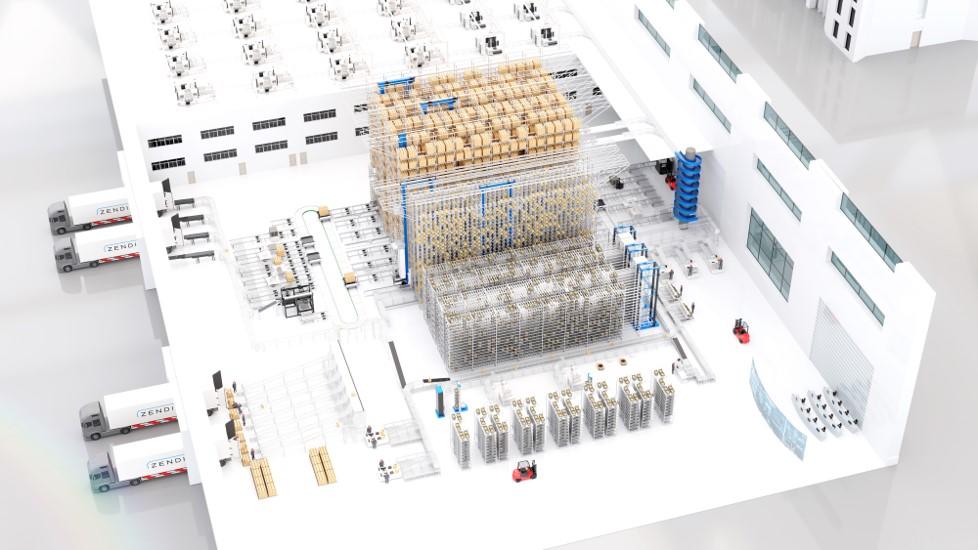
One-Stop Steward Service for the Entire Logistics System Integration Chain
Zhongding Intelligent (Wuxi) Technology Co., Ltd.

20 Inch 1600*900 Full HD 60Hz TFT LED Monitor with VGA and DP Interfaces for Desktop Computers-Business Use
Guangzhou Zanying Optoelectronics Technology Co., Ltd.

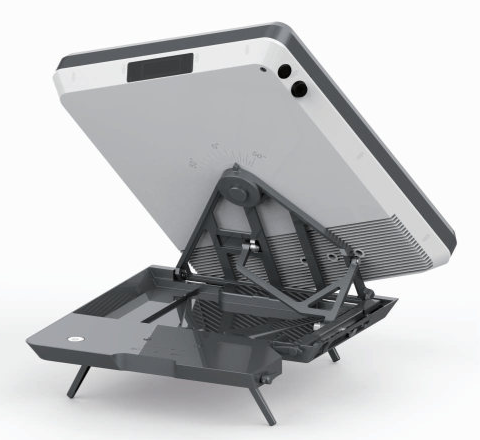
Flat Portable Satellite Terminal 0.35m Aperture Manual Portable Terminal
China Starwin Science & Technology Co., Ltd.


Automatic Aiming Laser Remote Obstacle Removal Robot
Pinggao Group Weihai High-Voltage Apparatus Co., Ltd.






