
A collaborative research team from the University of Sydney and the University of New South Wales has recently published significant results in Nature, developing a quantum control chip that operates in near-absolute zero environments, providing a key technological breakthrough for building million-qubit quantum computers. The study was led by Professor David Reilly's team at the Sydney Nano Institute, with its spin-off company, Emergence Quantum, actively pursuing commercialization of the technology.
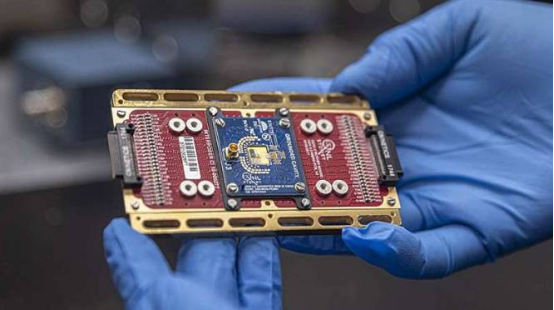
The research team's newly designed silicon-based control chip operates stably at millikelvin temperatures, successfully addressing the core challenges in scaling up qubits. Professor Reilly stated, "This technology will propel quantum computers from the lab to practical applications." The chip features extremely low power consumption, with analog components requiring only 20 nanowatts per megahertz, laying the foundation for building large-scale quantum systems.
Experimental data shows that the control system has a negligible impact on qubit performance: single-qubit operation fidelity loss is insignificant, coherence times show no notable reduction, and qubit interactions are not significantly disrupted by electrical noise. Lead author Dr. Sam Bartee noted, "We have confirmed the feasibility of integrating control systems in ultra-low-temperature environments."
The study utilized spin qubits provided by Diraq from the University of New South Wales, which are based on mature CMOS technology and considered to have the greatest scaling potential. Diraq CEO Professor Andrew Dzurak commented, "This technology opens new pathways for developing practical quantum computers."