
A new study from the University of Nottingham shows that mealworms require a minimum level of protein to grow and serve as a sustainable food source, challenging the myth that insects possess a superpower to absorb plastic waste and convert it into nutritionally valuable products. The findings were published in the journal Insects as Food and Feed.
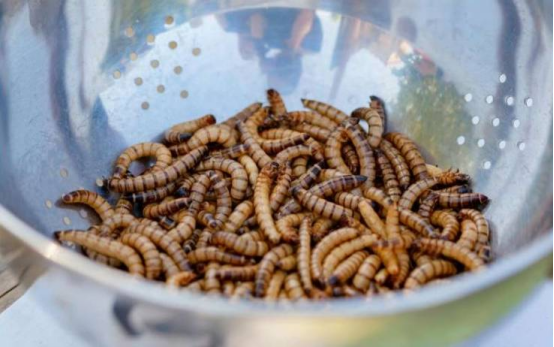
Mealworm (Tenebrio molitor) larvae are primarily composed of protein, fat, and fiber, offering high nutritional value. They can grow on relatively low-quality food sources like wheat bran, as well as industrial byproducts such as brewery spent grains, garden, and vegetable waste, making them a promising sustainable alternative protein source—not only for animal feed but also under exploration as a potential human food source.
Previous studies claimed that certain mealworm species could be fed polystyrene, but this new research demonstrates that feeding on protein-free substrates like plastic alone cannot achieve the growth and nutritional levels required for mealworms as a food source. Moreover, their crude protein and fat content varies significantly depending on the feed used.
To prove the necessity of minimum nutritional levels, the research team fed groups of mealworms diets with varying nutrient and protein contents. Results showed that mealworms fed protein-free diets ceased growing and failed to enter the pupation stage critical for reproduction. This raises significant doubts about the viability of protein-free substrates (such as plastic) as feasible feed sources for commercial mealworm production.
Study team member John Brammer said the research focuses on establishing mealworms as an effective and sustainable alternative protein source, working to identify the optimal nutrient combination. While prior studies indicated mealworms need all nutrients, including protein, to grow and pupate, this research further clarifies that point, emphasizing that consuming plastic or other non-protein foods alone allows survival but does not provide the nutrition required for them to serve as food.
Another researcher, Tim Parr, stated that understanding the minimum nutritional requirements of production animals like mealworms is a key part of enabling their large-scale use as a nutritional alternative food source. Now that protein is known to be a critical requirement, further efforts can build on this to fine-tune feed nutrient density and quantity, finding the formula best suited for mealworm growth and delivery of key nutrients—while ensuring it is economically viable and sustainable.