
A new study recently published shows that an international scientific team has successfully developed a biodegradable material that significantly cuts global energy consumption without requiring electricity.
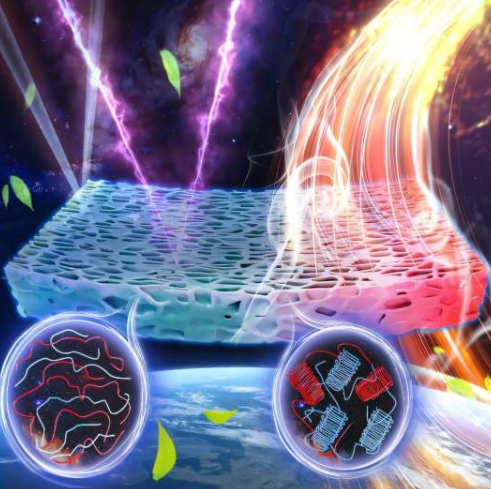
This novel bioplastic ultra-thin film was co-developed by researchers from Zhengzhou University in China and the University of South Australia (UniSA). It can be applied to buildings, equipment, and other surfaces, passively lowering temperatures by 9.2°C during peak sunlight hours and reflecting nearly 99% of sunlight. As a sustainable and durable material, it has the potential to reduce annual energy consumption in some of the world's hottest cities by up to 20%. The findings are detailed in the latest issue of Cell Reports Physical Science.
PhD student Yangzhe Hou from UniSA stated that this cooling metamembrane represents a breakthrough in sustainable materials engineering, helping address rising global temperatures and urban heat islands. Professor Hou from Zhengzhou University described the ultra-thin film as an eco-friendly alternative to air conditioning, which contributes significantly to carbon emissions.
The material not only reflects nearly all solar radiation but also allows internal building heat to dissipate directly into outer space, keeping structures cooler than ambient air even under direct sunlight. Notably, even after prolonged exposure to acidic conditions and ultraviolet light—two major barriers to the development of similar biodegradable materials—the film continues to perform effectively.
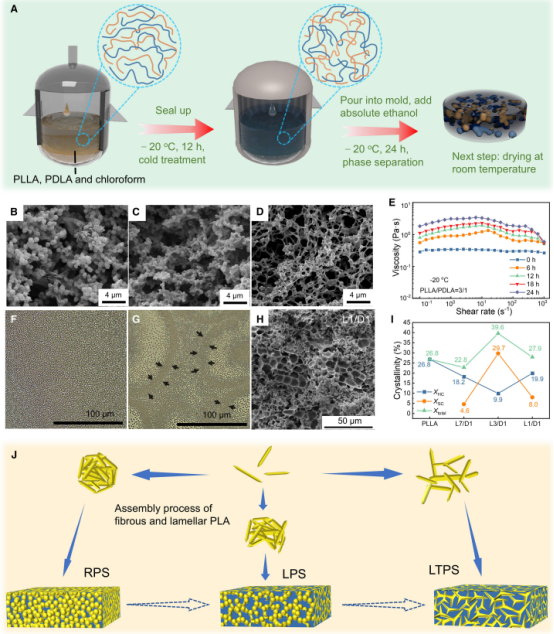
The ultra-thin film is made from polylactic acid (PLA, a common plant-derived bioplastic) and produced using low-temperature separation technology, reflecting 98.7% of sunlight while minimizing heat gain. Co-author Dr. Xianhu Liu from Zhengzhou University noted that, unlike traditional cooling technologies, this metamembrane requires no electricity or mechanical systems. Most existing passive radiative cooling systems rely on petrochemical-based polymers or ceramics, posing environmental issues, whereas using biodegradable PLA offers a green alternative with high solar reflectivity, strong thermal radiation, sustainability, and durability.
In practical applications, the ultra-thin film reduces daytime temperatures by an average of 4.9°C and nighttime temperatures by 5.1°C. Field tests conducted in China and Australia confirmed its stability and efficiency under harsh environmental conditions. Even after 120 hours of immersion in strong acid and ultraviolet exposure equivalent to 8 months outdoors, the film maintained a cooling capacity of up to 6.5°C. Simulations indicate that by reducing reliance on air conditioning, the metamembrane could cut annual energy consumption in cities like Lhasa, China, by up to 20.3%.
Co-author Professor Jun Ma from the University of South Australia stated that this is more than a lab-scale success—the film is scalable, durable, and fully biodegradable. The research aims to explore viable pathways for enhancing human comfort while minimizing environmental impact by reducing dependence on fossil fuels, contributing to sustainable development. This discovery addresses a major challenge in the field: balancing high-performance cooling with eco-friendly degradation.
Currently, the researchers are exploring opportunities for large-scale manufacturing and potential applications of the material in construction, transportation, agriculture, electronics, and biomedicine (including cooling wound dressings). The study was co-authored by Yangzhe Hou, Yamin Pan, Xianhu Liu, Jun Ma, Chuntai Liu, and Changyu Shen.