
Scientists at the world's largest stellarator facility, Wendelstein 7-X (W7-X), have recently achieved a major breakthrough by successfully generating high-energy helium-3 ions for the first time.
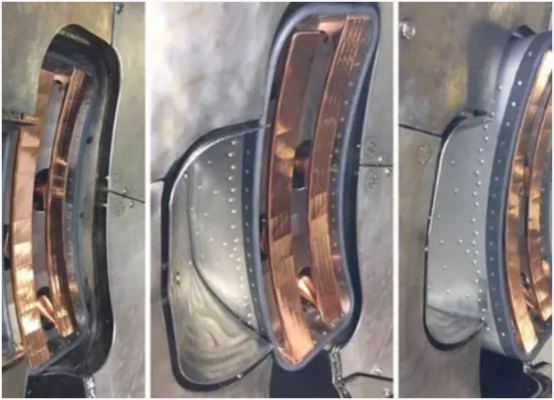
In a press release, the scientists stated: "For the first time in the world's largest stellarator, high-energy helium-3 ions have been produced using ion cyclotron resonance heating—a milestone in fusion research."
Operated by the Max Planck Institute for Plasma Physics, the advanced fusion reactor W7-X addressed a key challenge in harnessing fusion energy through its experiments. Future fusion power plants rely on effectively controlling ultra-hot plasma at millions of degrees, which generates high-energy "alpha particles" (helium-4 nuclei) critical for sustaining the extreme temperatures needed for ongoing fusion reactions. If these particles escape too quickly, the plasma cools, and the reaction cannot be maintained.
Given W7-X's experimental nature and its scaled-down design compared to mature fusion power plants, scientists used lighter, lower-energy particles to simulate relevant conditions. They explained that the lighter helium-3 ions can be accelerated to suitable energy levels for this purpose.
The team achieved this goal using the cutting-edge ion cyclotron resonance heating (ICRH) technique. The press release added: "It's similar to pushing a child on a swing: for effectiveness, each push must be precisely timed with the swing's natural frequency—in other words, resonance must be achieved."
ICRH uses powerful megawatt-level high-frequency waves, injecting electromagnetic waves into plasma containing hydrogen and helium-4, tuned to the specific frequency at which helium-3 ions naturally orbit magnetic field lines (their ion cyclotron frequency), allowing these particles to efficiently absorb energy. The release emphasized: "This is the first time high-energy helium-3 ions have been produced using ion cyclotron resonance heating (ICRH) in a stellarator: a world first in fusion research."
"The ICRH system is being developed and operated at W7-X with support from the Trilateral Euregio Cluster (TEC), in close collaboration between the Plasma Physics Laboratory at the Royal Military Academy in Brussels and the IFN-1 and ITE institutes in Jülich."
The significance of this innovation extends beyond Earth. Researchers found that the same resonance process driving helium-3 particles in W7-X may explain a puzzling phenomenon on the Sun. The team noted: "This research contributes to developing sustainable energy and provides unexpected insights into the Sun's mechanisms. The resonance process exciting helium-3 particles in W7-X may also explain the occasional helium-3-rich clouds in its atmosphere."
Theoretically, helium-3 particles in the Sun can be selectively accelerated by naturally occurring electromagnetic waves, forming massive clouds containing 10,000 times more helium-3 than usual.
The press release concluded: "These findings show that fusion science is not only shaping the future but also helping unravel the mysteries of the universe around us."