
Sensorineural hearing loss (SNHL) is a common permanent hearing impairment affecting approximately 6% of the global population. The condition is primarily caused by damage to inner ear hair cells or auditory nerves, with no effective reversal methods currently available. Recently, scientists have explored exosomes derived from mesenchymal stem cells (MSCs) as a potential therapeutic approach, with related research published in the journal Biomolecules and Biomedicine.
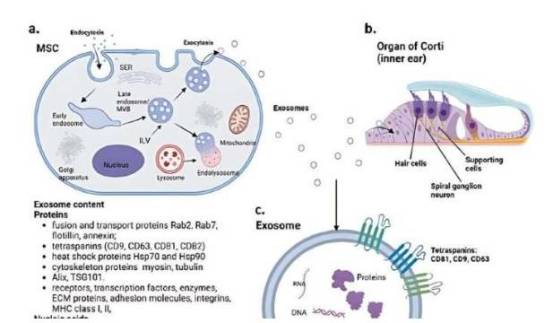
Traditional treatments such as hearing aids and cochlear implants improve hearing but cannot repair damaged cells. Research in regenerative medicine has shifted toward stem cell therapies, with exosomes gaining attention due to their unique advantages. Exosomes are nanoscale vesicles secreted by cells, carrying bioactive molecules such as proteins and RNA, capable of promoting tissue repair and reducing inflammation. Compared to live cell transplantation, exosomes avoid immune rejection and tumor risks, and more easily penetrate the blood-labyrinth barrier to reach the inner ear.
Animal experiments show that MSC exosomes can improve hearing thresholds and protect cochlear hair cells. In cisplatin-induced hearing loss models, exosome treatment significantly reduced cochlear damage and promoted neuron survival. In a preliminary clinical case, a cochlear implant patient receiving exosome-assisted therapy showed improvement in speech comprehension.
Despite promising prospects, the technology still faces challenges such as standardized production and dosage optimization. No large-scale clinical trials have yet validated its long-term safety and efficacy. Researchers indicate that future efforts should further explore the mechanisms of exosomes to optimize their therapeutic potential.