
Crude oil plays an indispensable role in modern life, powering vehicles, heating homes, and fueling industries. However, the process of separating crude oil consumes a significant amount of the world's energy.
It is reported that approximately 1% of global energy consumption is used to separate crude oil into gasoline, diesel, and heating oil, a process that also accounts for about 6% of global carbon dioxide emissions, with most of these emissions stemming from the high temperatures required to boil crude oil and separate it by boiling point.
Now, engineers at MIT have achieved a breakthrough by developing a membrane that filters crude oil components based on molecular size, potentially replacing energy-intensive heat-based crude oil separation methods. This advancement could reshape global oil processing and significantly reduce associated emissions.
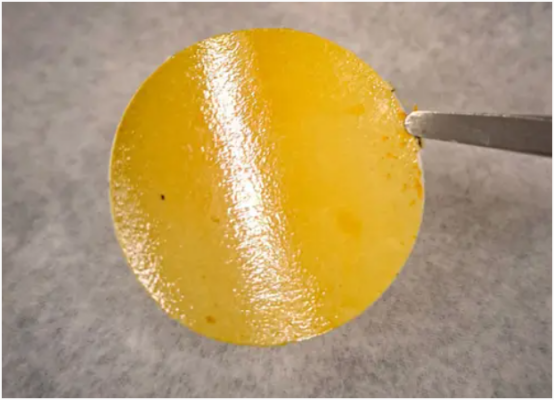
The MIT research team invented a thin polymer membrane that screens oil compounds based on shape and size (rather than boiling point). This shift could reduce the energy required for crude oil separation by up to 90%.
Zachary P. Smith, Associate Professor of Chemical Engineering at MIT and senior author of the study, said: "This is a completely new way to envision the separation process. Instead of purifying mixtures by boiling them, we separate components based on shape and size."
This new membrane has anti-swelling properties, addressing a major flaw in earlier versions, and performs well for both light and heavy hydrocarbons.
To create this new membrane, the research team drew on technologies from the water industry. Since the 1970s, reverse osmosis membranes have reduced the energy consumption of seawater desalination by 90%. MIT scientists adapted these membranes to process crude oil.
They replaced flexible amide bonds with rigid imide bonds, enhancing the membrane's stability and hydrophobicity, allowing hydrocarbons to pass through quickly without causing the membrane to swell. Senior author Zachary P. Smith said: "This is a completely new way to envision the separation process. Instead of purifying mixtures by boiling them, we separate components based on shape and size."
Notably, the membrane's anti-swelling properties overcome the main limitations of earlier versions and perform well for both light and heavy hydrocarbons.
To manufacture this new membrane, the team repurposed technologies from the water industry. Since the 1970s, reverse osmosis membranes have significantly reduced the energy consumption of seawater desalination. MIT scientists modified these membranes to handle crude oil, replacing flexible amide bonds with rigid imide bonds to make the membrane more stable and hydrophobic, allowing hydrocarbons to pass through quickly without causing swelling. Senior author Zachary P. Smith said: "The polyimide material forms pores at the interface, and with the addition of crosslinking chemistry, it no longer swells."
The membrane is designed for industrial-scale applications, using a monomer called truxene to form precise and durable pores, manufactured through interfacial polymerization, a technique already used at scale in industry, creating conditions for large-scale production. Lead author Li explained: "The main advantage of interfacial polymerization is that it is a mature method for producing water purification membranes, allowing these chemical methods to be applied to existing large-scale production lines."
In laboratory tests, the membrane performed exceptionally well. It increased the toluene concentration in a triisopropylbenzene mixture by 20 times and effectively separated actual industrial oil samples containing naphtha, kerosene, and diesel. Smith said: "With such a membrane, you could have a device that replaces the initial stages of crude oil fractionation towers, first separating heavy and light molecules, then using different membranes in a cascade to purify complex mixtures and isolate desired chemicals."
Experts believe this could represent a major leap in industrial efficiency. Andrew Livingston, Professor of Chemical Engineering at Queen Mary University of London, commented: "This study adopts the backbone technology of the membrane-based seawater desalination industry... and creates a new approach to applying it to organic systems."