
Researchers at Northeastern University have achieved a major breakthrough in quantum material control by developing a new method to regulate the electronic states of materials using light. This study, published in Nature Physics and led by Assistant Professor of Physics Alberto de la Torre with collaboration from Professor Gregory Fiete, enables rapid switching of materials between conductive and insulating states.
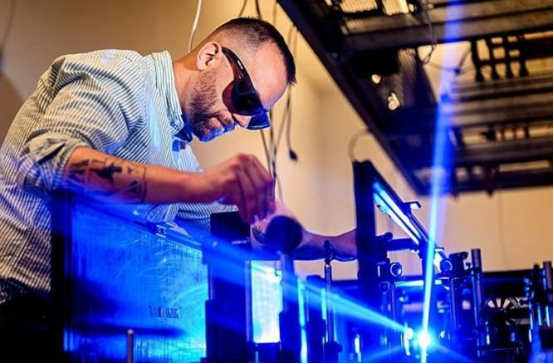
The research team employed a "thermal quenching" technique, precisely controlling heating and cooling processes to transition the quantum material 1T-TaS₂ between metallic and insulating states. This switching occurs at terahertz speeds—approximately 1,000 times faster than current processors. Notably, the material can maintain its preset state for months near room temperature, overcoming previous limitations that required extremely low temperatures.
"We are using light to control material properties at speeds approaching the physical limit," said Professor Fiete. Traditional electronic devices require both conductive and insulating materials, whereas this new technology enables a single material to switch between both functions, simplifying device design.
Building on prior ultrafast laser pulse research, the technique addresses key challenges such as short duration and temperature constraints. de la Torre noted: "This breakthrough opens possibilities for developing smaller and faster quantum electronic devices." The researchers emphasize that this approach may provide a new pathway to surpass the physical limits of existing silicon-based technologies.