
A research team from The University of Texas at Austin, Shanghai Jiao Tong University, National University of Singapore, and Umeå University in Sweden has achieved a major breakthrough: using machine learning to develop a new method for creating complex three-dimensional metamaterial thermal emitters. The work was published in Nature.
With this system, the researchers generated over 1,500 different materials capable of selectively emitting heat to varying degrees and in different ways—offering ideal solutions for improving energy efficiency and enabling more precise cooling and heating. Yuebing Zheng, professor in the Walker Department of Mechanical Engineering at the Cockrell School of Engineering and co-lead of the study, said the machine-learning framework represents a major leap in metamaterial emitter design. By automating the process and vastly expanding the design space, it enables the creation of high-performance materials previously unimaginable.
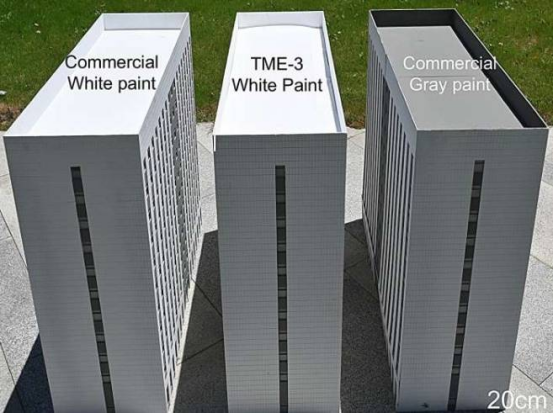
To validate the platform, the team fabricated and tested four materials, applying one to a model house. Under four hours of direct midday sunlight, the roof coated with the metamaterial emitter was on average 5–20 °C cooler than roofs painted white or gray. In hot climates like Rio de Janeiro or Bangkok, the researchers estimate this cooling effect could save an apartment building the equivalent of 15,800kWh of electricity per year—while a typical air conditioner consumes only about 1,500kWh annually.
The applications extend far beyond improving energy efficiency in homes and offices. Using the machine-learning framework, the team developed seven classes of metamaterial emitters, each with unique advantages and uses. For example, deployable thermal radiators can lower temperatures in urban areas to mitigate the urban heat island effect; metamaterial emitters can also manage spacecraft temperatures in space. Additionally, thermal metamaterial radiators could be integrated into everyday items such as textiles and car interiors, improving cooling for clothing and outdoor gear and reducing heat buildup in vehicles.
Traditionally, designing these materials has been tedious and has hindered mainstream adoption. Other automated approaches struggle with the complex 3D hierarchical structures of metamaterial emitters, resulting in simple geometries and inadequate performance. Professor Zheng noted that conventional design relies on time-consuming trial-and-error, severely limiting the ability to create effective materials.
The team will continue refining the technology and expanding its applications in nanophotonics, exploring light-matter interactions at the smallest scales. Co-author Kan Yao, a researcher in Zheng's group, believes that while machine learning is not a panacea, the unique spectral demands of thermal management make it particularly well-suited for designing high-performance thermal emitters.